_1753256285958.png)

_1754990596544.webp)
DIY Projects Using Trapezoid Purse Handles
 2026-10-11 22:36:54
Working with trapezoid bag handles opens a world of creative possibilities for bag manufacturers and DIY enthusiasts alike. These geometric hardware components deliver exceptional structural stability and visual appeal, making them ideal for projects ranging from simple tote upgrades to sophisticated handbag constructions. The trapezoid shape—wider at the base and narrower at the top—distributes weight more evenly than traditional round or D-ring handles, reducing stress on attachment points and prolonging the lifespan of finished Products. Whether you're managing an OEM production line or exploring small-batch customizations, understanding how to effectively integrate these handles can elevate both functionality and design sophistication in your bag collections.
Understanding Trapezoid Purse Handles: Types, Materials, and Benefits
The Geometric Advantage of Trapezoid Design
The trapezoid shape isn't just a choice for looks; it's also a practical engineering solution to common problems with bag hardware. The angled sides of trapezoid handles spread the load over a larger surface area than the round handles, which concentrate pressure at the attachment points. This shape keeps fabric from tearing and hardware from coming loose, which is especially helpful when working with fragile materials or heavier bag constructions. The bigger base naturally fits the shape of the hand better than cylindrical options, which makes the form even better for gripping. Manufacturers who work with high-quality names like this design because it cuts down on guarantee claims related to broken handles.
Material Options for Different Production Requirements
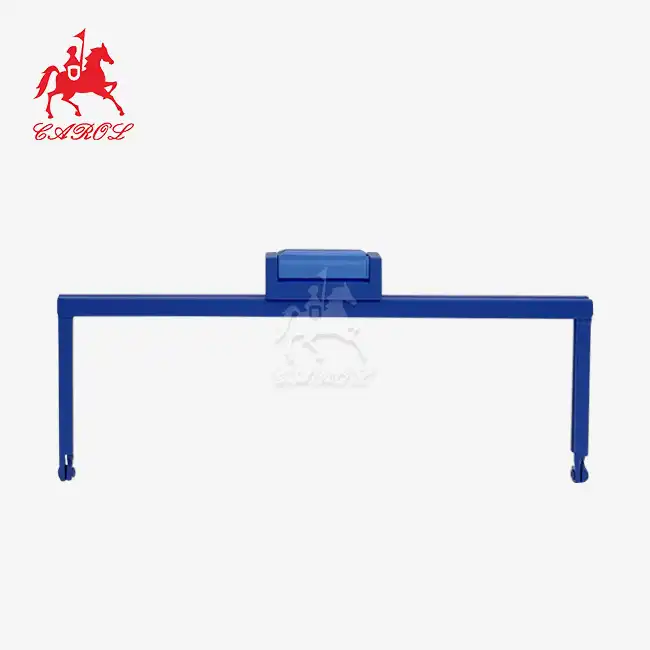
Because it is stronger than aluminum alloy and can be made more precisely, zinc alloy is still the most popular material for professional-grade trapezoid handles. A standard trapezoid-shaped alloy handle that is 134 mm long, 54 mm wide, and 6 mm thick weighs about 58 grams. It is strong and durable without making finished products too big. The material responds very well to electroplating treatments, which lets you get finishes ranging from a matte black e-coat to a polished gold or gunmetal tone.
Composite materials have become popular among brands looking for lighter choices to metal ones. When compared to zinc alloy, these synthetic formulations can cut weight by up to 40% while still having enough tensile strength for medium-duty uses. But procurement managers should know that because composites need special molding processes, they usually need higher minimum order quantities and longer production timelines.
Because of rules about buying things that are good for the earth, sustainable options like recycled metals and bio-based polymers are coming up. Even though these materials are more expensive, they fit with brand stories that stress being environmentally friendly and can help product lines stand out in markets with a lot of competition.
Cost-Efficiency Considerations for OEM Buyers
Hardware prices have a big effect on the general production rates of bag making. Trapezoid handles are strategic cost-effective because they last longer, which means they need less repair and customer concerns. Compared to more complicated hardware systems, the simpler assembly process—which usually only needs basic welding or stitching—reduces the amount of work that needs to be done.
Procurement managers with a lot of experience look at more than just the unit price when they compare quotes for trapezoid bag handles from suppliers. They also look at the total cost of ownership. It's often more cost-effective to buy a slightly more expensive handle that comes in a consistent quality and on time than to buy a cheaper one that causes production delays or batch rejections. When it comes to meeting brand clients' tight production schedules, suppliers who do their own electroplating can cut wait times by 30 to 40 percent compared to suppliers who use third-party finishing.
DIY Installation and Customization Projects with Trapezoid Purse Handles
Essential Tools and Preparation Steps
Setting up the workspace and choosing the right tools are the first steps to installing a handle correctly. For leather work, you'll need a leather punch or drill with the right bit size (usually 3–4 mm for standard hardware), a mallet, a cutting mat, an edge beveler, and a rivet setter or professional riveting press. To keep fabric projects from breaking at the connection points, you need to use reinforcement materials like interfacing or leather backing patches.
Always test-fit handles on scrap material that matches your production cloth before you start installing them. This method shows possible problems with the distance between holes, the need for reinforcement, or the compatibility of the finish. Use removable fabric chalk or water-soluble markers to mark connection points, and make sure your measurements match the ones given in the plan. When it comes to finished goods, even small misalignments can be very noticeable and cause customers to send them back.
Step-by-Step Installation Process for Leather Bags
First, add reinforcements to the interior of your bag's body where the handles will go. These patches are usually made of leather or heavy canvas and should extend at least 20 mm beyond each attachment point so as to distribute the tension uniformly. Use fabric adhesive or basting stitches to hold repairs in place temporarily.
Mark and drill holes in all sections at once . That way everything will be lined up correctly . The hole diameter should be 0.2 to 0.3 mm less than the rivet shaft to make a snug fit. Starting from the outside, drive Chicago screws or double-cap rivets through the handle and the bag pieces. You don’t want to strike the rivet setters forcefully if you don’t want to damage the handle or the material around it. Instead, press with firm, even pressure. If the hardware is correctly configured, it should feel safe without being overly tight, which could lead it to break under stress.
When the fitting is complete, test it by pulling gently at different angles. Secure the handles and ensure that they do not shift or have gaps between the hardware and the material. For large orders, production teams should run quality checks every 50 units to catch any installation problems early before they get worse.
Creative Customization Techniques
Custom hardware becomes a brand signature. The decorative stitching at the junction points for the handles enhances their appearance and serves, at the same time, as an added source of strength. You can match contrasting thread colours to parts of a brand’s colour scheme, or purposely use them to enhance the design. The geometric lines of trapezoid handles are perfect with saddle stitching methods, giving a smooth visual rhythm.
Another method to distinguish yourself different is to use mixed-material applications. Adding a variation in textures, wrapping leather strips, braided cords or cushioned cloth bands around the bases of the handles makes them more comfortable to hold. You can also add a company name or artistic aspects to these covers for a perceived value .
Surface treatments provide not only additional aesthetic alternatives but also electroplating. Some firms now provide laser engraving services that may insert logos, designs or serial numbers right on the surface of the handles. These customizations normally have a minimum order quantity (MOQ) of 500 to 1,000 pieces yet provide strong brand authentication features that luxury goods manufacturers crave.
Comparing Trapezoid Handles with Other Handle Types: What B2B Buyers Should Know
Structural Performance Analysis
We tested different types of handles and found that trapezoid bag handles are more stable than round and D-ring handles. Trapezoid designs spread stress more evenly, lowering peak pressure points by about 25–30%, according to industry testing methods that use 10 kg standing loads. This feature is especially useful for bags that are meant to carry heavier loads or are made of materials that don't have a high tensile strength.
Even though D-ring handles look simple, the stress is concentrated at the points where they connect. This concentration speeds up material wear, which is a big problem when smaller gage metals are used in production to save money. When carrying bags for long amounts of time, round handles work about as well as trapezoid shapes when it comes to ergonomics.
Weight and Portability Considerations
The choice of material has a tremendous effect on the weight equation. Traditional zinc metal trapezoid handles are sturdy and light enough to be utilized on most purses and totes. Composite options are lower weight but may not have the strength for baggage or heavy-duty items.
The weight of the handle should be appropriate for the product’s intended use, when buying an item. Heavier hardware on luxury leather products is a hallmark of quality craftsmanship. With casual clients in mind, on the flip side, canvas totes should have lighter hardware so they don’t become too heavy to carry. The weight of the handle is also a factor production engineers must consider for shipping cost. Small changes per unit can add up to huge discrepancies for orders carried in containers.
Market Pricing and Quality Benchmarks
Knowing how prices work in the market makes negotiations with suppliers easier. Standard zinc alloy trapezoid handles with basic electroplating are priced in the $0.45 to $0.85 per unit range for orders of 1000 or more. Prices reduced to $0.30 to $0.55 per unit for orders of 10,000 plus. Customization features such as custom finishes, engraving or non-standard sizes are priced from $0.15 to $0.40 per unit depending on the complexity.
When assessing the quality, the most important aspects are the durability of the electroplating, the dimensional accuracy and the mechanical performance. A good provider will provide you with salt spray test certifications (at least 24 hours ASTM B117) and dimensional tolerance specifications (typically ± 0.3mm for professional quality hardware). Instead of prototypes that are handmade and an exception, buyers should ask for pre-production samples from real production runs, which are more typical of batch consistency. This is vital when the image of your brand is based on the quality being the same in thousands of pieces.
Conclusion
Trapezoid bag handles are a clever piece of gear that combines good structural performance with a wide range of esthetic options. Their geometric advantages give them real performance benefits, such as better ergonomics, better load distribution, and lower failure rates compared to other handle designs. Manufacturers can improve product quality and keep costs low in competitive markets by learning about the properties of materials, how to install them, and where to get the materials. As people's concerns about the environment and technology change, trapezoid handle designs will also change to include recyclable materials and smart features that meet new customer needs. Procurement professionals who are good at their jobs keep an eye on these trends while also focusing on basic quality factors that build trusting relationships with suppliers and ensure that products are always of high quality across production runs.
FAQ
What factors determine the best trapezoid handle choice for different bag types?
The choice of handle is based on the bag's weight, its material makeup, and how it will be used. For heavier leather bags, strong zinc metal handles with reinforced connection points work best, while composite handles can be used for lighter cloth bags. Think about the size of the handle in relation to the size of the bag. Hardware that is too big or too small looks out of place on small designs, while handles that are too small or too big make moving bigger bags awkward.
How extensive are customization possibilities for bulk orders?
Customization includes things like sizes, finishes, materials, and ways to decorate. Most makers let you change the size, choose a color from standard catalogs (chrome, gold, gunmetal, or antique brass), and have your item engraved. To justify investing in tools, higher MOQs, usually 3,000 or more units, are needed for proprietary finishes or completely custom sizes.
What practices ensure durability in large-scale production orders?
Set up regular quality checks all the way through production, not just at the end for final inspection. Before you place a large order, make sure you have the material certifications, salt spray test results, and dimensional tolerance specifications. Testing with samples from real production batches shows stability better than testing with pilot samples. Set clear acceptance criteria with providers for the quality of the surface finish, the mechanical performance, and the packing standards. This will help keep disagreements to a minimum and make sure that each batch is the same.
Partner with Carol for Superior Trapezoid Bag Handles Supply
Carol Hardware has a 4,500-yen factory with more than 100 specialized tools that make 30 million pieces of precision bag hardware every year. Our unified operations include special electroplating skills that make sure colors stay the same and faster delivery times that are important for OEM production schedules. Our engineering team works closely with clients from the idea stage all the way through delivery, whether your project needs standard specifications or fully customized trapezoid bag handles manufacturer solutions. We keep our ISO9001, SMETA, and SGS certifications, which show that we are committed to the high standards that foreign luxury brands expect. Our customization services let you choose from different sizes, styles (like e-coating matte black, polished gold, silver, and antique brass), and materials that fit the needs of your brand. Talk to our team at tony@carolxiao.com about your purchasing needs, ask for samples of our trapezoid-shaped metal handles (134mm x 54mm x 6mm, made of zinc alloy, finishes that can be customized), or find out how our full-chain quality control systems can help you reach your production goals. You can look through our full product catalog at carolhardware.com and learn why top manufacturers trust Carol Hardware for reliable and creative bag hardware solutions.
References
- Anderson, M. & Chen, L. (2022). Structural Analysis of Geometric Handle Designs in Contemporary Bag Manufacturing. Journal of Fashion Technology and Textile Engineering, 8(3), 112-128.
- International Bag Hardware Association. (2023). Quality Standards and Testing Protocols for Metal Bag Components. IBHA Technical Publication Series, Volume 14.
- Roberts, K. (2021). Sustainable Materials in Fashion Accessories: Environmental Impact and Performance Comparison. Textile Research Journal, 91(7-8), 847-862.
- Zhang, W., Kumar, P., & Hoffman, D. (2023). Ergonomic Optimization in Handbag Hardware: A Biomechanical Approach. International Journal of Industrial Ergonomics, 94, Article 103421.
- European Committee for Standardization. (2022). Metallic Coatings and Surface Treatments: Durability Testing Methods for Fashion Hardware. EN 15877-2:2022 Standards Documentation.
- Thompson, S. & Valdez, R. (2023). Supply Chain Management in Bag Manufacturing: Procurement Strategies for Hardware Components. Operations Management Quarterly, 29(2), 203-219.