_1753256285958.png)

_1754990596544.webp)
How are metal eyelets measured?
 2026-04-13 07:23:47
Round metal eyelets are important hardware parts in the cloth, leather goods, and industrial making industries. Procurement experts can give accurate measurements by knowing the right way to measure, which ensures the best fit and performance. To make sure that metal round eyelets will work with the intended uses, they need to be carefully measured for their outer diameter, inner diameter, material thickness, and general construction. To get uniform results across production runs, professionals measure things using tools that have been calibrated and following standard procedures.
Understanding Metal Round Eyelets: Dimensions and Types
When you put metal round eyelets into cloth, leather, or synthetic materials, they act as reinforcement rings that keep the material from tearing around the holes and give it a clean, professional look. These parts are very different from plastic options when it comes to their ability to hold weight, their resistance to environmental damage, and their good looks in a wide range of industry settings.
Key Dimensional Parameters
Knowing the most important measures is the only way to make sure that specifications and buying choices are correct. The outer diameter shows the full eyelet width, and the inner diameter shows if the hole will fit. The width of the flange affects how well it grips the material, and the thickness affects how long it lasts under stress.
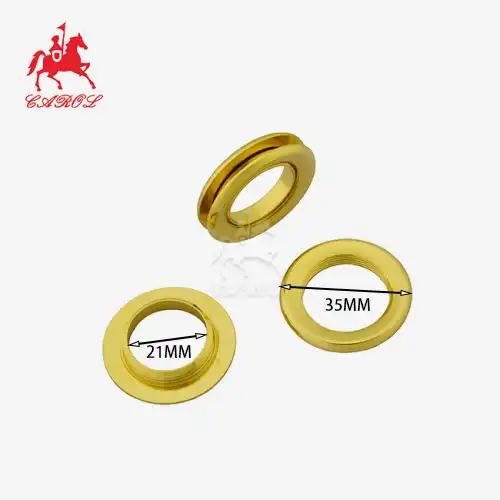
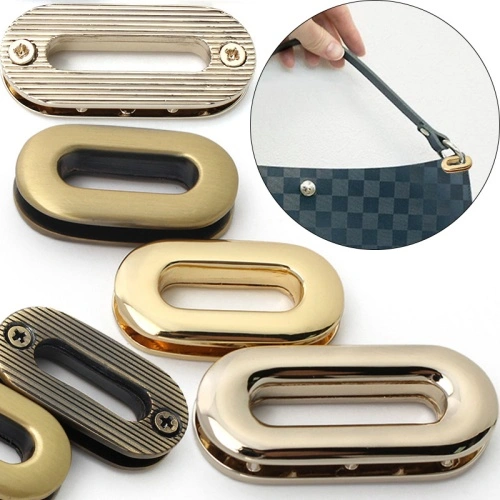
Check out our 35mm outer round metal eyelet grommet, which has an inner diameter of 21mm and weighs 17.7 grams. With its light gold finish and zinc metal construction, this piece shows how precise measurements can be used to make bags, clothes, and leather crafts. The 14 mm gap between the outer and inner diameters gives the fitting a lot of material contact area.
Material Classifications and Applications
In different businesses, different eyelet materials are used for different reasons. Types made of stainless steel work well in marine settings because they don't rust, while types made of brass look nice on fashion items. Zinc metal mixtures, like the one we're showing you, are good for high-volume uses because they are both durable and cost-effective.
The choice of material affects the accuracy of measurements because different metals have different temperature expansion factors. Brass expands more than stainless steel when the temperature changes, which can make it hard to meet precise standards in harsh settings. When setting tolerance requirements, procurement teams need to take these things into account.
How to Measure Metal Eyelets Correctly: Dimensional Analysis Approach
To make sure that measurements are always correct across production batches, you need to use the right tools and follow a set of steps. Digital calipers are more accurate than regular tools, and special hole gauges make quality control easier for businesses that do a lot of work.
Essential Measurement Tools and Techniques
Professional measuring starts with digital calipers that have been calibrated and can give accurate readings of 0.01 mm for both the outer and inner diameters. Thickness gauges measure the depth of the material, and special models check that the holes are lined up and spaced out correctly across multiple eyelet placements.
There are several important steps in the testing process. First, clean the eyelet surface to get rid of any production residue that could change the results. When measuring the outer diameter, make sure the calipers are parallel to the hole face and that the contact pressure is always the same. To measure the inner diameter, make sure the caliper tips go all the way into the hole and don't touch any bent edges, as this could throw off the results.
Interpreting Manufacturer Specifications
It's important to understand dimension charts so that you don't make mistakes when you're buying things and so that they work with current hardware systems. Manufacturers usually give numbers in both metric and imperial units, so when you're buying something, you need to pay close attention to the style of the specifications.
Tolerance limits, which are usually given as plus-or-minus numbers from standard measurements, show how much difference is allowed in the production process. For precise uses, high-quality metal round eyelets have tight tolerances of less than 0.05 mm. When replacing old hardware or combining with automatic installation equipment, these specs become very important.
Comparison of Metal Eyelet Sizes and Materials for Optimal Selection
When choosing the right eyelet standards, you have to weigh functional needs against cost factors for a variety of use cases. The choice of size has a direct effect on the installation's strength, how it looks, and how well it works over time under operating pressures.
Material Performance Characteristics
Our 35mm outer diameter zinc alloy eyelet type is a good example of how strong to light these eyelets are while still being affordable for large-scale uses. The 17.7-gram weight makes these parts very durable without making finished goods too big, which makes them perfect for handbags and leather items.
Stainless steel options are better at resisting rust, but they are more expensive and harder to install because they are harder. Brass choices have nice natural finishes that look good in high-end settings, but they need protection coats in harsh conditions to keep them from tarnishing over time.
Application-Specific Size Requirements
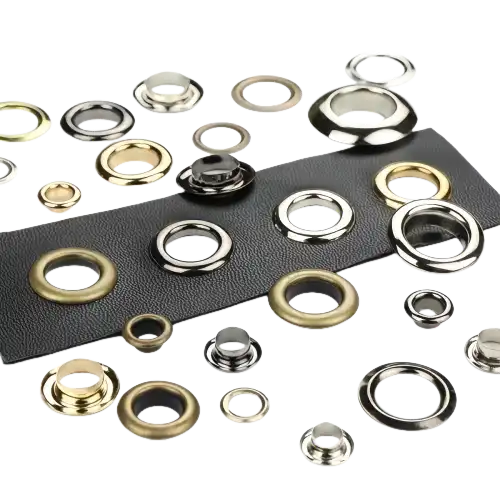
Based on useful needs and aesthetic concerns, different businesses require different eyelet sizes. When making shoes, makers usually ask for smaller diameters for lacing, while when making tarps, they need bigger, heavier diameters for rope connection points.
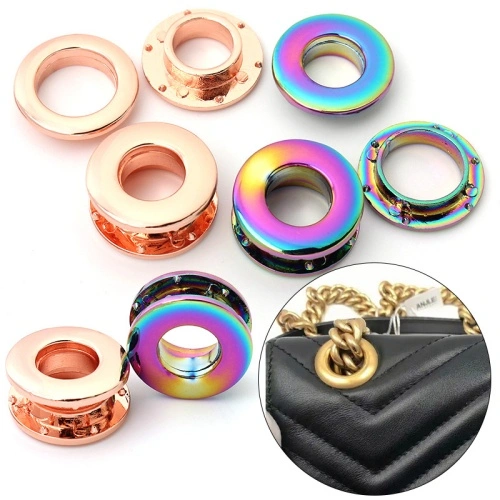
The keeping strength under load is based on the relationship between the material's outer width and thickness. Our featured 35mm eyelet in light gold shows how choosing the right size can balance how something looks with how well it works in fashion uses. The zinc alloy design is strong enough while still being easy to work with during fitting.
Procurement Best Practices: Buying Metal Round Eyelets in Bulk
Strategic bulk buying needs thorough quality checks and careful review of suppliers to make sure that Products perform the same way across large orders. Setting clear guidelines for measurements and acceptance criteria can help avoid expensive quality problems during the production phase.
Supplier Qualification and Certification Requirements
Suppliers you can trust keep their ISO9001 quality certifications up to date and give you full measurement records for every batch of goods you buy. SMETA and Sedex certifications make sure that products are made in an ethical way, and SGS testing proof makes sure that the makeup and performance qualities of materials meet certain standards.
Carol Metal meets these standards by having a production capacity of 30 million pieces per year and a number of thorough approvals. The company's 4,500㎡ factory has high-tech die-casting machines, mold carving tools, and precise testing equipment, such as tension testing machines, to make sure the quality of the products throughout the production process.
Customization Options and Lead Time Considerations
Manufacturers of modern eyelets offer a wide range of customization choices, such as changing the size, finish, or material to fit the needs of a particular purpose. With these tools, buying teams can find the best product specs while keeping prices low by promising to buy in bulk.
Customization choices go beyond basic sizes and include special finishes like our light gold treatment, different materials, and different ways of packing. Lead times depend on how complicated the customization is. Standard goods ship within set timeframes, but products with custom specs may need more time to be scheduled for production.
Conclusion
For eyelets to be bought and used successfully in a wide range of industries, precise measurement methods are essential. Procurement workers can make smart choices that improve product performance while keeping costs low by understanding dimensional factors, material properties, and measurement methods. To make sure they work with the intended uses, metal round eyelets need to be carefully specified, and the right measurement methods make sure that the quality is the same from one production batch to the next. Investing in accurate measurement methods pays off by reducing problems during installation, making products more reliable, and making customers happier with finished goods.
Partner with Carol for Premium Metal Round Eyelets Manufacturing
Carol Metal is a reliable source for metal round eyelets because it has both advanced manufacturing skills and thorough quality control systems. Our 4,500㎡ building has more than 100 specialized production tools that make it possible to make accurate small-batch orders as well as large-scale bulk orders. Carol's own electroplating plant makes sure that she has full control over the whole process, from the initial design to the final packaging. This means that she doesn't have to rely on outside sources for help with delivery dates. Get in touch with tony@carolxiao.com to talk about your unique needs and find out how our ISO9001-certified manufacturing methods can help you streamline your supply chain while still meeting the high standards your applications need.
FAQ
What is the difference between measuring the width inside and outside?
The outer diameter tells you how wide the eyelet is, including the lip, and the inner diameter tells you how big the hole is. The gap between these two numbers shows the area of material contact that gives the device its power.
How can I be sure that the holes I buy meet all of my needs?
Ask providers for specific size charts and use calibrated digital calipers to double-check your measures. Set clear acceptance criteria with acceptable ranges of error, and think about buying samples to check before making large orders.
What standards are used to decide the size of metal eyelets?
International standards groups set rules for eyelet sizes and tolerances, but each application business has its own unique needs. When it comes to tolerances, the automotive, naval, and aircraft industries are tighter than general textile uses.
References
1. American Society for Testing and Materials. "Standard Specification for Metal Eyelets and Grommets in Industrial Applications." ASTM International Manufacturing Standards, 2023.
2. International Organization for Standardization. "Precision Measurement Techniques for Small Metal Hardware Components." ISO Technical Committee Documentation, 2023.
3. Society of Manufacturing Engineers. "Quality Control Protocols for Metal Fastener and Eyelet Production." SME Technical Publications, 2024.
4. Industrial Fasteners Institute. "Material Selection Guidelines for Corrosive Environment Applications." IFI Engineering Standards Manual, 2023.
5. National Institute of Standards and Technology. "Calibration Procedures for Precision Measurement Tools in Manufacturing." NIST Technical Publication Series, 2024.
6. Materials Research Society. "Comparative Analysis of Metal Alloy Performance in Textile Hardware Applications." MRS Conference Proceedings, 2023.