_1753256285958.png)

_1754990596544.webp)
Import Guide for Metal Eyelets from China
 2026-03-23 21:36:24
Strategic preparation and a deep comprehension of quality requirements, supplier assessment, and import processes are necessary when sourcing metal round eyelets from China. From the first source investigation to the last customs clearance, this thorough handbook takes you step-by-step through the whole import procedure. For metal eyelet hardware used in the luxury fashion, leather goods, and gift sectors, Chinese producers provide outstanding value via their sophisticated manufacturing capabilities, affordable prices, and wide range of customization choices.
Why Source Metal Round Eyelets from China?
Manufacturing Excellence and Scale
China's enormous manufacturing capacity and technical advancements have allowed it to dominate the global metal hardware industry. Prominent producers like as Carol Metal run 4,500□ facilities with more than 100 specialized equipment, producing 30 million pieces a year. Both modest trial orders and large-scale bulk needs may be handled effectively with this scale.
The integrated production approach sets Chinese suppliers apart. Complete in-house capabilities span design consultation, precision manufacturing, electroplating finishing, and rigorous quality inspection. This vertical integration eliminates external dependencies while ensuring consistent quality control throughout the entire production cycle.

Advanced Technical Infrastructure
Chinese metal eyelet manufacturers invest heavily in cutting-edge equipment including die-casting machines, CNC milling systems, and precision testing instruments. Facilities feature specialized tools like tensile testing machines, impact resistance analyzers, and durability assessment equipment. These technological investments translate into superior product precision and reliability for metal round eyelets.
Surface treatment capabilities represent another key advantage. Independent electroplating factories within manufacturing complexes enable custom finishing options for metal round eyelets including light gold, antique brass, nickel, and specialized coatings. This flexibility supports brand alignment requirements for luxury fashion applications.
Cost Structure Transparency
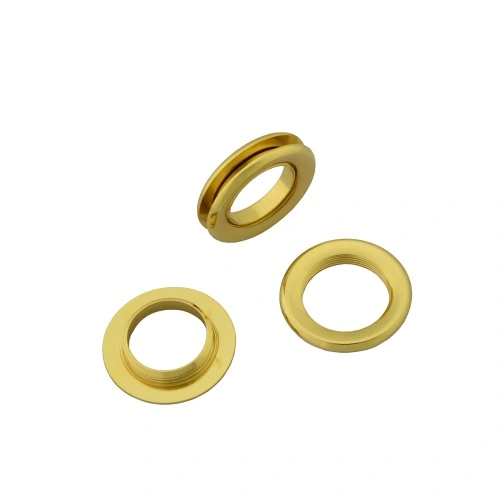
Chinese manufacturing offers competitive pricing through optimized production processes and efficient resource utilization. The 35mm outer round alloy eyelet grommet exemplifies this value proposition - featuring 21mm inner diameter, 17.7-gram weight, and premium light gold finishing at accessible price points.
Material selection flexibility further enhances cost efficiency. Zinc alloy compositions provide excellent durability while maintaining reasonable pricing. Alternative materials including brass, stainless steel, and aluminum accommodate different budget requirements without compromising functionality.
Critical Technical Specifications for Quality Assurance
Material Standards and Performance Metrics
Certain material compositions are necessary for premium metal round eyelets to guarantee performance and lifespan. Strength, resistance to corrosion, and production efficiency are all well balanced by zinc alloy. Top-notch vendors provide comprehensive material certifications that include mechanical property test results and chemical composition analyses.

Dimensional tolerances, corrosion resistance levels, and tensile strength ratings are important performance requirements. Professional-grade eyelets sustain loads exceeding 50 kg of tensile strain while maintaining ±0.05mm dimensional precision. In demanding applications, these parameters have a direct influence on product dependability.
Surface Finishing Quality Parameters
Electroplating quality significantly influences both the aesthetics and the durability of metal round eyelets. Premium finishes achieve uniform coating thickness between 8-12 microns with consistent color matching across production batches. Advanced plating processes incorporate multiple preparatory stages including degreasing, acid cleaning, and activation treatments.
Salt spray testing, adhesion assessment, and color fastness verification are all part of quality assessment. Reputable vendors demonstrate corrosion resistance appropriate for high-end fashion applications via 48-hour salt spray testing. When a product is properly finished, its longevity is increased and its aesthetic appeal is preserved throughout time.
Dimensional Accuracy and Tolerances
Consistent fit and operation across many applications are guaranteed by precision manufacturing. Depending on the intricacy of the feature, standard dimensional tolerances for metal eyelet components usually fall between ±0.05mm and ±0.1mm. Flange thickness, outer and inner diameters, and total height measures are critical characteristics.
Measurement verification utilizes calibrated equipment including digital calipers, height gauges, and coordinate measuring machines. Batch sampling protocols ensure statistical quality control with documented measurement records for traceability purposes.
Navigating Import Regulations and Compliance Requirements
International Certification Standards
Metal hardware imports require compliance with multiple international standards depending on destination markets. ISO9001 certification demonstrates quality management system effectiveness while SGS testing validates material safety and performance characteristics. European markets additionally require REACH compliance documentation for chemical substance regulations.
For initiatives that use sustainable procurement, environmental certifications are becoming more important. SMETA and Sedex audits validate ethical manufacturing practices, including worker safety, environmental protection, and fair labor standards. These certifications support corporate responsibility objectives while ensuring regulatory compliance.
Documentation Requirements and Procedures
Full import documentation packages include certificates of origin, bills of lading, packing lists, commercial invoices, and metal round eyelets. Each document provides special customs clearance capabilities, legal protection, and freight traceability.
Product-specific documentation includes material safety data sheets, quality test results, and compliance certificates. Comprehensive product specifications that include dimensions, materials, and intended applications facilitate duty assessment and customs classification procedures.
Customs Classification and Duty Implications
HS codes 8308.20 for metal fasteners and 8308.90 for other metal hardware accessories are often used for metal eyelet items. Duty rates, import limitations, and paperwork requirements are all impacted by proper categorization. Accurate categorization and adherence to destination country rules are guaranteed by consultation with customs brokers.
Between nations and trade agreements, duty rates vary greatly. Duties for qualified goods and sources may be lowered or eliminated under preferential trade schemes. Comprehending these ramifications facilitates precise expense estimations and competitive price tactics.
Essential Import Process Steps
Supplier Identification and Evaluation
Effective supplier research begins with comprehensive background verification including business licenses, production capabilities, and quality certifications. Factory audits reveal actual production conditions, equipment status, and quality control procedures. Virtual facility tours provide initial assessments before committing to detailed evaluations.
Reference checks with existing customers offer insights into supplier reliability, communication effectiveness, and problem resolution capabilities. Long-term partnerships require suppliers who demonstrate consistent quality, delivery performance, and responsive customer service.
Sample Evaluation and Testing Protocols
Sample requests have to include comprehensive specifications that include things like materials, finishes, measurements, and performance standards. Dimensional accuracy, material characteristics, surface quality, and functional testing are all covered in a thorough sample review. Crucial requirements are objectively verified by independent testing facilities.
Tensile strength examination, corrosion resistance assessment, durability analysis, and testing of metal round eyelets are all included in testing methods. Comparing the results to predetermined benchmarks guarantees that samples fulfill performance standards and application requirements
Quotation Analysis and Cost Breakdown
Expert quotes break down the costs of materials, production, finishing, packing, and shipping. Accurate total landed cost estimations and successful bargaining tactics are made possible by an understanding of cost structures.
Price comparisons require standardized specifications and quantities for meaningful evaluation. Hidden costs including tooling charges, setup fees, and minimum order penalties significantly impact total procurement expenses.
Contract Terms and Payment Structures
Comprehensive contracts specify product specifications, quality standards, delivery schedules, and payment terms. Clear performance criteria and acceptance procedures prevent disputes while ensuring mutual understanding of expectations and obligations.
Payment structures typically involve advance deposits, production milestone payments, and final settlement upon completion. Letters of credit provide security for both parties while enabling flexible payment scheduling aligned with production progress.
Trade Terms and Risk Management
Understanding International Commercial Terms
FOB (Free on Board) terms require buyers to arrange international shipping while sellers handle export clearance and delivery to departure ports. This arrangement provides shipping control but increases logistical complexity for international buyers.
CIF (Cost, Insurance, Freight) terms include shipping and insurance in quoted prices, simplifying procurement for buyers while transferring logistics responsibility to sellers. EXW (Ex Works) terms minimize seller obligations but require buyers to manage complete logistics chains including export procedures.
Risk Transfer Points and Responsibilities
Risk transfer occurs at specific points depending on chosen trade terms. FOB terms transfer responsibility when goods cross ship rails at departure ports. CIF arrangements maintain seller responsibility until destination port delivery. Understanding these distinctions prevents disputes and ensures appropriate insurance coverage.
Documentation requirements vary according to trade terms and risk responsibilities. Buyers must understand their obligations for customs clearance, import documentation, and local delivery arrangements under different commercial terms.
Insurance and Quality Protection
Comprehensive insurance coverage protects against transit damage, delays, and quality issues. Marine cargo insurance typically covers physical loss or damage during international shipment. Product liability insurance addresses quality-related claims and customer damages.
Quality protection mechanisms include inspection rights, warranty provisions, and remedy procedures for non-conforming Products. Escrow payment systems provide additional security by releasing payments only upon satisfactory delivery confirmation.
Supply Chain Reliability and Lead Time Management
Production Planning and Capacity Assessment
Effective production planning requires understanding supplier capacity constraints, equipment availability, and scheduling flexibility. Peak season demand periods may extend lead times or require advance booking commitments. Capacity assessment helps establish realistic delivery expectations and contingency planning.
Production monitoring systems provide real-time updates on manufacturing progress, quality checkpoints, and potential delivery adjustments. Regular communication maintains visibility throughout production cycles while enabling proactive issue resolution.
Logistics Infrastructure and Shipping Options
Chinese manufacturing centers benefit from world-class port facilities and efficient logistics networks. Major shipping ports including Shanghai, Shenzhen, and Ningbo offer frequent sailing schedules and competitive freight rates to global destinations.
Shipping mode selection balances cost and speed requirements. Ocean freight provides economical solutions for large volumes while air freight enables rapid delivery for urgent requirements. Metal round eyelets consolidated shipping services offer middle-ground options combining reasonable costs with acceptable transit times.
Quality Control and Inspection Procedures
Pre-shipment inspection protocols verify product compliance before departure, preventing costly returns and delivery delays. Professional inspection services conduct dimensional verification, material testing, and functional evaluation according to agreed specifications.
Quality documentation packages accompany shipments providing traceability and compliance evidence. Test reports, inspection certificates, and conformance declarations support customs clearance while demonstrating due diligence in quality assurance.
Communication Excellence and Business Relationships
Language and Cultural Considerations
Effective communication bridges language barriers through clear specifications, detailed drawings, and standardized terminology. Technical discussions benefit from visual aids including product samples, dimensional drawings, and reference standards.
Cultural awareness enhances business relationships and negotiation effectiveness. Understanding Chinese business practices, decision-making processes, and relationship-building customs facilitates smoother collaboration and long-term partnerships.
Technology Platforms and Collaboration Tools
Modern communication platforms enable real-time collaboration including video conferences, shared documentation systems, and project management tools. These technologies maintain constant connectivity while supporting complex technical discussions and design iterations.
Digital sample approval processes accelerate development timelines through electronic communication and documentation. Secure file sharing systems protect intellectual property while enabling efficient design collaboration and specification development.
Relationship Building and Long-term Partnerships
Successful sourcing relationships develop through consistent communication, mutual respect, and shared objectives. Regular factory visits strengthen relationships while providing ongoing insight into supplier capabilities and improvement initiatives.
Long-term partnerships enable deeper collaboration including joint product development, exclusive arrangements, and strategic planning coordination. These relationships often yield preferential pricing, priority production scheduling, and enhanced service levels.
Conclusion
Importing metal round eyelets from China offers exceptional opportunities for quality hardware procurement at competitive prices. Success requires thorough supplier evaluation, comprehensive understanding of technical specifications, and careful attention to regulatory compliance. The integrated approach combining advanced manufacturing capabilities, rigorous quality control, and responsive customer service creates optimal sourcing partnerships. Chinese manufacturers continue investing in technology, certifications, and process improvements to meet evolving global market demands while maintaining cost competitiveness.
Partner with Carol Metal for Premium Eyelet Hardware Solutions
Carol Metal delivers unmatched expertise in metal round eyelets manufacturing with comprehensive capabilities spanning design consultation through final delivery. Our 4,500㎡ facility features advanced die-casting equipment, precision testing instruments, and independent electroplating operations ensuring superior quality control. With 30 million piece annual capacity and ISO9001, SGS, SMETA certifications, we serve luxury fashion brands, leather goods manufacturers, and gift companies worldwide. Our customization expertise accommodates unique specifications while maintaining cost efficiency through integrated production processes. Contact tony@carolxiao.com to discuss your metal round eyelets supplier requirements and discover why leading brands choose Carol Metal for reliable hardware solutions.
FAQs
1. What minimum order quantities apply for custom metal eyelets?
Minimum order quantities vary by supplier and customization complexity. Standard products often require 1,000-5,000 piece minimums while custom designs may need 10,000+ pieces to justify tooling costs. Sample orders typically accommodate smaller quantities for evaluation purposes.
2. How long does typical production take for metal eyelet orders?
Standard lead times range from 15-30 days depending on order complexity and quantity. Custom tooling adds 7-15 days for initial setup. Rush orders may be accommodated with premium pricing and advance scheduling coordination.
3. What quality certifications should suppliers provide?
Essential certifications include ISO9001 for quality management, SGS testing for material verification, and REACH compliance for European markets. Additional certifications like SMETA and Sedex demonstrate ethical manufacturing practices important for corporate responsibility programs.
4. How can I verify supplier manufacturing capabilities?
Factory audits provide comprehensive capability assessment including equipment verification, process review, and quality system evaluation. Virtual tours offer preliminary insights while reference checks with existing customers reveal actual performance history and service quality.
5. What payment terms are typically acceptable?
Standard payment structures include 30% advance deposits with 70% balance upon completion. Letters of credit provide security for larger orders while T/T transfers offer simplicity for established relationships. Payment terms often improve with order volume and relationship history.
References
1. International Trade Centre. "Market Analysis: Metal Hardware Components in Global Fashion Industry." Geneva: ITC Publications, 2023.
2. Zhang, Wei, and Liu, Ming. "Quality Control Standards for Metal Fasteners in Textile Applications." Journal of Manufacturing Technology, vol. 45, no. 3, 2023, pp. 127-142.
3. European Committee for Standardization. "EN 14582: Metal Accessories for Leather Goods - Safety and Performance Requirements." Brussels: CEN Publishing, 2022.
4. American Society for Testing and Materials. "ASTM B117-19: Standard Practice for Operating Salt Spray Testing Apparatus." West Conshohocken: ASTM International, 2019.
5. World Customs Organization. "Harmonized System Classification Guide for Metal Hardware Accessories." Brussels: WCO Publications, 2023.
6. Smith, Robert J. "Supply Chain Management in Asian Manufacturing: Best Practices for International Procurement." New York: Industrial Press, 2022.