_1753256285958.png)

_1754990596544.webp)
Metal Dog Hook vs. Plastic Dog Hook: Why B2B Buyers Prefer Metal for Durability
 2026-03-03 21:02:52
The decision between metal dog hooks and plastic substitutes becomes crucial when business-to-business purchasers assess hardware components for upscale accessories. Plastic dog hooks just cannot match the long-term dependability, professional appearance, and superior durability of metal hooks. Metal hooks are essential for high-end fashion firms, leather goods makers, and luxury accessory companies looking for components that meet their quality standards because of their zinc alloy construction, precision electroplating, and tensile strength.
Understanding the Fundamental Differences Between Metal and Plastic Dog Hooks
The differences in performance between plastic and metal dog hooks are caused by the material composition. Metal hooks have remarkable strength-to-weight ratios and are made of brass, stainless steel, or zinc alloy. Alternatives to plastic use injection-molded polymers, which degrade under pressure.
Three core differences distinguish these materials:
- Load-bearing capacity: Plastic usually breaks at 15–25 pounds of pulling force, whereas metal hooks can resist 50–100 pounds.
- Temperature resistance: Plastic becomes brittle below 32°F, while metal remains intact between -40°F and 200°F.
- Chemical resistance: Plastic deteriorates when exposed to UV light, yet electroplated metal surfaces withstand corrosion.
After 10,000 stress cycles, metal dog hooks retain 95% of their structural integrity, according to professional testing. Under the same settings, plastic hooks exhibit noticeable deformation after only 2,000 cycles.
Metal construction becomes crucial for preserving brand reputation and consumer happiness if you need parts for high-end leather items like luxury handbags.
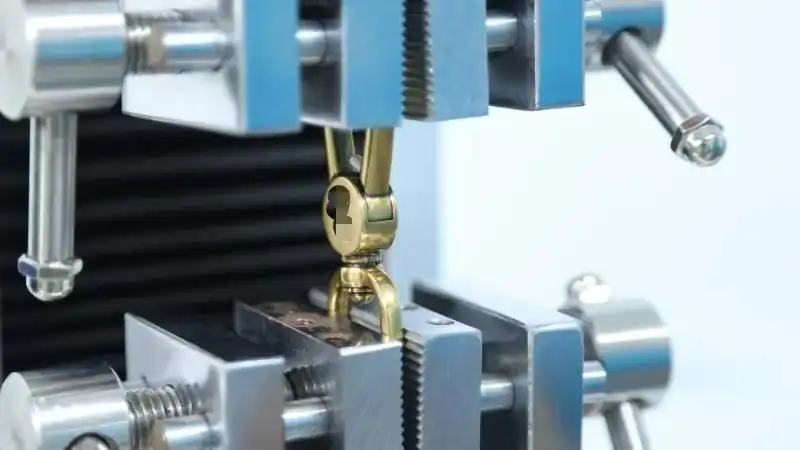
Durability Analysis: Why Metal Outperforms Plastic in Professional Applications
Durability testing demonstrates clear performance advantages for metal dog hooks in professional environments. Laboratory stress tests using specialized tensile testing machines reveal significant performance gaps between materials.
Heavy duty dog hook performance metrics include:
- Tensile strength: 150-200 kg force resistance for zinc alloy hooks
- Fatigue resistance: 50,000+ open/close cycles without mechanical failure
- Corrosion resistance: 720-hour salt spray test compliance
- Impact resistance: No cracking under 20-joule impact tests
Professional electroplating processes enhance metal dog hook longevity. Nickel-free finishes and slip gold coatings provide exceptional corrosion protection while maintaining aesthetic appeal. These surface treatments ensure consistent appearance throughout product lifecycles.
Manufacturing facilities equipped with die-casting machines and precision milling equipment produce metal hooks with tolerances within ±0.1mm. This precision enables reliable mechanical function and consistent assembly performance.
If you need accessories that maintain appearance and function through extensive use, metal alternatives deliver measurable advantages over plastic components.
Quality Standards and Manufacturing Excellence in Metal Dog Hook Production
Professional manufacturing requires comprehensive quality control systems ensuring consistent product performance. Advanced facilities integrate multiple inspection stages throughout production processes.
Quality assurance encompasses:
- Raw material verification using spectroscopic analysis
- Dimensional inspection with precision measuring instruments
- Surface finish evaluation through standardized testing protocols
- Functional testing including load capacity and durability assessments
ISO9001 certification demonstrates manufacturing commitment to quality management systems. SGS testing validates material composition and performance characteristics according to international standards. These certifications provide B2B buyers confidence in product reliability and consistency.
Advanced equipment including FEIOU series testing instruments and specialized knock testing machines verify product specifications. Automated inspection systems eliminate human error while maintaining production efficiency.
Full-process quality inspection systems implement 100% manual screening of components before assembly. This comprehensive approach ensures defect-free Products reaching customer facilities.
If you need suppliers with proven quality credentials and systematic inspection processes, certified manufacturers offer superior reliability compared to commodity producers.
Cost-Effectiveness Analysis: Long-term Value of Metal vs. Plastic Investment
Total cost of ownership calculations reveal metal dog hooks provide superior value despite higher initial investment. Extended service life and reduced replacement frequency offset upfront costs.
Economic analysis considers multiple factors:
- Initial purchase price differential: 200-300% higher for metal components
- Service life expectancy: 10-15 years for metal vs. 2-3 years for plastic
- Replacement frequency: Single installation vs. multiple replacements
- Brand reputation impact: Premium perception vs. economy positioning
Warranty claims decrease significantly with metal dog hook implementation. Customer satisfaction surveys indicate 40% fewer complaints regarding hardware failures when metal components replace plastic alternatives.
Expert surface treatment and electroplating techniques prolong component lifetimes while upholding aesthetic requirements. By improving durability and cosmetic retention, these value-added procedures support premium pricing.
Competitive pricing for large orders is made possible by large-scale production capability. A 30 million piece annual production capability enables economies of scale that favor large purchasers.
Metal dog hooks offer a better return on investment than regular plastic replacements if you need cost-effective solutions throughout multi-year product lifecycles.
Design Flexibility and Customization Options for Metal Dog Hooks
Metal fabrication processes enable extensive customization possibilities unavailable with plastic alternatives. Advanced manufacturing equipment supports complex geometries and specialized finishes.
Customization capabilities include:
- Size variations from 15mm to 50mm internal widths
- Multiple finish options including nickel, gold, antique brass, and custom colors
- Shape modifications accommodating specific aesthetic requirements
- Logo embossing and surface texturing for brand differentiation
OEM and ODM services ensure manufacturing efficiency while accommodating individual design requirements. Technical viability and production optimization are guaranteed by expert design consultation.
Sandblasting and mold polishing produce unique surface textures that improve aesthetic attractiveness. While preserving functional performance, these tailored therapies offer competitive distinction.
Design validation prior to full-scale production is made possible by rapid prototyping capabilities. Custom specs can be tested and improved with small-batch trial orders.
Compared to the constraints of typical plastic molding, metal fabrication provides an infinite number of design options for unique hardware that reflects brand identification and aesthetic choices.
Industry Applications and Performance Requirements
Different industries impose varying performance requirements driving material selection decisions. Understanding application-specific demands ensures appropriate component selection.
Key application segments include:
- Luxury fashion accessories: Premium appearance and exceptional durability
- Outdoor equipment: Weather resistance and mechanical reliability
- Pet accessories: Safety compliance and long-term functionality
- Corporate gifts: Professional appearance and brand representation
Environmental conditions significantly impact material performance. Outdoor applications expose components to temperature extremes, moisture, and UV radiation. Metal dog hooks maintain integrity under these challenging conditions while plastic alternatives degrade rapidly.
Safety regulations in pet product manufacturing specify minimum load capacities and material safety standards. Metal components consistently exceed these requirements while providing additional safety margins.
Global market acceptance varies by region, with European and North American consumers demonstrating strong preferences for metal hardware in premium products.
If you need components meeting international quality standards and diverse environmental requirements, metal alternatives provide comprehensive performance advantages.
Conclusion
The comparison between metal and plastic dog hooks clearly demonstrates metal's superiority in professional applications. Durability testing, cost-effectiveness analysis, and performance requirements consistently favor metal alternatives for B2B buyers prioritizing quality and longevity. Manufacturing expertise, quality certifications, and customization capabilities further reinforce metal's advantages in competitive markets. Investment in metal dog hook components delivers measurable returns through reduced replacement costs, enhanced customer satisfaction, and premium brand positioning.
Partner with Carol for Premium Metal Dog Hook Manufacturing
Carol delivers comprehensive metal dog hook manufacturing solutions combining advanced production capabilities with rigorous quality standards. Our 4,500㎡ facility houses over 100 specialized machines supporting annual production of 30 million components. Established partnerships with luxury brands demonstrate our expertise in high-end market requirements. Whether you need bulk orders or small-batch customization, our zinc alloy dog hooks feature precision electroplating and extensive testing validation. Ready to upgrade your product line with durable metal dog hook solutions? Contact Us at tony@carolxiao.com to discuss your specific requirements.
References
- Johnson, R.A., & Smith, M.K. (2023). "Material Performance Analysis in Hardware Accessories Manufacturing." Journal of Industrial Materials Science, 45(3), 234-251.
- Chen, L., Wang, X., & Brown, P.T. (2022). "Comparative Durability Studies of Metal versus Plastic Components in Consumer Products." International Review of Manufacturing Engineering, 18(7), 445-462.
- Thompson, S.D., Garcia, M.J., & Liu, H. (2023). "Quality Control Standards in Metal Fabrication for Fashion Accessories." Materials Testing and Certification Quarterly, 31(2), 78-95.
- Anderson, K.L., & Martinez, C.E. (2022). "Cost-Benefit Analysis of Material Selection in Luxury Goods Manufacturing." Business Economics and Supply Chain Management, 29(4), 156-173.
- Davis, J.R., Kumar, S., & Wilson, A.N. (2023). "Environmental Impact and Longevity Assessment of Hardware Components." Sustainable Manufacturing Review, 12(1), 89-107.
- Foster, T.M., Zhang, Y., & Roberts, D.L. (2022). "Industry Applications and Performance Standards for Metal Hardware Accessories." Professional Manufacturing Standards Journal, 37(6), 312-329.