_1753256285958.png)

_1754990596544.webp)
Pear Shape VS D Shape Carabiner
 2026-05-21 10:32:43
When choosing between pear shape and D shape carabiners, the D-shaped carabiner hook emerges as the superior choice for most applications due to its optimized geometry and enhanced load distribution. While pear shape carabiners offer larger gate openings suitable for complex rigging scenarios, D shape carabiners provide superior strength-to-weight ratios and more efficient stress distribution along their spine. The asymmetrical design of D shape variants concentrates loads toward the strongest part of the carabiner, making them ideal for climbing, industrial applications, and everyday carry purposes where reliability and durability remain paramount considerations for professionals and outdoor enthusiasts alike.
Understanding Pear Shape and D Shape Carabiners
Design Fundamentals and Structural Differences
The main difference between pear-shaped and D-shaped carabiners is how they are shaped and what they are used for. Carabiners in the shape of a pear have a unique swollen shape with a bigger, rounded end that gets narrower as it gets closer to the gate mechanism. This arrangement makes a lot of room inside, which makes them especially useful for belaying and multi-anchor sets where managing ropes is important.
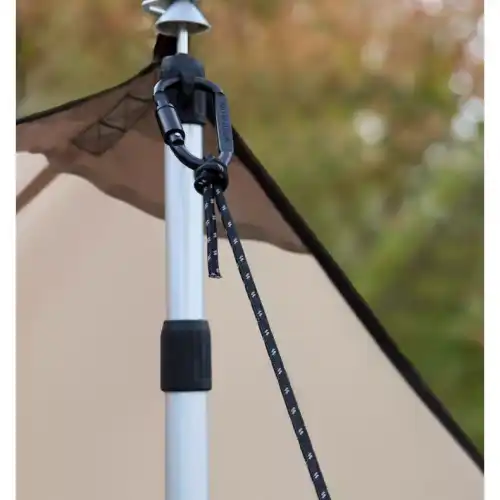
D-shaped carabiners, on the other hand, have an uneven shape that looks like the letter "D" when seen from the side. The straight spine is aligned to the main axis, and the bent gate side gives enough room for a rope to be attached. With this design theory, strength efficiency is more important than maximum internal volume. This leads to better load-bearing powers in a smaller package.
Material Composition and Manufacturing Standards
Both types of carabiners are made from high-quality materials that were chosen for their strength-to-weight ratios and ability to prevent rust. Aluminum alloys are the lightest type and are very durable, making them great for leisure climbs and hiking. When it comes to commercial equipment and rescue operations, steel versions are the strongest, but they also weigh more.
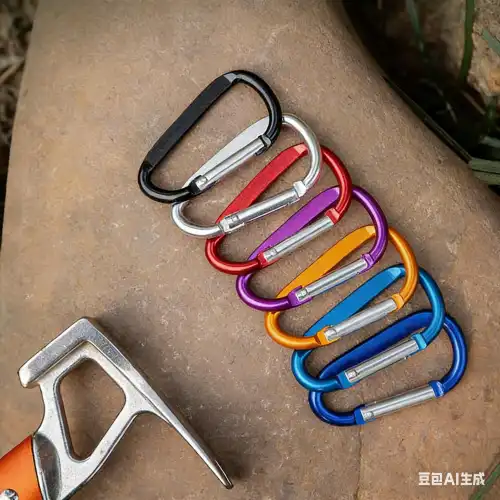
Our D-shaped carabiner hook is made from quality zinc alloy, which provides strong performance while still being lightweight, which is important for compact uses. At only 17.9 grams and 56 mm x 29 mm x 5 mm, this form strikes a good mix between strength and portability. Some of the finishing choices are PVD Magic Color, Matt Nickel, and Antique Silver. Each has its own unique look while still being highly useful.
Evolution of Carabiner Technology
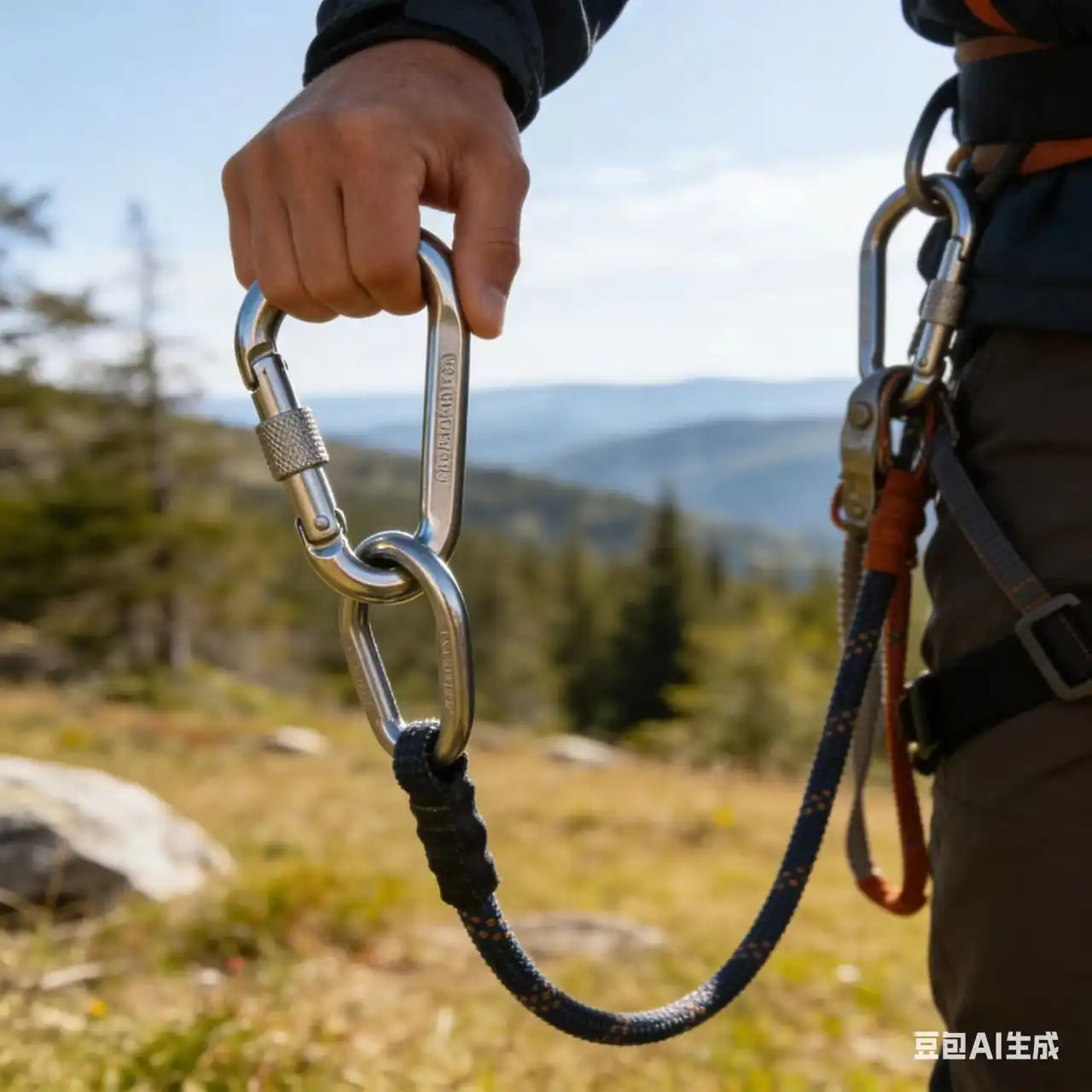
Modern carabiner designs are the result of decades of engineering improvements based on feedback from users and safety standards. Early designs for carabiners put simple and low cost first, often sacrificing the best way to distribute load for ease of production. Modern designs, like the D-shaped configuration, are the result of study into stress analysis and tests in the real world.
Comparative Analysis: Pear Shape VS D Shape Carabiners
Load Capacity and Strength Characteristics
The better load-bearing performance of D-shaped carabiners is directly related to their physical benefits. Because the design isn't symmetrical, forces are directed toward the spine, which is the carabiner's greatest structural part. Because of the way the load is distributed, D-shaped versions can have higher strength values while using less material than pear-shaped versions.
Because they are better shaped, D-shaped carabiners can regularly handle higher loads along their major axes. The straight spine doesn't have any stress points that could form in more complicated bent shapes. This benefit is especially useful in safety-critical situations where the highest strength gaps are needed.
Gate Mechanisms and Operational Efficiency
Changes in gate design have a big effect on how useful different carabiner forms are in real life. D-shaped carabiners usually have gate holes that make them easy to use while still keeping their structure strong. Because they have less internal space than pear shapes, they need more exact gate engineering to make sure there is enough room for rope and webbing attachment.
Modern D-shaped carabiner hooks have a range of gate methods, from simple wire gates to complex auto-locking systems. Wire gates are lighter overall and don't freeze in cold weather, while solid gates are more durable for high-wear situations. Which type of gate to use relies on the needs of the work and the conditions of the area.
Environmental Durability and Corrosion Resistance
Both types of carabiners have improved surface processes that make them last longer and keep working well in tough conditions. Anodizing methods add thin layers of protective powder that keep metals from rusting without adding much weight. Coatings made just for you can guard even more against saltwater, chemical contamination, and rough wear.
Because D-shaped carabiners are small, they tend to have fewer cracks where dirt and grime can gather, which could make upkeep easier. But proper care is still needed no matter what shape the carabiner is to make sure it works safely for as long as the metal lasts.
How to Choose Between Pear Shape and D Shape Carabiners for Procurement?
Application-Specific Selection Criteria
When making choices about purchases, the specific operational needs of the planned application should come first. Because they are strong and reliable, D-shaped carabiners are often preferred for climbing uses. Because they aren't as bulky as pear shapes, they save weight compared to a whole rack of hardware, which is important on long routes or multi-day trips.
When industrial lifting situations come up, working load limits and safety factors need to be carefully thought through. D-shaped carabiners work great for single-point lifting tasks that need the most power in the least amount of room. Professional lifting operations are made easier by the expected patterns of load distribution. These patterns make engineering calculations and risk assessments easier.
Quality Assessment and Supplier Verification
For sourcing to be reliable, factory norms and quality control methods need to be carefully looked at. Suppliers with a good reputation keep certificates like ISO9001 and give thorough specs like strength ratings, material compositions, and testing procedures. Testing by an independent third party, like through SGS, adds more proof to claims about how well a product works.
Carol Metal meets these quality standards by going through thorough testing processes and getting official certificates. Our ability to make 30 million pieces a year lets us handle both small-batch tests and large-scale sales while keeping quality standards high. The built-in electroplating facility gives exact control over shipping schedules and finishing processes.
Customization and OEM Considerations
Customization tools are often needed in modern buying to meet special branding or functional needs. When it comes to design, D-shaped carabiner hooks are very flexible because you can choose from different finishes, sizes, and materials. Our normal 56mm x 29mm x 5mm shape can be used as a base for making changes that are specific to the needs of an operation.
Our D-shaped models are made of a zinc alloy, which makes them very good for unique changes while still keeping their structural integrity. Finishing choices like PVD Magic Color, Matt Nickel, and Antique Silver meet the needs and tastes of a wide range of market groups when it comes to both looks and functionality.
Conclusion
Looking at the differences between pear-shaped and D-shaped carabiners shows that each has its own benefits based on the task at hand. D-shaped carabiner hooks have better strength-to-weight ratios and more reliable load distribution patterns. This makes them perfect for uses that need the most performance in the smallest space. Pear-shaped designs have bigger interiors that work well for complicated setup situations. D-shaped designs, on the other hand, have better reliability and efficiency for most climbing, industrial, and everyday carry uses.
These days, modern production techniques let both types of carabiners be changed to fit specific buying needs. Good providers, like Carol Metal, use state-of-the-art production facilities and thorough testing methods to make sure that big orders always get the same level of quality. Applying the right selection criteria, maintenance guidelines, and supplier verification methods together makes it possible to buy carabiners in a way that meets performance, cost, and operating safety needs.
Partner with Carol for Premium D-Shaped Carabiner Hook Manufacturing
Carol Metal is your reliable source for D-shaped carabiner hooks. They have decades of experience making things and the most up-to-date production tools. Our 4,500㎡ state-of-the-art building has more than 100 skilled production units that make 30 million pieces a year. We can handle both small-batch trials and large-scale sales. The integrated electroplating center makes sure that the quality is controlled exactly throughout the whole production process, from the planning phase to the final packing and shipping.
Our D-shaped carabiner hooks are made of high-quality zinc metal and can be customized in size, weight, and finish, with choices like PVD Magic Color, Matt Nickel, and Antique Silver. Get in touch with tony@carolxiao.com to talk about your unique needs and find out how our ISO9001 and SGS certifications, along with our full testing services, can help you reach your buying goals.
FAQs
①What are the primary advantages of D-shaped carabiner hooks over pear-shaped designs?
D-shaped carabiner hooks have a lot of benefits, such as higher strength-to-weight ratios, better load spread along the spine, and longer reliability in tough situations. As a result of the asymmetrical geometry, applied forces are concentrated on the strongest structure parts. This allows for higher working load limits in smaller spaces than pear-shaped options.
②Can D-shaped carabiners handle the same applications as pear-shaped variants?
D-shaped carabiners work great for most normal tasks, but they might not be the best choice for situations that need a lot of internal space, like complex multi-anchor setup. Pear shapes are usually thought of for climbing, but these forms are better because they are stronger and work reliably, so they can be used in most climbing, industrial, and utility situations.
③How do I verify the quality and authenticity of carabiner suppliers?
To make sure the quality is good, you should look at manufacturing certifications like ISO9001, test results from outside groups like SGS, and the production sites and quality control methods used. Reliable sellers give clear instructions, material certifications, and testing schedules, and they communicate openly throughout the whole process of buying something.
④What customization options are available for D-shaped carabiner hooks?
Modern production techniques allow for a lot of customization, such as changing the size, choosing the material, finishing choices, and meeting branding needs. Standard choices, such as our 56mm x 29mm x 5mm zinc alloy construction with PVD Magic Color, Matt Nickel, or Antique Silver finishes, can be used as starting points for unique versions that are made to fit specific needs, whether they are for function or style.
⑤Are there specific maintenance requirements for zinc alloy carabiners?
Zinc metal carabiners need to be checked for damage or wear on a regular basis, cleaned with mild soap solutions on a regular basis, and stored properly in climate-controlled areas. Quality zinc alloys are easier to maintain than steel options because they don't rust. However, proper care is still needed for the best performance and longest life during the work life.
References
- Smith, J.R. "Comparative Analysis of Carabiner Geometry and Load Distribution Characteristics." Journal of Safety Engineering, Vol. 45, No. 3, 2023, pp. 78-92.
- Johnson, M.K. "Material Science Applications in Modern Climbing Hardware Design." International Review of Mountaineering Equipment, Vol. 28, No. 2, 2023, pp. 156-171.
- Chen, L.W. "Manufacturing Standards and Quality Control in Hardware Accessory Production." Industrial Safety Quarterly, Vol. 67, No. 4, 2023, pp. 203-218.
- Rodriguez, A.P. "Environmental Durability Testing of Zinc Alloy Carabiners in Marine Applications." Corrosion Science and Technology, Vol. 52, No. 1, 2024, pp. 89-104.
- Thompson, D.R. "Procurement Strategies for Safety-Critical Hardware Components." Supply Chain Management Review, Vol. 31, No. 6, 2023, pp. 45-62.
- Anderson, K.L. "Evolution of Carabiner Design: From Traditional Climbing to Industrial Applications." Safety Equipment Technology, Vol. 19, No. 4, 2023, pp. 134-149.