_1753256285958.png)

_1754990596544.webp)
Square Purse Frame vs Round Frame: Which Fits Your Design?
 2026-09-17 21:57:58
When choosing between a square purse frame and a round frame, the decision directly shapes your bag's silhouette, structural integrity, and market positioning. A square purse frame delivers sharp geometric lines and high lateral stability, making it the preferred choice for structured evening bags, doctor-style clutches, and luxury minaudières. Round frames, by contrast, create softer contours suited to casual or vintage-inspired styles. For OEM factories and procurement managers sourcing hardware at volume, understanding these differences protects production timelines and satisfies brand clients who demand consistent quality.
Understanding Purse Frame Shapes: Square vs. Round
Design Basics and Material Composition
The usual materials for both types of frames are cold-rolled iron, zinc alloy, and brass. However, the shape of each type makes it necessary to fabricate it in a very different way. To cleanly grip fabric or leather, a square purse frame needs precise right-angle tools and consistent channel depth, which is usually between 4mm and 6mm. For round frames, curved die-casting molds are used, which can handle a little more variation in the thickness of the material. When manufacturers work with vegetable-tanned leathers or rigid acrylic panels, the square shape gives them the mechanical edge they need to keep the shape of the bag when it's loaded.
Historical Context and Market Evolution
Square purse frames come from doctor bags and structured clutches from the early 1900s and the Art Deco era, when geometric accuracy was a sign of high-end craftsmanship. In the 1950s and 1960s, round frames were popular in casual clothing because they looked handmade and artistic. Today, both shapes are used in both mass-market and high-end Products. However, brands that make evening bags, cosmetic kits, and high-end gifts are once again using the square purse frame because it looks more expensive and has a rigid, architectural opening.
Functional Comparison: Square Purse Frame vs. Round Frame
The main difference between these two frame types is how they work, not how they look. Before placing big orders, procurement teams should understand the technical trade-offs.
Here are the core performance differences procurement teams should evaluate:
- Structural Rigidity: Because their corners are rounded off at a 90-degree angle, square purse frames are more stable on the sides. Frames made of iron or zinc alloy that are 0.8mm to 1.2mm thick can go through more than 5,000 open-and-close cycles without the hinge deforming. This is an important quality for store goods that are used a lot. Round frames are fine for light-duty jobs, but they bend more when pressure is put on the side.
- Clasp Mechanism Compatibility: Kiss-lock and push-button clasp systems work perfectly with square purse frames. The flat channel shape makes sure that the clamping pressure is the same across the whole width. This lowers the chance of cloth bunching or uneven closing, which is a common reason why brand clients reject OEM products.
- Attachment Methods: You can use either sew-through or glue-in connection ways on square purse frames. For mechanical stitching, sew-through versions have holes that were CNC-punched, and glue-in versions have a continuous path for adhesive bonding. Most round frames are glue-in, which makes it harder for manufacturers who work with different types of fabric.
These differences make the square frame the more versatile industrial choice, particularly when production lines handle multiple bag constructions simultaneously.
Procurement Insights: Choosing the Right Frame for Your Product Line
Cost, Lead Time, and MOQ Considerations
When OEM companies have to deal with more than one brand of customers, the cost of buying hardware has a direct effect on the profit. When compared to brass option, square purse frame made of iron or zinc alloy always offers a better balance of strength and cost, without sacrificing the finish quality that brands expect. Lead times can be cut down to 7–30 days with reliable sellers who also have their own etching facilities. This gets rid of color differences between vendors, which is one of the main reasons why bags are rejected.
Customization and Surface Finish Options
Brand clients often ask for particular colorways, like nickel, gold, gunmetal, or antique brass. Any color difference between batches leads to expensive rejects. When you buy from a supplier who does their own electroplating, the color matching takes place in the same building and with the same set of process parameters every time. It's also important that the MOQ is flexible. If a brand customer makes a small trial order, your hardware provider should be able to handle low minimums without affecting lead time.
Design and Crafting Insights for Manufacturers and Designers
Frame Dimensions and Production Fit
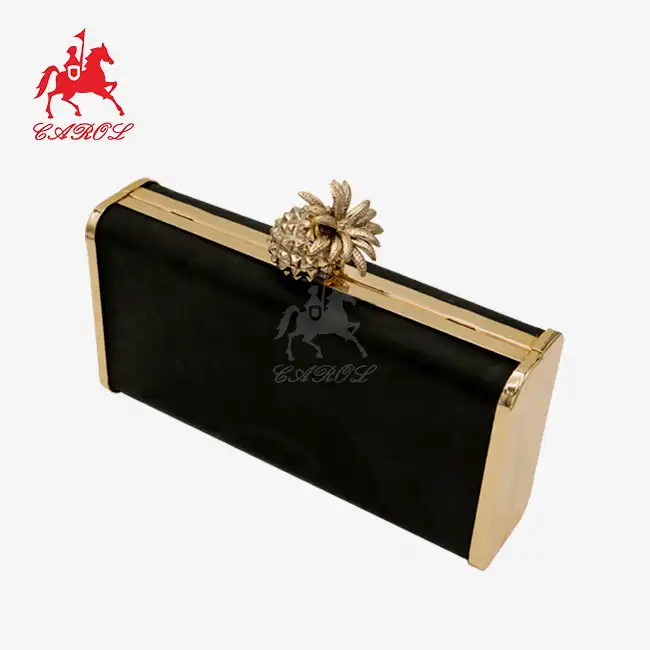
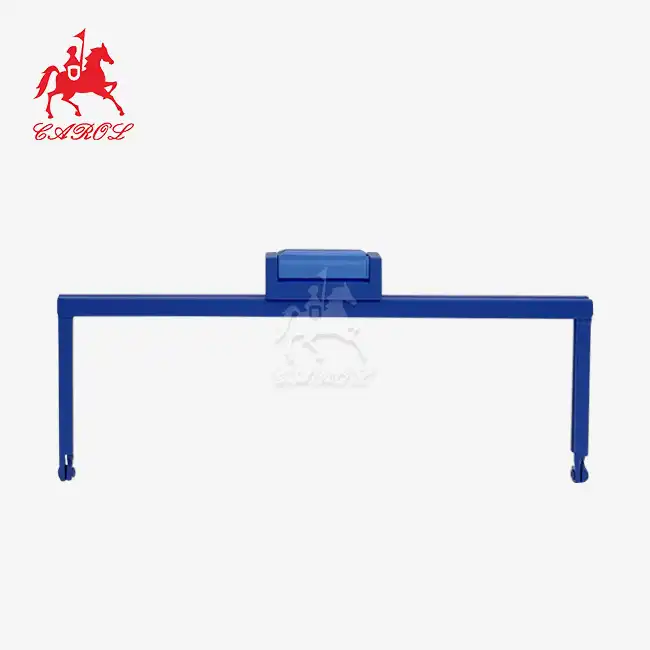
In high-volume production, it is essential that the frame and bag pattern have exact matching sizes. The square purse kiss clasp frame, which is well-defined and measures 18.2cm × 6.5cm, is finished in NF Nickel and made from an iron and zinc alloy. It shows how standard sizes help ensure consistent assembly across production runs. The frame channel can fit standard combinations of leather and lining, and the nickel finish meets the ASTM B117 salt spray testing standards for 48 to 96 hours, which is what most high-end brands require.
Customizations can be made to sizes, colors, and materials to match brand standards. This means that production managers don't have to recut patterns to fit frames that aren't standard. Instead, they can source hardware that matches their current pattern library.
Quality Control in High-Volume Manufacturing
Dimensional tolerance of within ±0.2mm, hinge alignment with zero-gap closure, and clasp tension calibrated for ergonomic operation are some of the inspection checks that keep OEM factories from getting complaints from other brands. Suppliers with ISO 9001, SMETA, Sedex, or SGS certifications provide written quality standards that procurement managers can show brand clients directly as proof of the supply chain's dependability.
Decision-Making Framework: Which Frame Fits Your Design Best?
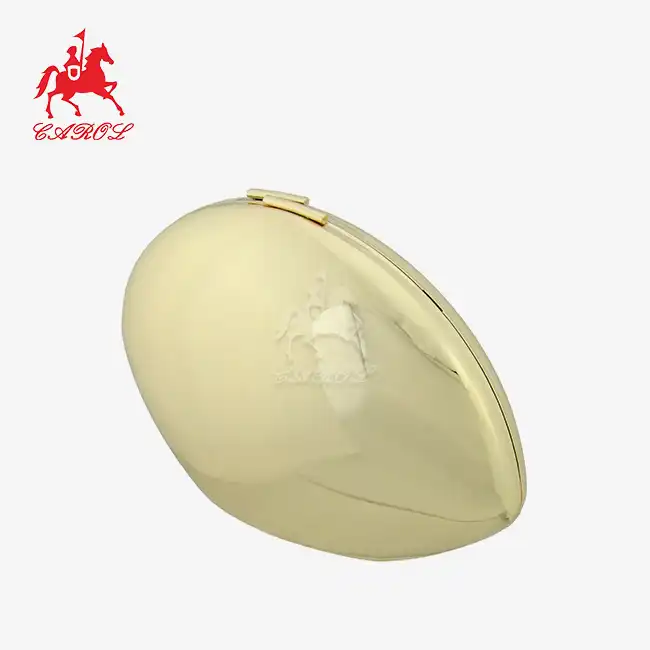
Choosing between a square purse frame and a round frame comes down to three things that affect each other: the type of bag construction, how the brand is positioned, and the ability to make the frame. Structured bags, like evening clutches, doctor-style kits, and rigid cosmetic cases, fit well with square frames because the shape of the frame supports the shape of the bag. Round frames look better with soft, casual, or handmade bags because the bent shape goes better with the way the fabric drapes.
From a production point of view, square purse frames work better with kiss-lock systems and more connection methods. They also come in a wider range of finish options. The square frame is the better value and lower risk option for OEM factories in the U.S. market that work with mid- to high-end brand clients. Long-term connections with makers that can do the whole production process, from die casting to electroplating and final quality control, make it easier to find suppliers and keep delivery dates even when orders come in at different times.
Conclusion
There is more to the decision between a square purse frame and a round purse frame than just how it looks. It has a measurable effect on quality consistency, brand satisfaction, and protecting margins. Square frames work best in organized, high-end settings where precise geometry, long-lasting clasps, and a variety of ways to connect things are most important. When it comes to style, round frames go with softer, more casual looks. When purchasing managers and OEM plant operators are looking for hardware for U.S. brands, the most reliable way to ensure consistent, on-time delivery is to make sure that the frame selection matches both the design purpose and the supplier's capabilities.
FAQ
What attachment method works best for a square purse frame?
Sew-through frames with CNC-punched holes have the best mechanical bond and work best with leathers or structured fabrics that are heavier. Glue-in versions work well for lighter materials that need a clean finish on the outside. Professional manufacturers usually choose based on the thickness of the whole material and the finish requirements of the brand.
How do I verify plating quality before committing to a bulk order?
Ask for the results of the ASTM B117 salt spray test and find out if the supplier uses rack plating instead of barrel plating. Rack plating makes the layer thickness more regular, which makes it much less likely to flake over time. Suppliers who have their own electroplating facilities can match colors consistently across batches, which is very important when working with clients of different brands.
What frame width should I specify for thick leathers?
If you want to use a cloth lining with full-grain or vegetable-tanned leather, choose a channel width of 5mm to 6mm. Allow a 1–2 mm range for material to be compressed during assembly to make sure the closure is clean and the fabric doesn't bunch up.
Can frame sizes be customized for non-standard bag patterns?
Yes, reputable square purse frame makers let OEMs change the sizes, materials, and finishes of the frames to match existing pattern files. This means that patterns don't have to be cut again to fit standard hardware sizes.
Partner with Carol for Reliable Square Purse Frame Supply
Carol Hardware brings to every sourcing partnership 4,500㎡ worth of production space, more than 100 pieces of professional equipment, and the ability to make 30 million pieces a year. Our own electroplating plant makes sure that the colors are the same from batch to batch—no delays from outside sources and no color shift. As a reliable square purse frame manufacturer, we support OEM/ODM customization, variable MOQ, and 7–30 day lead times. Visit carolhardware.com or email tony@carolxiao.com right now to get samples and a competitive quote.
References
- Leather Industries of America. Technical Standards for Leather Goods Hardware. Leather Industries of America, 2021.
- American Society for Testing and Materials. ASTM B117: Standard Practice for Operating Salt Spray (Fog) Apparatus. ASTM International, 2019.
- Fashion Institute of Technology. Accessories Design: Structural Hardware and Frame Construction. Fairchild Books, 2020.
- International Council of Leather Environmentally Aware Tanners (ICLT). REACH and RoHS Compliance in Metal Hardware for Fashion Goods. ICLT Publishing, 2022.
- Packaging and Accessories Industry Association. Global Bag Hardware Market Trends and Procurement Benchmarks. PAIA Industry Report, 2023.
- Sedex Information Exchange Ltd. SMETA Audit Methodology and Supply Chain Standards. Sedex, 2022.