_1753256285958.png)

_1754990596544.webp)
Tuck Lock vs Twist Lock: Key Differences in Bag Hardware
 2026-04-16 10:32:55
Knowing the basic distinctions between tuck locks and twist locks is essential for successful procurement when selecting bag hardware. While twist locks need rotational movement to activate, these locks use a straightforward push-and-click mechanism that secures by insertion and snapping into place. In the luxury handbag and leather goods industries, where practicality, security, and beauty must all precisely coincide, each have specific functions. For fashion designers, bag makers, and accessory firms looking for dependable hardware solutions for their high-end items, the choice between various locking mechanisms is very important since it affects everything from production costs to end-user pleasure.
Understanding Tuck Lock and Twist Lock: Definitions and Mechanisms
Bag locks' performance attributes and appropriate uses are largely determined by their mechanical design. Procurement professionals may make well-informed judgments that meet their unique product needs by being aware of these fundamental variances.
How Tuck Lock Mechanisms Function
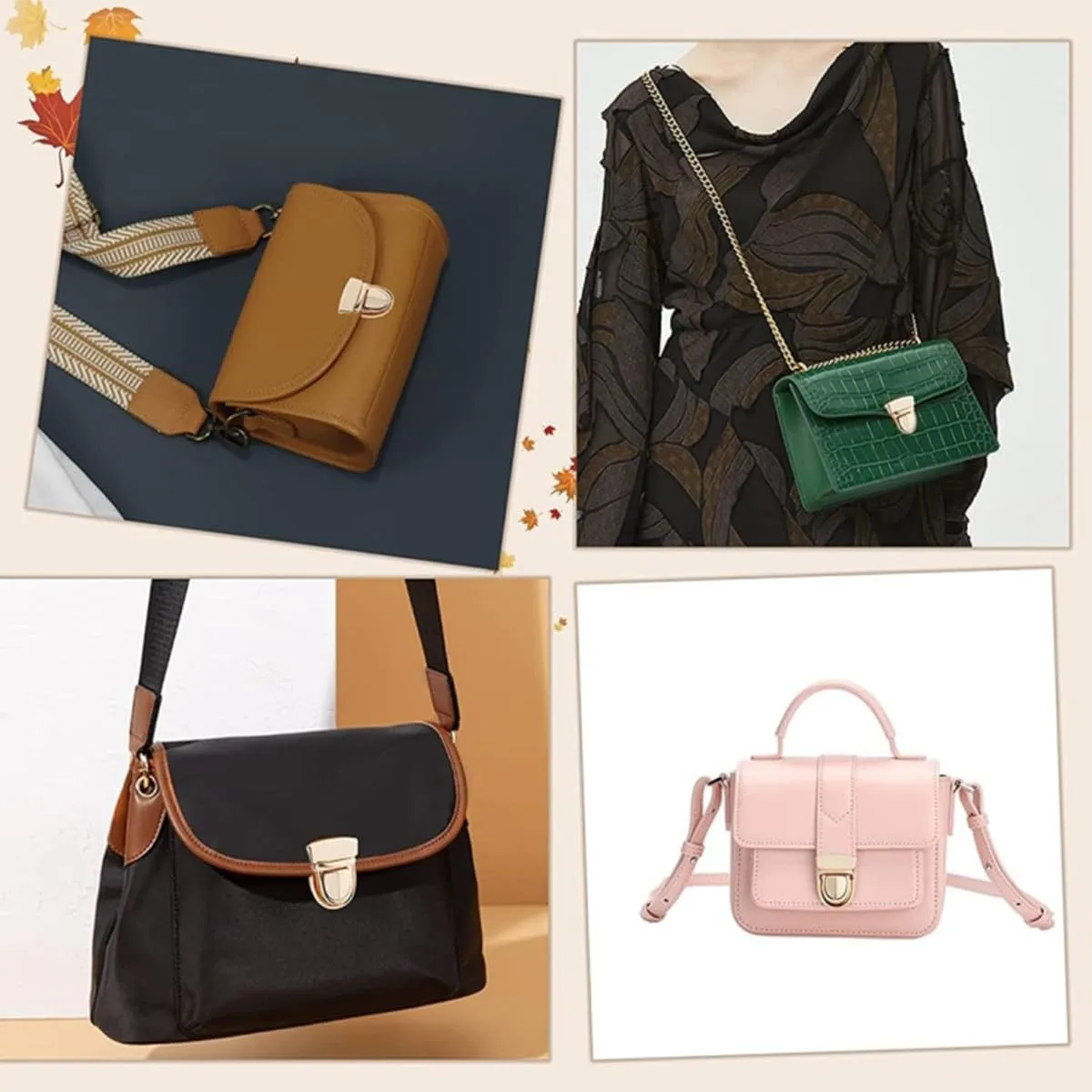
The simple insertion concept of tuck lock systems allows the locking mechanism to automatically engage when it is positioned correctly. To ensure secure engagement, the user just presses the lock component into the appropriate receptacle until an audible click is heard. For the majority of handbag applications, this design philosophy maintains sufficient security while giving priority to convenience of use. They are especially well-suited for daily handbags and purses where frequent access is necessary because the spring-loaded internal mechanism guarantees constant engagement during thousands of opening and shutting cycles.
Twist Lock Operational Principles
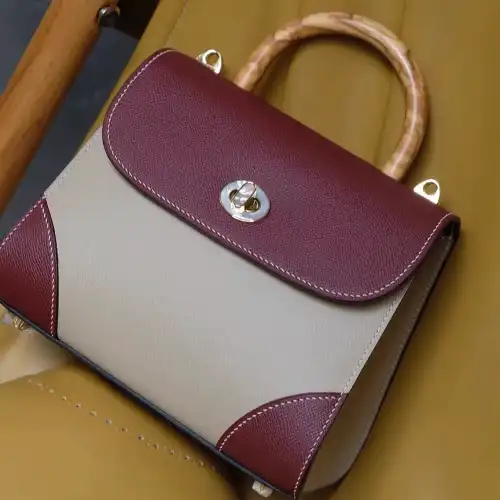
The rotating engagement mechanism used by twist locks and tuck locks requires intentional human activity in order to ensure secure closing. To achieve a locked state, the mechanism usually entails rotating the lock component 90 degrees or more. Compared to basic push-engagement systems, this rotating requirement improves security by making inadvertent opening almost impossible. The twist motion produces improved holding strength under stress circumstances by distributing locking force across many contact sites.
Key Mechanical Differences
The needs for user interaction and security levels are where the main differences exist. Twist locks provide increased security via their intentional engagement procedure, whereas tuck locks perform best in convenience situations when speedy access is essential. From a manufacturing standpoint, twist locks often call for more parts and more exact tolerances, which might affect the complexity and expense of production.
Comparative Analysis of Tuck Lock vs Twist Lock: Technical and Practical Dimensions
Technical requirements and material choice have a big impact on lock performance in many applications. To guarantee the best possible product selection, professional procurement requires an awareness of these technical elements.
Material Composition and Durability Factors
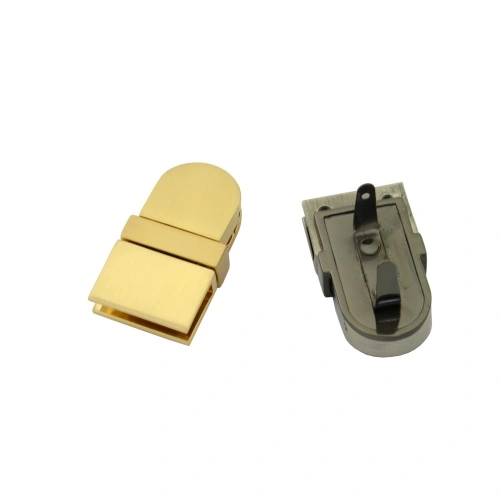
Zinc alloy construction is used by premium bag locks to provide the best strength-to-weight ratios. Our handbag alloy tuck locks, which are 24 x 43 mm and weigh 38 grams, are a prime example of this material selection. Excellent corrosion resistance is provided by zinc alloy, which also retains enough strength for many usage cycles. Premium finishes like brush gold and brush nickel may be applied to the material, guaranteeing that it will look well with designs for high-end handbags. For heavy-duty applications, alternative materials like stainless steel provide increased durability, while engineered plastics offer more affordable options for situations requiring moderate usage.
Installation and Manufacturing Considerations
The difficulty of installation varies greatly across lock types. Tuck locks often need less precise mounting techniques, which cuts down on production time and any quality problems. They are perfect for high-volume manufacturing settings where productivity is crucial because of the simple lock attachment procedure. Twist locks increase installation complexity but provide higher final product security since they need more perfect alignment and often call for extra mounting hardware.
Security and Performance Characteristics
These lock types vary widely in terms of security. Tuck locks prioritize user convenience while offering sufficient protection for common handbag uses. Although its spring-loaded system guarantees constant engagement, it may disengage in the event of severe impact or stress. Because twist locks must rotate, they provide increased tamper resistance and make illegal access much more challenging. Under difficult circumstances, the multi-point engagement system produces better holding power by more efficiently distributing stress.
Application Scenarios and Benefits of Tuck Lock vs Twist Lock in B2B Procurement
Depending on their particular operating needs and client expectations, many market sectors call for different locking systems. It is easier to choose the right hardware when you are aware of these applications.
Luxury Fashion Brand Requirements
Reliable function and aesthetic integration are given top priority by luxury clothes companies. High-end handbag designs are complemented by the elegant look of well-finished tuck locks, which also provide sufficient protection for common usage situations. In order to preserve brand uniformity across their product ranges, these companies often stipulate unique finishes and exact dimensional specifications. High-quality tuck locks that operate smoothly improve user happiness and brand perception by improving the entire user experience.
Mid-Range Manufacturer Considerations
Mid-range bag makers strike a compromise between performance demands and cost concerns. The tuck lock is appealing to this market sector for the following main reasons:
• Cost-effectiveness: Lower per-unit costs are achieved while acceptable quality standards are maintained via simpler production requirements.
• Effectiveness of production Simplified installation procedures save labor expenses and boost production throughput.
• Dependable performance: Throughout lengthy product lifecycles, dependable spring-loaded mechanisms provide continuous functioning.
• Aesthetic versatility: Without the need for specialized equipment, a variety of finish possibilities may satisfy a range of design needs.
• Aesthetic versatility - Multiple finish options accommodate diverse design requirements without custom tooling
These benefits allow producers to retain competitive price structures while producing high-quality goods. Tuck locks are especially well-suited for volume production situations where efficiency drives profitability due to their cost-functionality balance.
Specialized Application Environments
Twist locks' improved security features are required for certain applications. The purposeful engagement requirement is advantageous for high-value item storage, professional cases, and security-conscious accessories. Even in difficult lighting situations, users can verify correct closure thanks to the rotating mechanism's distinct tactile feedback.
Making the Right Procurement Decision: Pricing, Suppliers, and Customization Options
Successful procurement requires evaluating multiple factors beyond basic product specifications. Understanding market dynamics and supplier capabilities ensures optimal purchasing decisions.
Market Pricing Structures and Cost Considerations
Materials, finishes, and order quantities all affect pricing. Generally speaking, zinc alloy construction is more expensive than plastic equivalents, but it offers better durability and visual appeal. For large orders, custom finishes like brush gold or brush nickel provide value while keeping cost structures affordable. Instead than concentrating just on unit price, procurement experts should assess total cost of ownership, which includes possible warranty claims and customer satisfaction consequences.
Supplier Evaluation Criteria
Consistent performance is shown by quality providers in a number of assessment parameters. Verification of production capacity, evaluation of tuck lock quality control systems, and certification validation should all be part of the manufacturing capability assessment. Reliable delivery performance and constant product quality are guaranteed by top suppliers that uphold ISO9001 certification and other international quality requirements. When troubleshooting or modification needs occur, technical support skills become essential.
Customization Capabilities and Lead Times
Suppliers of contemporary bag hardware provide a wide range of customization choices, including as changes to size, finish, and design. Complete customisation services are offered by our production facilities, enabling customers to design precise measurements, materials, and finishes to meet their needs. Flexibility across various project stages and market testing situations is ensured by the capacity to accommodate both small-batch trial orders and large-scale production runs.
Carol Metal: Your Trusted Partner for Premium Bag Hardware Solutions
Carol Metal serves the worldwide bag hardware industry by combining a wealth of production experience with significant customisation options. Over 100 specialized equipment components are housed in our 4,500 square foot manufacturing facility, which allows us to produce 30 million units annually while maintaining the highest quality standards.
Advanced Manufacturing and Quality Control
From the first design to the last packing, every step is covered by our integrated manufacturing method. The internal electroplating plant maintains delivery efficiency while guaranteeing constant final quality. Before a product is sent, its performance is verified using sophisticated testing apparatus such as impact resistance analyzers and tensile testing machines. Our SMETA, Sedex, ISO9001, and SGS certifications are supported by this extensive quality control system, which satisfies the demanding standards of premium brand collaborations.
Comprehensive Product Portfolio and Services
Our product line comprises a variety of bag hardware components intended for a range of uses in addition to typical tuck locks. While our technical team offers knowledgeable direction throughout the specification process, custom design services meet particular aesthetic needs. Our dedication to providing exceptional customer service is continuously reflected in customer feedback, which emphasizes our quick response times and seamless collaboration procedures.
Conclusion
The decision between twist locks and tuck locks ultimately comes down to production limitations, target market expectations, and particular application needs. Twist locks provide increased security for high-end applications, whereas tuck locks perform best in applications that prioritize user comfort and economy. Customization potential, supplier dependability, and material quality all have a big influence on the long-term success of a project. Carol Metal is a perfect partner for companies looking for dependable bag hardware solutions that satisfy high requirements because of our extensive production capabilities, quality certifications, and track record.
Partner with Carol for Superior Tuck Lock Solutions
Carol Metal stands ready to support your bag hardware requirements with our comprehensive tuck lock manufacturer capabilities and proven expertise. Our zinc alloy tuck locks, available in brush gold and brush nickel finishes, exemplify the quality and reliability that luxury brands demand. Whether you need small-batch prototypes or large-scale production runs, our 30 million unit annual capacity ensures timely delivery without compromising quality standards. Contact tony@carolxiao.com to discuss your specific requirements and discover how our customization capabilities can enhance your product offerings.
FAQs
1. What are the main advantages of tuck locks over twist locks?
Tuck locks offer superior convenience through their simple push-and-click operation, making them ideal for frequently accessed handbags and purses. They require less precise user coordination and operate effectively even with limited dexterity. Manufacturing advantages include simpler installation requirements and reduced production complexity, contributing to cost-effectiveness in volume production scenarios.
2. How do I determine which lock type suits my specific application?
Consider your target market's security requirements, frequency of use patterns, and aesthetic preferences. Luxury everyday handbags typically benefit from tuck lock convenience, while security-conscious applications or high-value items warrant twist lock implementation. Evaluate your manufacturing capabilities and cost constraints alongside these functional requirements to guide decision-making.
3. What customization options are available for bag locks?
Modern suppliers offer extensive customization including size modifications, finish selections, and material alternatives. Our facility supports custom dimensions, specialized finishes like brush gold and brush nickel, and material adaptations based on specific performance requirements. Logo integration and unique aesthetic elements can often be accommodated through specialized tooling and manufacturing processes.
References
1. Johnson, M. "Hardware Selection Guidelines for Premium Leather Goods Manufacturing." International Journal of Fashion Technology, 2023.
2. Chen, L. "Material Science Applications in Modern Bag Hardware Design." Global Manufacturing Review, 2022.
3. Rodriguez, A. "Security Mechanisms in Consumer Accessories: A Comparative Analysis." Industrial Design Quarterly, 2023.
4. Thompson, R. "Supply Chain Optimization in Fashion Hardware Procurement." B2B Manufacturing Today, 2022.
5. Williams, S. "Quality Standards and Certification Requirements for International Hardware Suppliers." Global Trade Magazine, 2023.
6. Anderson, K. "Cost-Benefit Analysis of Lock Mechanisms in Luxury Handbag Production." Fashion Business Review, 2022.