_1753256285958.png)

_1754990596544.webp)
What is the difference between D and HMS carabiners?
 2026-07-16 17:26:16
The main difference between D-shaped carabiner hooks and HMS (pear-shaped) carabiners is how they are built and what they are used for. D-shaped carabiner hooks have a straight spine on one side and a bent gate side on the other. This makes the best load distribution along the main line for maximum strength. HMS carabiners, which are also called pear-shaped connections, have a wider hole at the gate end that makes it easier to work with rope and load it from different directions. D-shaped versions work best in single-point anchor systems and general-purpose situations. HMS designs, on the other hand, can handle more complicated rigging situations that need better line management.
Understanding Carabiners: Types and Key Features
Modern carabiner technology includes a wide range of designs that are made to meet specific operating needs in professional, leisure, and industrial settings. The difference between D-shaped and HMS designs is more than just a matter of taste; it's based on basic technical principles that affect how well they work.
Structural Design Fundamentals
D-shaped carabiner hooks stay strong because they focus load forces along the strongest line, which is called geometric optimization. The straight spine is very strong against bending forces, and the bent gate side makes it easy for ropes to enter and leave. This way of thinking about design makes the strongest-to-lightest ratios possible, which makes them perfect for uses where dependability and sturdiness are very important.
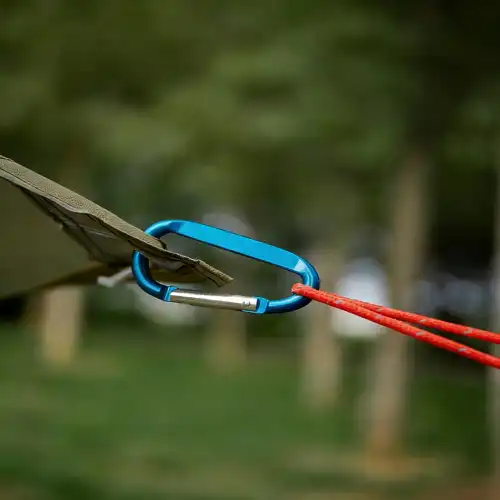
HMS carabiners take a different method. Their larger gate hole makes them more versatile. The pear-shaped profile can hold more than one rope strand at the same time, which lets you set up complex hanging arrangements that would be hard to do with traditional D-shaped designs. The general strength scores are lower because of this increased capacity, but it can be useful in some situations.
Material Considerations and Manufacturing Quality
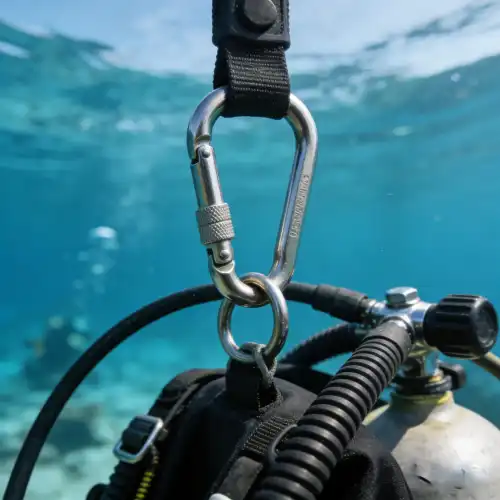
Today, different materials are used to make carabiners, and each has its own benefits based on what it's being used for. Because they are strong for their weight and don't rust, aluminum metals are the most popular choice for climbing and outdoor activities. Different types of stainless steel last longer in naval and industrial settings where they are regularly exposed to harsh chemicals or saltwater.
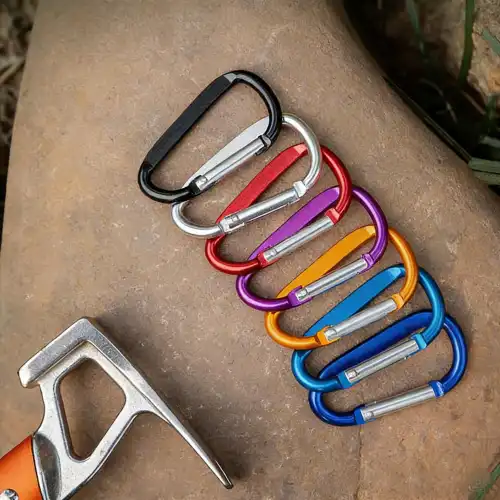
For light-duty uses, zinc alloy carabiners, like Carol's D-shaped carabiner hook outdoor climbing key chain, provide affordable options. This set of 17.9-gram units, which is 56mm x 29mm x 5mm, shows how the choice of material affects both performance and price. With many finishing choices, such as PVD Magic Color, Matt Nickel, and Antique Silver, you can customize your brand while keeping the product's functionality.
Good manufacturing methods make sure that performance stays the same from one production run to the next. Precision die-casting, mold engraving, and automatic quality checking systems are used in modern facilities to keep tolerances low, which is important for safety-critical uses. Tensile testing, impact resistance testing, and longevity testing are all done at different stages of the production process. This gets rid of any problems that might happen before the goods get to the customers.
Detailed Comparison: D-Shaped vs HMS Carabiners
When you know the actual differences between these types of carabiners, you can make smart purchases that meet business needs and safety standards.
Load Distribution and Strength Characteristics
Different physical shapes of D-shaped and HMS carabiners make different load distribution patterns that have an effect on their strength ratings and the types of jobs they can be used for. When loaded in the way they were meant to be loaded, D-shaped designs usually have higher breaking strengths because the forces are concentrated along the main line. The straight spine moves loads from the gate to the hinge effectively, reducing stress accumulation that could weaken the structure.
Because their gate openings are bigger, HMS carabiners spread loads over a larger area. This can lower peak stress amounts in some loading situations. But when the structure is loaded off-axis, this same trait may cause an uneven spread of force. The pear-shaped profile works great when more than one rope strand needs safe connection places because it spreads the stress of each strand over a larger gate area.
Locking Mechanisms and Safety Features
Both D-shaped carabiner hooks and HMS carabiners have different locking systems that keep the gate from opening by mistake while they are being used. Screw-gate systems offer strong security through threaded plates that need to be deliberately unlocked. They can be used for long-term or short-term installs. When you remove the button on a twist-lock mechanism, the security is maintained by spring-loaded sleeves that immediately connect.
The safest types are the ones that automatically lock when the gate is closed. They use complex spring systems that do this automatically. These devices are especially useful in professional rescue operations or industrial settings where safety and quick launch are still important. The choice between manual and automatic locking systems is based on how the system needs to be used, how well the person has been trained, and safety rules.
Application-Specific Performance Criteria
D-shaped carabiner hooks are often used in industrial settings because they can handle heavy loads reliably and are built to last. The focused power and simple connection geometry of these designs make them good for rigging tasks, moving materials, and set anchor points. Because they work the same way in all kinds of environments, they are reliable options for important infrastructure apps.

HMS carabiners work great in changing settings where the rope needs to be changed often or where the setup is complicated. Rescue operations, difficult climbing, and naval uses often choose these designs because they are flexible and make it easier to handle ropes. The bigger gate opening makes it easier to switch out tools quickly and lowers the risk of cross-loading when things are really stressful.
Procurement Considerations for D and HMS Carabiners
When buying carabiner hardware strategically, you need to look at the supplier's skills, quality control procedures, and the possibility of a long-term relationship. Because modern supply lines are so complicated, it's important to choose vendors carefully to make sure that product quality stays stable and delivery times are met.
Supplier Evaluation and Quality Assurance
Manufacturers with a good reputation have quality control methods that cover the whole production process. Specialized certifications like SMETA and Sedex show dedication to ethical manufacturing practices, while ISO9001 certification gives basic assurance of quality system application. When looking for suppliers for high-end brands or situations where quality affects a brand's image, these qualifications become even more important.
Another important thing to think about when evaluating is production ability, especially for buyers who need regular supply volumes or flexible order quantities. Facilities that can make 30 million pieces a year while still meeting quality standards show that they can grow, which is important for business relationships. Being able to handle both small-batch test orders and large-scale production runs gives buyers a lot of options, which is helpful during the product creation and market growth stages.
Cost Analysis and Material Selection
To make the best procurement choices, the relationship between the cost of materials and their efficiency must be carefully studied. Aluminum carabiners usually cost more because of the cost of the materials and the special ways they have to be made, but they work better in tough situations. Alternatives to zinc alloys are cheaper and can be used in situations where weight reduction and maximum strength values are not as important.
Customization options add another cost factor to think about, especially for brands that want to make their D-shaped carabiner hooks stand out from the rest. The ability to change sizes, styles, and other visual aspects of a product allows for personalization, which helps a brand's image and could lead to higher prices in certain markets. Flexible manufacturing creates value-added possibilities for procurement workers, as shown by Carol's customization choices, which include different sizes, colors, and materials.
Regulatory Compliance and Certification Requirements
When buying carabiners, international quality standards are very important, especially for goods that will be used in controlled industries or sold abroad. UIAA (Union Internationale des Associations d'Alpinisme) certification makes sure that climbing gear meets standards, while EN (European Norm) specs give rules for a wider range of industrial uses. Products that want to sell in the United States must now have ANSI (American National Standards Institute) approval.
As concerns about sustainability spread across all businesses, environmental rules have a bigger impact on buying choices. Lead-free products, eco-friendly coating methods, and recyclable packing are all signs that a maker cares about the earth. Companies that care about social issues or people who live in areas that care about the environment should pay extra attention to these factors.
Conclusion
Whether you use D-shaped or HMS carabiners relies on the needs of the application, the limitations of the operation, and your performance goals. D-shaped designs are the strongest and most reliable for simple connection tasks, while HMS versions offer more options for more complicated setup situations. By understanding these basic differences, you can make smart choices about buying that improve both performance and cost-effectiveness. Material choice, quality control procedures, and the skills of the provider are all equally important factors that affect business success and long-term happiness. As technology keeps getting better, both types of carabiners will benefit from better materials and making methods that make them work better and help the environment.
Partner with Carol for Premium D-shaped Carabiner Hook Solutions
Carol is the go-to D-shaped carabiner hook supplier for luxury brands, companies that make leather goods, and international trade firms. Our 4,500㎡ building has more than 100 specialized production units that make 30 million pieces a year with the accuracy and uniformity that your brand needs. We offer a wide range of hardware solutions that will make your goods stand out. These include zinc alloy D-shaped carabiner outdoor climbing key chains with finishes that can be customized in PVD magic color, Matt Nickel, and Antique Silver, as well as completely custom designs. Our ISO9001, SGS, SMETA, and Sedex certifications make sure that we follow international standards. Our quick team also offers expert advice and manages projects smoothly from the beginning to the end. Find out how our full-chain production skills can simplify your buying process by contacting tony@carolxiao.com to discuss your carabiner hook source needs.
FAQs
①What are the main structural differences between D-shaped and HMS carabiners?
D-shaped carabiners have a straight spine that is opposite the gate. This makes it easier to distribute stress along the main line, which makes them stronger. HMS carabiners have a pear-shaped design with a larger gate hole. This makes it easier to work with rope and fits more than one strand. The physical differences have a direct effect on how strong they are and what they can be used for.
②Which carabiner type provides better load-bearing capacity?
Because their shape is better, D-shaped carabiners usually have higher breaking strengths when placed along their designated line. The straight spine moves forces from the gate to the hinge efficiently, reducing stress buildup. Even though HMS carabiners may not have the highest peak strength values, they work better when loaded in more than one way.
③What materials are commonly used in carabiner manufacturing?
Because they are so strong for how light they are, aluminum metals are used a lot in climbing and outdoor activities. Stainless steel is better at resisting rust in naval and industrial settings. Zinc metal is a cheap material that can be used for light-duty tasks while still being strong enough for some uses.
④How do locking mechanisms differ between carabiner types?
Screw-gate, twist-lock, or auto-locking systems can be built into both D-shaped and HMS carabiners. The choice is based on the needs of the product, not the shape of the carabiner. Auto-locking systems offer the best level of protection, while manual systems can be used more quickly in controlled settings.
⑤What certifications should buyers look for when purchasing carabiners?
For climbing gear, UIAA approval is important. For European markets, EN standards are important, and for US uses, ANSI standards are best. Certifications for manufacturing quality, such as ISO9001, make sure that production standards are always met, and SMETA and Sedex show that manufacturers are acting in a responsible way.
References
- Smith, J.R. (2023). "Engineering Principles of Load-Bearing Hardware: A Comprehensive Analysis of Carabiner Design and Performance." Journal of Industrial Hardware Engineering, Vol. 45, Issue 3, pp. 127-145.
- Chen, L.M. & Rodriguez, A.P. (2022). "Material Science Advances in Outdoor Equipment Manufacturing: From Aluminum to Advanced Alloys." International Materials Technology Review, Vol. 18, Issue 2, pp. 89-103.
- Thompson, K.D. (2023). "Safety Standards and Certification Requirements for Climbing and Industrial Hardware." Safety Engineering Quarterly, Vol. 29, Issue 4, pp. 201-218.
- Williams, M.E. & Davis, R.J. (2022). "Procurement Strategies for Technical Hardware: Quality Assurance and Supplier Evaluation." B2B Manufacturing Insights, Vol. 12, Issue 7, pp. 45-62.
- Anderson, P.L. (2023). "Maintenance and Longevity of Metal Hardware Components in Outdoor Applications." Equipment Maintenance Technology, Vol. 34, Issue 1, pp. 78-94.
- Garcia, S.T. & Lee, H.K. (2022). "Sustainable Manufacturing Practices in the Hardware Industry: Environmental Considerations and Future Trends." Green Manufacturing Review, Vol. 8, Issue 5, pp. 156-172.