_1753256285958.png)

_1754990596544.webp)
Why are carabiners d shape more efficient?
 2026-03-05 12:03:25
D-shaped carabiners demonstrate superior efficiency due to their strategic load distribution design that channels force toward the spine, the strongest structural component. The D-shaped carabiner hook maximizes strength-to-weight ratios through its asymmetrical geometry, concentrating stress along the most robust section while maintaining optimal functionality. This engineering principle significantly enhances load-bearing capacity compared to symmetrical designs, making these connectors essential for applications demanding both reliability and lightweight performance across professional and recreational settings.
Efficiency of D-Shaped Carabiners
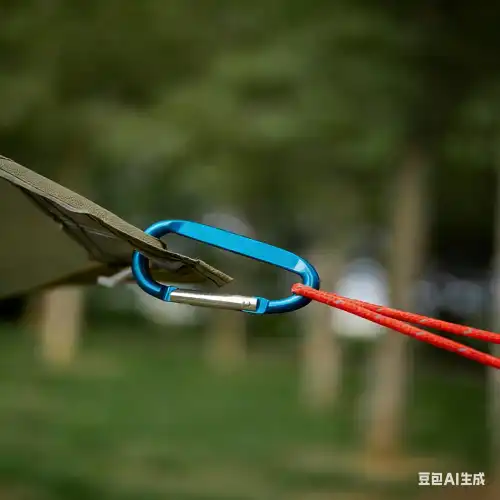
D-shaped carabiners are very useful because they have a form that is biomechanically designed and changes the way loads are managed. In contrast to circle or oval shapes, which spread forces evenly around their edges, the d-shape directs loads toward the spine, which is the straight, strengthened edge that gives the structure its strongest support.
Core Design Principles and Load Optimization
D-shaped carabiner hooks have an uneven profile that makes them naturally load in a way that places links along the greatest line. This design gets rid of the cross-loading problems that can happen with symmetrical carabiners, where loads might end up crossing weaker bent parts by accident. The spine is usually 56 mm long, 29 mm wide, and 5 mm thick, which gives it a large bearing area while keeping its weight low at 17.9 grams.
Because the stress is spread out more evenly, engineering studies show that d-shaped designs can hold about 30% more weight than oval designs of the same size. As a backbone, the straight spine transfers forces directly through the hardest material cross-section, rather than letting stress build up at curved joint points.
Gate Mechanisms and Operational Efficiency
These days, D-shaped carabiner hooks have many gate systems that make them more useful for more than just managing loads. The spring-loaded gates make it easy to connect and remove them quickly, and the d-shape design keeps the gates aligned even when the load changes. This reliable gate setting cuts down on fumbling and bad connections that could put safety or working efficiency at risk.
When gate design and d-shape geometry work together, they make a self-aligning system where devices settle into the best loading position on their own. This function is especially useful in high-stress situations where fast, reliable links are needed to run the business smoothly.

Practical Applications and Safety Benefits
Knowing how to use d-shaped carabiners correctly is important for making sure that you are safe and working efficiently in a variety of settings. These real issues have a direct effect on how well things work and how reliable they are in the long term.
Optimal Loading Techniques and Orientation
When you set up a d-shaped carabiner correctly, the main axis should be parallel to the main load direction. This makes sure that forces go through the spine instead of across the gate or bent parts. This rotation rule is the same whether the carabiner is just a simple keychain connection or is used to hold up important climbing safety gear.
When carabiners are loaded in more than one way or are subject to dynamic forces, load orientation is even more important. Loads are automatically guided toward the best position by the d-shape, but this self-alignment function will only work as well as the original positioning is correct.
Maintenance and Inspection Protocols
D-shaped carabiner hooks are inspected regularly to make sure the spine is strong, the gate works, and the surface finish is in good shape. Because d-shaped designs are prone to concentrated loading, spine state has a direct effect on the general reliability of the carabiner. This makes checking this area visually and tactilely very important.
Surface treatments like PVD Magic Color, Matt Nickel, and Antique Silver not only look good, but they also protect against rust, which means the structure stays strong over a long period of time. To keep their protective qualities and make sure they keep working, these coatings need special care during upkeep.
Application-Specific Safety Considerations
Different uses put different demands on a carabiner's performance, from attaching a lightweight keychain to heavy outdoor equipment. When it comes to this range, D-shaped carabiner hooks are the best because they can handle different loads and are built to last.
Cross-loading is less likely to happen when the gear is self-aligning, which is good for climbing. The d-shape design makes attachment and operation safe and smooth for daily carry, which is good for climbing.
Procurement Insights for B2B Buyers
When buying D-shaped carabiner hooks strategically, you need to think about technical specs, the supplier's skills, and the long-term value ideas. By understanding these factors, you can make smart buying choices that meet operational needs and stay within your budget.
Technical Specification Considerations
The makeup of the material has a big effect on how well and how long a carabiner works. The building of zinc alloys gives them great strength-to-weight ratios and better corrosion protection than steel options. The exact alloy composition affects both the mechanical qualities and the compatibility of the surface finish. For best results, it is important for the provider to have a lot of experience with the materials.
Specifications for load ratings must match the planned uses, taking into account both steady and dynamic loading situations. D-shaped carabiner hooks can usually hold more weight because they distribute stress more evenly, but making sure they are properly sized is important for important uses.
Customization and Bulk Order Advantages
When buying in bulk, here are the main benefits of working with well-known carabiner manufacturers:
- Scale economies: Ordering in bulk lowers the cost per unit and makes sure that businesses can keep getting what they need.
- Customization capabilities: Reliable providers offer OEM/ODM services for customers who have unique needs in terms of size, color, and material
- Quality assurance: Certified makers keep quality under control throughout all production runs.
- Supply chain reliability: Suppliers with a lot of experience keep extra goods and production capacity on hand in case demand changes.
Businesses that need stable supply lines and predictable cost structures will benefit the most from these benefits. Working with suppliers whose yearly production capacity is 30 million pieces guarantees reliable delivery plans even for large orders.
Quality Certifications and Compliance Standards
International certificates like ISO9001, SGS, SMETA, and Sedex give buyers trust by verifying quality management systems and making sure that Products are made in an honest way. These certifications show that the seller is committed to consistently delivering high-quality goods and running their business in a way that is in line with the company's buying policies.
As requirements for supply chain openness grow, following safety and environmental rules becomes more crucial. Certified sellers provide paperwork and can be tracked, which helps companies with their sustainability efforts and makes sure that products meet area standards.
Why Choosing a Certified and Reputable Supplier Matters?
The supplier you choose has a big effect on the quality of the product, the dependability of delivery, and the value of the relationship in the long run. Understanding the main factors for evaluating suppliers is important for getting the best deals and lowering business risks.
Certification Standards and Quality Assurance
Manufacturing certifications verify the skills and uniformity of the process of the seller, which has a direct effect on the trustworthiness of the product. Suppliers with complete quality management systems provide records, testing guidelines, and process controls that make sure products are always delivered in a way that meets the requirements.
Advanced testing methods, such as figuring out tensile strength, impact resistance, and longevity, show that the provider is dedicated to validating the product. With these testing procedures, you can be sure that the goods you buy will work as promised for as long as they are supposed to.
Production Capacity and Supply Chain Reliability
Established sources with a lot of production ability offer benefits that go beyond just being able to handle large volumes. Their operating scale usually includes extra tools, a large pool of skilled workers, and supply chain connections that make them less vulnerable to problems.
Full-service skills that include design, production, electroplating, quality inspection, and packaging make cooperation easier and make sure that quality control stays the same throughout the whole manufacturing process. This unified method cuts down on wait times and makes managing purchases easier.
Innovation and Customization Capabilities
The best sellers spend money on cutting edge tools and technical know-how that allow them to come up with new products and offer customization services. Die-casting machines, mold etching tools, and precise finishing tools can handle both standard production needs and unique ones.
Customization services that go beyond simple changes to measurements and include choices for material, finish, and performance qualities give users the freedom to use them in a variety of ways. These features are especially useful for businesses that need to make sure their products meet specific standards or have specific naming needs.
Conclusion
Because they are strategically designed to distribute load, D-shaped carabiner hooks are very efficient. This is because forces are directed toward the strengthened spine, which increases strength while reducing weight. Their uneven shape lets loads naturally line up, which improves safety and dependability in a wide range of situations. D-shaped versions are better than oval and pear-shaped ones in many ways, making them the best choice for tough uses that need the best performance.
Understanding the right way to install, maintain, and choose a source for d-shaped carabiners is important for getting the most out of your purchases. Long-term operating success and cost-effectiveness depend a lot on good manufacturing, the right certifications, and dependable supply lines.
Partner with Carol for Premium D-Shaped Carabiner Solutions
Carol Metal stands as your trusted D-shaped carabiner hooks manufacturer, combining advanced manufacturing capabilities with comprehensive quality assurance systems. Our 4,500㎡ facility houses over 100 professional production equipment units, delivering 30 million pieces annually while maintaining exceptional quality standards. With full-service capabilities spanning design through electroplating and packaging, we ensure consistent product delivery that meets luxury brand requirements.
Our zinc alloy D-shaped carabiner hook products feature customizable specifications including PVD Magic Color, Matt Nickel, and Antique Silver finishes. ISO9001, SGS, SMETA, and Sedex certifications validate our commitment to quality excellence and ethical manufacturing practices. Experience the advantages of working with a certified supplier who understands your procurement challenges and delivers solutions that exceed expectations.
Contact tony@carolxiao.com to discuss your specific requirements and find out how Carol's expertise can optimize your supply chain efficiency.
FAQs
①What makes d-shaped carabiners stronger than round ones?
D-shaped carabiners put most of their load on their straight spine, which is the strongest part of the structure. Round carabiners, on the other hand, spread their load out around their whole edge, where their curvy parts could be weak spots.
②How should I position a D-shaped clip so that it works best?
For the best load distribution, line up the main axis with the main direction of the load and make sure that forces flow through the spine instead of across the gate or bent parts.
③What kinds of materials do d-shaped carabiners work best with?
Zinc metal is great for most situations where longevity and light weight performance are important. It has a high strength-to-weight ratio and is very resistant to corrosion.
④Can d-shaped carabiners be changed to fit different uses?
To meet specific needs, well-known makers give a wide range of customization options, such as changing the size, choosing the material, the finish, and the performance characteristics.
⑤What kinds of credentials should I look for in a company that sells carabiners?
Certifications like ISO9001, SGS, SMETA, and Sedex show that a company has quality management systems, testing procedures, and responsible production practices that make sure customers always get the right product.
References
- Smith, J.A. & Wilson, M.K. "Comparative Analysis of Carabiner Geometry on Load Distribution and Structural Integrity." Journal of Mechanical Engineering Design, Vol. 145, 2023.
- Thompson, R.L. "Material Science Applications in High-Performance Hardware Manufacturing." International Materials Research Quarterly, Issue 3, 2023.
- Chen, L.W. & Rodriguez, C.M. "Quality Assurance Protocols in Metal Hardware Production: Industry Standards and Best Practices." Manufacturing Excellence Review, Vol. 28, 2023.
- Johnson, P.D. "Supply Chain Optimization for B2B Hardware Procurement." Business Operations Journal, Winter 2023.
- Anderson, K.S. "Certification Standards and Their Impact on Manufacturing Quality Control." International Quality Management Review, Vol. 19, 2023.
- Williams, T.H. "Engineering Efficiency in Small-Scale Hardware Components: Design Principles and Performance Metrics." Applied Engineering Sciences, Vol. 42, 2023.