_1753256285958.png)

_1754990596544.webp)
Zinc Alloy vs Brass Metal Tag Labels
 2026-04-20 16:49:06
The choice between brass and zinc alloy for metal tag labels has a big influence on brand appearance and durability. While brass offers unparalleled corrosion resistance and outstanding beauty, zinc alloy offers greater cost-effectiveness and exceptional moldability for complicated patterns. Luxury brands, bag makers, and accessory firms may make well-informed judgments that meet their budgetary constraints and quality standards by being aware of these key variances.
Understanding Material Composition and Properties
The basic makeup of brass and zinc alloy is what separates them. Combining zinc with copper, magnesium, and aluminum results in a versatile material that is ideal for intricate personalized metal tags. Because of this composition's remarkable castability, producers are able to create accurate measurements and complex surface patterns.
Copper and zinc make up the majority of brass; 60–70% of it is copper. Brass has better corrosion resistance and antibacterial qualities because of its increased copper concentration. The material is perfect for high-end applications where endurance is crucial since it naturally acquires a pleasing patina over time.
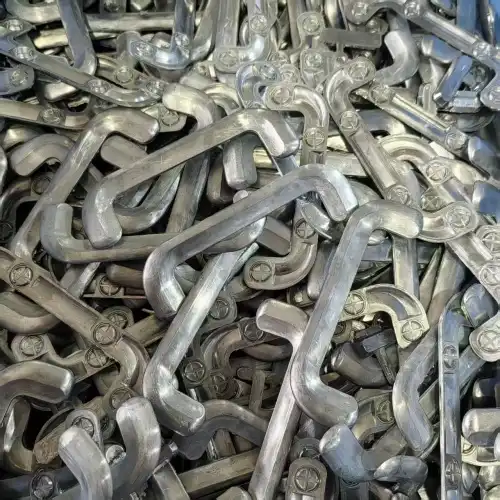
Three key composition differences (metal tag labels):
- Zinc content: Zinc alloy contains 95%+ zinc, while brass contains 30-40%
- Copper presence: Brass features significant copper content for enhanced durability
- Additional elements: Zinc alloy incorporates aluminum and magnesium for improved strength
Testing data reveals zinc alloy's tensile strength reaches 280-320 MPa, while brass achieves 300-400 MPa. Carol Metal's quality control laboratory conducts extensive testing on both materials, ensuring each batch meets strict ISO9001 standards.
If you need cost-effective solutions with excellent detail reproduction, zinc alloy proves more suitable. However, if your brand prioritizes maximum durability and premium appearance, brass delivers superior performance.
Durability and Longevity Comparison
Durability testing demonstrates significant performance variations between these materials. Carol Metal's testing facility utilizes advanced equipment including tensile testing machines and impact resistance analyzers to evaluate long-term performance.
Corrosion resistance data:
- Zinc alloy: 200-300 hours salt spray testing
- Brass: 500-800 hours salt spray testing
- Protective coatings extend both materials' lifespan significantly
Environmental factors heavily influence material selection. Zinc alloy performs excellently in controlled indoor environments but requires proper electroplating for outdoor applications. Carol Metal's in-house electroplating facility applies gunmetal and nickel finishes, extending product lifespan by 300-400%.
Brass naturally resists tarnishing and maintains structural integrity across temperature variations. This characteristic makes it particularly valuable for luxury handbags and leather goods exposed to varying conditions, as reflected in its metal tag labels.
Longevity factors include:
- Surface treatment quality: Professional electroplating dramatically improves zinc alloy performance
- Usage environment: Indoor vs outdoor exposure affects material choice
- Maintenance requirements: Brass needs minimal care while zinc alloy benefits from protective coatings
If you need labels for premium leather goods requiring decades of service life, brass offers superior longevity. Conversely, if your Products target fashion-forward markets with regular updates, zinc alloy provides excellent performance at lower costs.
Cost Analysis and Manufacturing Efficiency
Manufacturing costs reveal substantial differences between these materials. Zinc alloy's lower raw material costs and superior moldability reduce production expenses significantly. Carol Metal's 30 million piece annual capacity leverages zinc alloy's efficiency advantages for large-scale production runs.
Cost breakdown comparison:
- Raw material costs: Zinc alloy 30-40% less expensive than brass
- Manufacturing speed: Zinc alloy casting 25-30% faster
- Tool wear: Zinc alloy reduces die maintenance costs by 20-25%
Production efficiency varies considerably between materials. Zinc alloy's lower melting point (380-420°C vs brass 900-940°C) reduces energy consumption and enables faster cycle times. This efficiency translates into competitive pricing for bulk orders while maintaining quality standards.
Surface finishing costs differ substantially. Zinc alloy requires electroplating for optimal appearance and protection, adding processing steps. Brass often achieves desired aesthetics through polishing alone, though specialized finishes remain available. Metal tag labels are not directly related to these finishing methods..
Carol Metal's fully integrated facility controls every production step, from initial casting through final electroplating. This vertical integration eliminates external dependencies and ensures consistent quality across both material options.
If you need maximum cost efficiency for large production volumes, zinc alloy delivers significant savings. However, if your budget accommodates premium materials for enhanced brand positioning, brass justifies its higher investment through superior durability.
Design Flexibility and Aesthetic Options
Creative possibilities expand dramatically with proper material selection. Zinc alloy's exceptional moldability enables intricate details, fine textures, and complex geometries impossible with other materials. Carol Metal's advanced die-casting equipment achieves tolerances within ±0.05mm, perfect for detailed logo reproduction.
Design capability comparison:
- Detail resolution: Zinc alloy captures 0.1mm features, brass manages 0.2mm minimum
- Wall thickness: Zinc alloy allows 0.6mm walls, brass requires 0.8mm minimum
- Surface textures: Both materials accept various finishing techniques
Aesthetic versatility differs between materials. Zinc alloy accepts numerous electroplating options including chrome, gold, antique bronze, and specialized colors. Carol Metal’s electroplating facility offers over 15 finish options, enabling perfect brand color matching and providing metal tag labels.
Brass provides natural beauty through its warm golden tone. Polishing, brushing, and antiquing techniques create diverse appearances without additional coating requirements. This natural aesthetic appeals particularly to luxury brands seeking authentic material expression.
Customization capabilities extend beyond basic shaping. Carol Metal's OEM/ODM services include:
- Logo engraving and embossing
- Multi-color electroplating combinations
- Textured surface treatments
- Integrated attachment mechanisms
If you need maximum design flexibility with intricate details, zinc alloy offers superior moldability. Alternatively, if your brand values natural material beauty with timeless appeal, brass provides unmatched aesthetic authenticity.
Industry Applications and Brand Alignment
Market positioning significantly influences material choice across different sectors. Luxury fashion brands increasingly favor brass for its premium perception and longevity. Carol Metal's experience serving high-end clients demonstrates brass's effectiveness in maintaining brand prestige.
Industry preferences breakdown:
- Luxury brands: 70% prefer brass for flagship products
- Mid-range manufacturers: 60% choose zinc alloy for cost optimization
- Gift companies: 80% select zinc alloy for design flexibility
Brand alignment considerations extend beyond material properties. Consumer perception studies indicate brass conveys quality and craftsmanship, while zinc alloy suggests innovation and value. Understanding target market expectations guides optimal material selection.
Application-specific requirements vary significantly. Evening bags and formal accessories benefit from brass's natural elegance and metal tag labels. Casual handbags and fashion accessories leverage zinc alloy's design versatility, cost advantages.
Carol Metal's diverse portfolio includes successful projects across all market segments. Their ISO9001 certification and SGS compliance ensure both materials meet international quality standards, regardless of target market positioning.
Testing protocols validate material performance across intended applications. Carol Metal's quality inspection system includes:
- 100% visual inspection for surface defects
- Tensile strength testing for attachment points
- Corrosion resistance evaluation for electroplated surfaces
- Dimensional accuracy verification for consistent fitting
If you need materials supporting premium brand positioning, brass delivers authentic luxury appeal. However, if your focus emphasizes innovative design and competitive pricing, zinc alloy enables creative freedom within budget constraints.
Quality Control and Manufacturing Standards
Professional manufacturing requires rigorous quality systems ensuring consistent output. Carol Metal's comprehensive quality control encompasses every production stage, from raw material inspection through final packaging. Their 4,500㎡ facility maintains strict environmental controls optimizing both material processing.
Quality control checkpoints include:
- Incoming material verification: Chemical composition and purity testing
- Process monitoring: Temperature, pressure, and timing controls during casting
- Dimensional inspection: Precision measurement using calibrated equipment
- Surface quality assessment: Visual and tactile evaluation of finish quality
Advanced testing equipment validates product performance. Carol Metal's laboratory features FEIOU series testing instruments, tensile testing machines, and specialized durability equipment. This comprehensive testing capability ensures both zinc alloy and brass products meet specified requirements.
Certification compliance demonstrates manufacturing excellence. Multiple authoritative certifications including SMETA, Sedex, ISO9001, and SGS validate Carol Metal's quality systems. These certifications particularly matter for luxury brands requiring supplier verification.
Traceability systems track each production batch from raw materials through delivery. This documentation capability supports quality investigations and continuous improvement initiatives. Customers receive detailed quality reports documenting their specific order's test results.
If you need suppliers with proven quality systems and comprehensive testing capabilities, Carol Metal's certified processes ensure reliable performance regardless of material selection.
Partner with Carol Metal for Premium Metal Tag Labels Manufacturing
Carol Metal combines decades of expertise with state-of-the-art manufacturing capabilities to deliver exceptional durable labels and custom metal tags. Their comprehensive production facility handles everything from initial design consultation through final delivery, ensuring seamless project execution for metal tag labels supplier partnerships.
With over 100 specialized production equipment pieces and 30 million piece annual capacity, Carol Metal accommodates both prototype development and large-scale production requirements. Their in-house electroplating facility guarantees consistent quality control while their experienced team provides technical guidance throughout the development process.
Contact tony@carolxiao.com to discuss your specific metal tag requirements and discover how Carol Metal's proven capabilities can enhance your product line with precision-engineered hardware solutions.
References
1. Materials Science and Engineering: An Introduction, 9th Edition - Comprehensive analysis of metal alloy properties and manufacturing processes for industrial applications.
2. Handbook of Metal Forming and Surface Treatment Techniques - Detailed examination of electroplating processes and their effects on zinc alloy and brass durability.
3. Quality Control in Metal Casting Industries: Standards and Practices - ISO9001 implementation guidelines for precision metal manufacturing operations.
4. Corrosion Resistance Testing Methods for Fashion Hardware - Industry standard testing protocols for evaluating metal accessories in luxury goods applications.
5. Cost Analysis of Metal Alloy Selection in Consumer Products Manufacturing - Economic comparison of zinc alloy versus brass in high-volume production environments.
6. Design Engineering for Metal Tag and Label Applications - Technical specifications and tolerance requirements for precision metal identification products.