_1753256285958.png)

_1754990596544.webp)
 2025-12-31 23:23:28
Different materials have different pros and cons that affect performance, durability, and cost-effectiveness. The arch bridge buckles material you choose for things like bag hardware, chain connectors, or belt loop buckles will affect how well they resist rust and how much weight they can hold.
Overview of Arch Bridge Buckle Materials
Understanding the basic properties of arch bridge buckle materials helps make smart procurement decisions. Each material category has unique properties that affect application performance.
Common Arch Bridge Buckle Materials
The industry uses several core materials with specific performance requirements. Heavy-duty applications favor steel variants due to their strength. Carbon steel can carry loads, while stainless steel resists corrosion. In weight-sensitive corrosion-resistant applications, aluminum alloys are popular. Zinc alloy is a good compromise between strength and finishing. Fiberglass and carbon fiber reinforced polymers are used in applications that require extreme environmental resistance.
Material Type Performance Characteristics
Material performance varies greatly in four key dimensions. Service life and load capacity depend on strength and durability. Steel is stronger raw, but composites are stronger-to-weight. Maintenance and ownership cost depend on corrosion resistance. In harsh environments, aluminum and treated steel work well. Installation costs and structural requirements depend on weight. Aluminium and composites save weight. Steel is often the most cost-effective material for standard applications due to initial and long-term maintenance costs.
Performance Comparison: Advantages and Disadvantages of Each Material
A close look at material-specific performance characteristics reveals procurement trade-offs. Understanding these details helps buyers choose the best material for their application.
Arch Bridge Buckles
Superior strength and durability make steel buckles ideal for high-load applications. Arch bridge buckles offer competitive pricing and reliable supply chains due to their widespread availability. Well-established manufacturing processes reduce quality variability. However, steel's corrosion requires protective coatings or treatments, increasing initial costs. The material's density makes components heavier, which may increase shipping costs and installation complexity. Harsh environments require regular maintenance to prevent degradation.
Aluminium Arch Bridge Buckles
Long-term maintenance is reduced by aluminum's natural corrosion resistance. Lightweight design simplifies handling and installation and lowers shipping costs. Easy to machine material allows precise manufacturing tolerances. Aluminum is weaker than steel, limiting its use in high-stress environments. Higher material costs affect initial budgets. Cyclic loading fatigue susceptibility requires careful engineering analysis for dynamic applications.
Arch Bridge Buckles Zinc Alloy
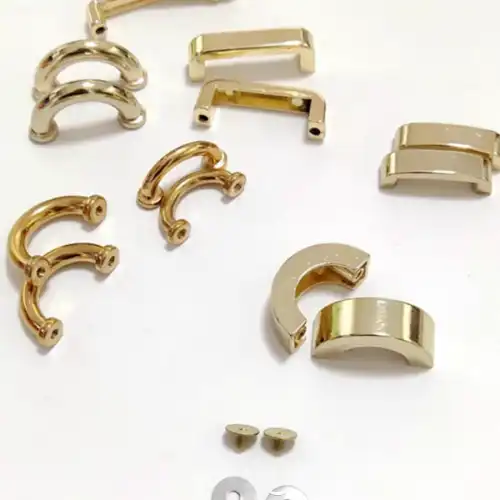
Zinc alloy buckles, like our 8.3-gram 13mm inner diameter model, combine performance and style. Premium finishes like brush gunmetal and brush antique brass last well on the material. Bag purse hardware and belt loops benefit from zinc alloy's corrosion resistance and strength. Manufacturing ensures quality and dimensional control. The material's moderate density reduces shipping costs and is durable enough for fashion accessories.

Arch Bridge Composite Buckles
Composites excel in corrosive environments where metals fail quickly. Their high strength-to-weight ratios allow lightweight designs without sacrificing performance. Chemical resistance outperforms metals in many applications. Higher startup costs can strain project budgets. Specialized manufacturing reduces supplier options and increases lead times. Long-term performance data is scarce for critical applications requiring extended service life guarantees.
Material Selection Criteria for Arch Bridge Buckles in B2B Procurement
Material selection requires systematic evaluation of multiple factors that affect performance and value. Smart procurement teams combine technical and business criteria.
Engineering and structural requirements
Load capacities must match applications and safety margins. Industry requires higher performance than fashion accessories, which require moderate strength. Environmental factors strongly influence material selection. In coastal areas, corrosion-resistant aluminum or zinc alloy is preferred. Careful material compatibility analysis is needed for chemical exposure. Extreme temperatures may limit material choices or require special treatment.
Supply Chain and Cost Considerations
Total cost of ownership helps choose materials, but budget constraints often do. Steel has the lowest initial cost, but aluminum and composites may last longer in harsh environments. Material lead times vary greatly. Standard steel buckles ship quickly, but composites may take longer. Time-sensitive projects require reliable suppliers, so established manufacturers with experience are essential.
Adjustment to Project Specifications
Custom arch bridge buckles' capabilities vary by material. Zinc alloy buckles are highly customizable in size, color, and finish. Our factory can customise dimensions and materials to your specifications. Attachment methods, dimensional tolerances, and aesthetics must be considered when integrating existing designs. Critical applications may require compatibility testing.
Installation and Maintenance Implications Based on Material Choice
Installation, maintenance, and lifecycle costs depend on material choice. Understanding these implications helps buyers maximize performance and value.
Installation instructions and best practices for various materials
Optimizing performance requires specific handling techniques for each material. Installing steel arch bridge buckles requires care to avoid coating damage. Proper torque specifications prevent overstressing and secure attachment. Handling aluminum components gently prevents surface damage and fatigue cracks. When installing zinc alloy buckles, finish protection is important. For secure attachment, composite materials may need specialized fasteners or adhesives.
Common Problems and Solutions by Material
Understanding typical failure modes helps procurement teams choose materials and plan maintenance. Steel arch bridge buckles degrade due to corrosion, especially at stress concentration points. Routine inspections catch issues before they fail. Cyclic loading can cause fatigue cracks in aluminum components, requiring periodic inspection of high-stress areas. If properly finished, zinc alloy buckles last a long time and wear slowly.
Maintenance Methods to Improve Performance and Life
Proactive maintenance extends buckle life regardless of material. Regular cleaning and coating renewal benefit steel parts. Environmental exposure and loading determine inspection frequency. Aluminum buckles require little maintenance but should be cleaned periodically to maintain appearance and prevent debris. Basic cleaning keeps zinc alloy buckles working, and their durable finishes resist wear under normal use. Documenting maintenance helps improve procurement decisions.
Carol Metal: Your Trusted Arch Bridge Buckle Manufacturer
Carol Metal leads arch bridge buckle manufacturing with precision-engineered solutions for global fashion and accessories markets. Our flagship 13mm inner diameter zinc alloy buckles in brush gunmetal and brush antique brass finishes are ideal for belt loops and chain connectors.
Our modern 4,500◡ manufacturing facility can produce 30 million pieces annually with over 100 pieces of professional production equipment. Our scale advantage lets us efficiently handle small-batch trial orders and large-volume production runs. Our fully integrated operation includes an in-house electroplating facility for raw material to finished product quality control.
Excellent quality drives our entire operation. Our ISO9001, SGS, SMETA, and Sedex certifications show our commitment to international standards. Our testing services include tensile strength, impact resistance, and durability using specialized equipment. Our rigorous process ensures every buckle meets or exceeds performance expectations.
We stand out in the accessories market with our customization. Our engineering team collaborates with clients to create custom solutions for specific dimensions, finishes, and materials. Sizes, colors, and materials can be fully customized to make your Products stand out.
Conclusion
When choosing a material for arch bridge buckles, you must consider its strength, cost, conditions, and appearance. Steel is the strongest and most affordable, but it must be properly protected from corrosion. Aluminum is great at resisting corrosion, and even though it costs more at first, it has benefits because of its light weight. Zinc alloy gives the best overall performance, look, and value for fashion applications. Composite materials work great in harsh conditions, but they are very expensive. Understanding these trade-offs lets you make smart purchasing decisions that get the best performance and value. The secret is to find a balance between the material's properties and application needs should be considered, as should the total cost of ownership, not just the initial purchase.
Carol Metal combines decades of manufacturing expertise with cutting-edge production capabilities to deliver solutions that exceed expectations. Our zinc alloy buckles offer the perfect combination of aesthetics, durability, and value for discerning brands worldwide. Whether you need standard configurations or completely custom designs, our team stands ready to support your success. Contact Us at tony@carolxiao.com to discuss your requirements with our arch bridge buckle supplier specialists.
FAQs
Q1: How do I choose coastal arch bridge buckle materials?
A: Salt air exposure requires excellent corrosion resistance in coastal areas. In these conditions, aluminum alloy or zinc alloy buckles work well. Consider exposure level—direct saltwater contact requires more protection than occasional salt air. Zinc alloy buckles with premium finishes perform well coastally for fashion.
Q2: What are typical custom arch bridge buckle lead times?
A: Order volume and customization complexity affect lead times. Custom designs may take 4-6 weeks for tooling and production, while standard modifications take 2-3 weeks. Full in-house control of all processes allows our integrated manufacturing facility to deliver faster than industry averages.
Q3: Are zinc alloy arch bridge buckles as strong as steel for heavy equipment?
A: Fashion accessories and moderate-duty applications benefit from zinc alloy, but extreme load requirements may require steel. Our 8.3-gram buckles are strong enough for bag hardware, belt loops, etc. We recommend steel with protective coatings for heavy industrial use.