_1753256285958.png)

_1754990596544.webp)
Are eyelets and grommets the same?
 2026-10-11 22:36:44
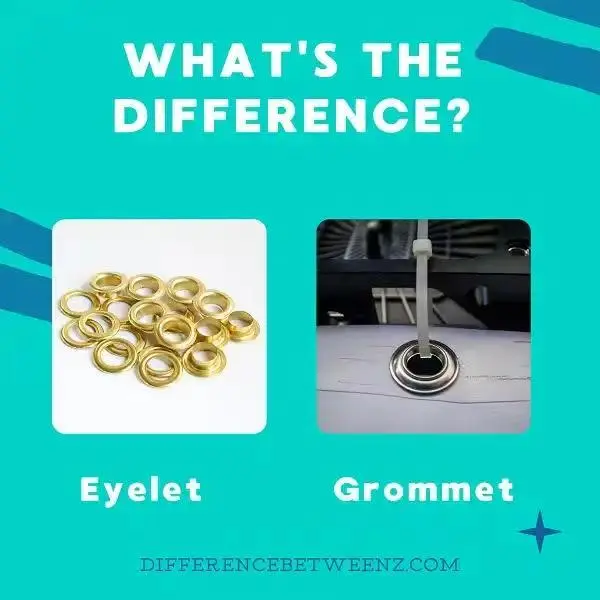
When you receive a new batch of hardware samples for your latest handbag production line, you might notice two similar-looking circular metal pieces—one labeled "eyelet" and the other "grommet." At a glance, they seem interchangeable, yet your production supervisor insists they serve different purposes. This confusion is common among procurement professionals managing hardware supply chains. Simply put, metal eyelets and grommets are not the same, though they share similar functions. Metal eyelets typically consist of a single-piece tubular barrel with a flared flange designed for lighter materials like fabric and leather crafts. Grommets, on the other hand, usually feature a two-piece construction—a barrel paired with a separate washer—engineered to handle heavier stress and thicker substrates such as industrial tarpaulins. Understanding this distinction is essential when sourcing hardware that must meet specific performance standards, avoid costly production errors, and maintain batch consistency across large-scale manufacturing orders.
This guide demystifies these two fasteners by exploring their definitions, structural differences, material options, installation methods, and procurement considerations. Whether you operate a mid-sized bag manufacturing facility in Guangdong or manage OEM orders for international fashion brands, this resource will help you make smarter sourcing decisions that optimize both cost and quality.
Understanding Eyelets and Grommets: Definition and Differences
What Are Metal Eyelets?
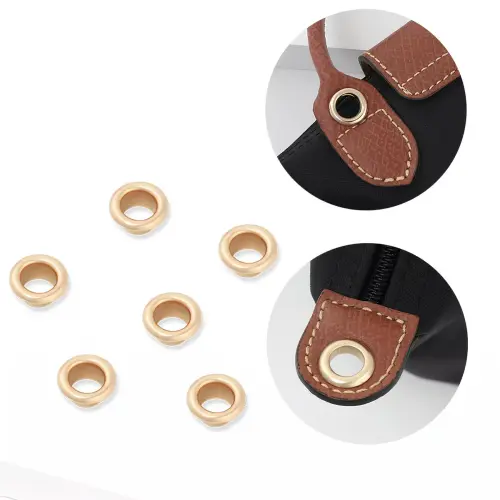
Metal eyelets are carefully made cylindrical hardware parts with a single-piece tubular barrel and a flanged end. They make circle holes in surfaces stronger so that the material doesn't fray or break down around the opening. Bag straps, shoelace holes, decorative accents on leather goods, and clothing closures are all common uses. Because of how they're made, ropes, ribbons, or laces can go through them without hurting the material around them. For example, brass, zinc alloy, aluminum, or stainless steel are often used in cold-forming methods during manufacturing. These materials are chosen for their specific performance qualities, such as weight or resistance to corrosion.
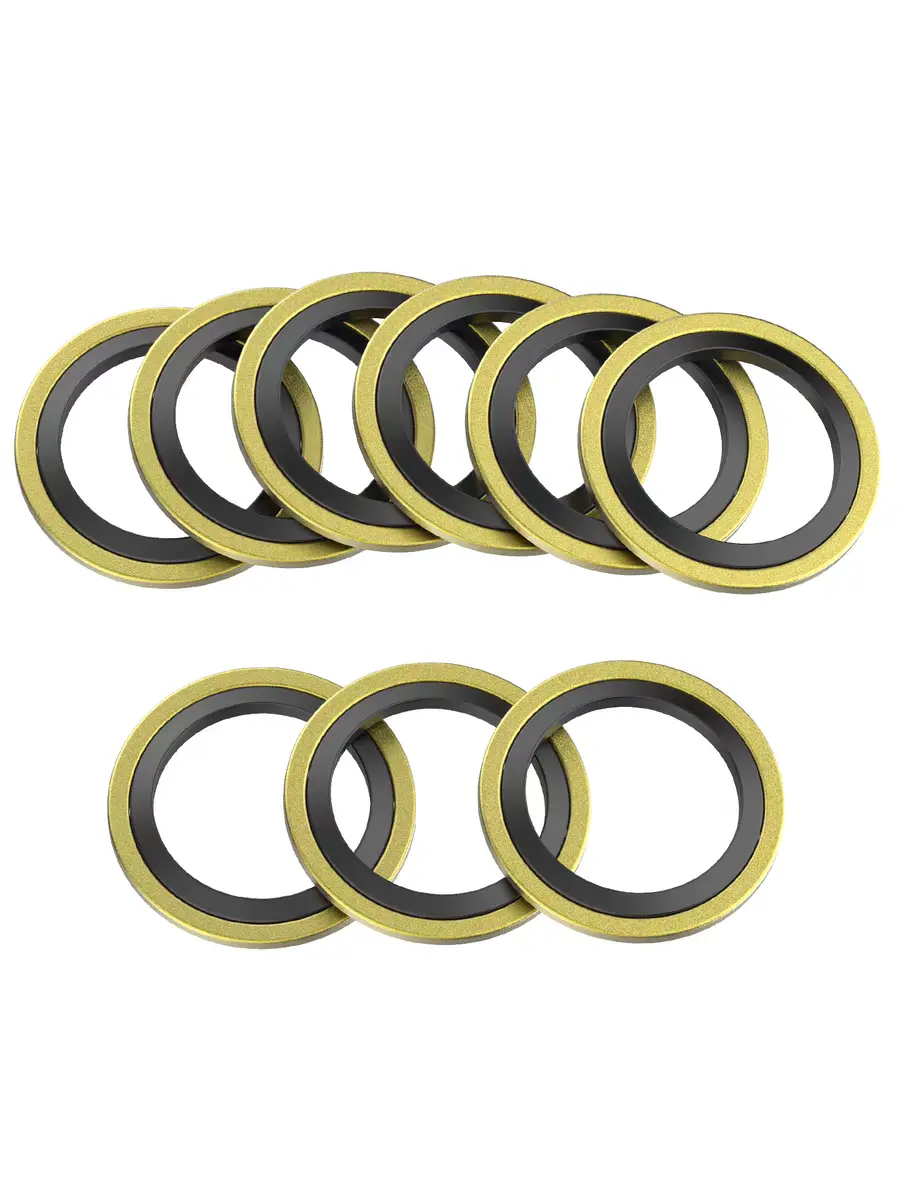
What Are Grommets?
Grommets are different because they are made up of two separate parts: a circular barrel and a screw that fits inside it to hold the material in place. Because it has two parts, this design spreads mechanical stress over a larger surface area, which makes grommets perfect for heavy-duty uses like naval tarps, industrial canvas, car seats, and outdoor signs. Grommets work great in places where they need to fight pulling out and last a long time when they are under stress. Compared to eyelets, they usually come in bigger sizes and are made of strong materials like marine-grade 316 stainless steel or cold-rolled steel.
Key Structural and Functional Differences
The main difference is in how they are built and how much weight they are supposed to hold. Eyelets use a single-piece flange that rolls back on itself during installation to make a strong grip that works with thin to medium substrates. With their screw part, grommets make a sandwich effect that works better with stronger materials and more stress. There are also different ways to install them. To install eyelets, you only need a simple flare tool or a hand-press setter. To install grommets, you need special tools that can squeeze both pieces at the same time. This difference in structure has a direct effect on procurement decisions—picking the wrong part can cause the system to fail early, cause expensive batch rejections, and cause delays in meeting brand client orders.
Types and Specifications of Metal Eyelets and Grommets
Material Options and Their Properties
Choosing the right material is very important for making sure that hardware performance meets the needs of the application. Eyelets made of brass don't rust and are often used on high-end leather goods and fashion accessories. They keep their look over time and can be plated with different finishes, such as light gold, antique bronze, and nickel-free coats. Zinc metal eyelets are popular for making mid-range handbags because they are both cheap and strong enough. Stainless steel types, especially 304 and 316 grades, are better at resisting corrosion in saltwater and must be used for marine-grade applications. When weight is an issue, technical clothing and camping gear made with aluminum eyelets are great options.
Size Variations and Specifications
There are different sizes of metal eyelets and grommets to fit different material widths and use cases. The 30mm outer round alloy eyelet grommet has an inner diameter of 15mm, weighs about 17.7 grams, and has a light gold finish. This is a standard specification. This size works well for bags, clothes, and leather projects that need some extra support without adding too much weight. Smaller eyelets, with an inner width of 3 mm to 10 mm, are used for decoration or smaller lacing tasks in shoes and clothes. Larger grommets, ranging from 20 mm to 40 mm or more, are used in industries for things like hanging banners or supporting heavy canvas. Figuring out how shank length, material thickness, and flange diameter relate to each other stops installation problems and makes sure that quality is the same from one batch of production to the next.
Specialty Variants for Specific Applications
Specialty holes and grommets meet specific buying needs and come in shapes other than the normal round ones. Waterproof versions have rubber gaskets or sealed flanges that keep water out, which is important for outdoor and marine gear. Decorative eyelets have fancy flange patterns, colored coatings, or crystal accents that are made for high-end leather items and fashion wallets. Self-piercing holes get rid of the need for pre-punching, which speeds up production in textile factories that make a lot of clothes. Rolled-edge grommets make things safer by getting rid of sharp metal edges, which is important for clothing and items for kids. Each variant solves a different problem related to production efficiency, esthetics, or following the rules.
Installation and Removal: Practical Guidance for B2B Clients
Essential Tools and Installation Techniques
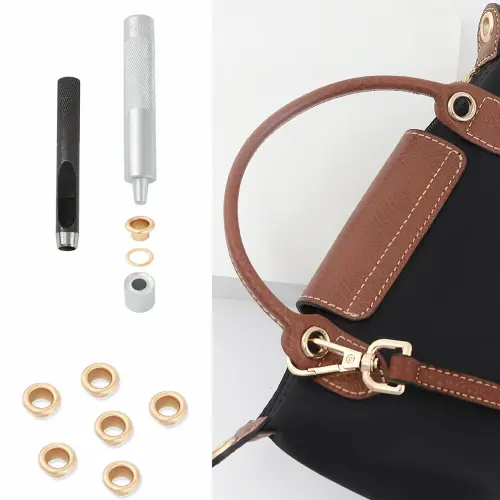
Correct fitting has a direct effect on how long a product lasts and how happy the customer is with it. Metal eyelets need a setting tool that works with them. For low-volume jobs, human hand-press setters work well, but for high-throughput production lines, air machines are better. To install something, you have to put the material on a strong anvil, place the eyelet barrel through a hole that has already been punched, and then apply even pressure to the barrel to make it curve over the backside of the material. For grommets, you have to insert the barrel from one side and the washer from the other side, and then use a special die set to squeeze them together. By keeping the pressure steady and making sure everything is lined up correctly, you can avoid problems like incomplete rolls, cracked flanges, and weaker grip strength that can happen in the field.
Removal Methods Without Damaging Materials
Due to changes in design or quality problems, you may need to take out installed hardware from time to time without damaging the base material. Cutting pliers or special eyelet removal tools can be used to carefully pry the curved edge apart, but this could tear leather or fabrics that aren't strong enough. Using a rotary cutting tool to grind away the rolled part piece by piece is a better method. The barrel should then be carefully removed. This method keeps the surrounding material's structure, so it can be used again or fixed. However, avoiding problems before they happen is more cost-effective than fixing them. Sample testing and pilot production runs can help find problems with size or compatibility before starting full-scale production.
Quality Optimization Tips
Several things need to be taken into account in order to get an installation that meets the standards of the brand client. Pre-punching holes with exact diameter tolerances—usually 0.5mm to 1mm less than the inner diameter of the eyelet—makes sure that the parts fit tightly and don't pull apart. If you use even pressure during setting, you can avoid uneven flaring that weakens the structure. Using tensile testing equipment to do regular pull-out force tests on installed eyelets makes sure they meet certain retention values, which are usually measured in Newtons. Setting tools that are regularly calibrated and workers on the production line who are taught the right way to do their jobs lower the number of mistakes and the chance that a batch will be rejected by brand customers who care about quality.
Conclusion
By knowing the difference between eyelets and grommets, buying workers can choose hardware that fits the needs of the production, the material, and the brand. Metal eyelets are used for lighter-duty tasks in clothing, leather crafts, and bags, while grommets are used for heavy-duty reinforcement needs. Which material you choose—brass, zinc alloy, stainless steel, or aluminum—has a direct effect on how well structures resist corrosion, how long they last, and how much they cost. Techniques for installation and quality control make sure that all production runs work the same way. When you work with strategic suppliers who offer flexible customization, low minimum order quantities, and reliable lead times, buying hardware goes from being a necessary evil to a competitive edge that improves product quality and supply chain efficiency.
FAQ
Can I Use Eyelets and Grommets Interchangeably?
No, not usually. Both eyelets and grommets reinforce holes, but eyelets are better for lighter materials and lower stress situations, while grommets' two-piece design is better for heavier materials and higher tension. If you use a hole where a grommet should be used, the product might fail early and need to be returned.
How Do I Determine Correct Sizing Based on Material Thickness?
To allow for proper curving, the eyelet stem should be 1.5 mm to 2 mm longer than the thickness of the material. Carefully measure your substrate and look at the supplier's size charts. The fit and installation compatibility can be checked better by asking for samples before placing large orders.
What Are the Advantages of Stainless Steel Versus Brass Eyelets?
Stainless steel is very good at resisting corrosion, especially in coastal or high-humidity settings. It also stays strong in harsh circumstances. Brass looks great, can be plated with different finishes, and doesn't rust, so it's perfect for high-end items. Pick based on what the application needs and your cash.
Partner with Carol for Reliable Metal Eyelet Supply
Finding the correct metal eyelets and grommets shouldn't slow down your production schedules or put stress on your supply chain. Carol runs a 4,500㎡ factory with more than 100 specialized machines that can make 30 million pieces a year. This makes sure that we can quickly and easily handle both small orders and large orders. Our in-house electroplating plant makes sure that all of the batches are the same color. This gets rid of the delays and quality problems that come with supply chains with many vendors. Our OEM/ODM services can be tailored to your exact needs, whether you need standard 30mm outer round alloy eyelet grommets with 15mm inner diameters and light gold finishes, or you need hardware that is completely made to fit the needs of your brand. Our ISO9001, SMETA, Sedex, and SGS certifications show that we are dedicated to quality standards that meet the needs of even the strictest brand checks. Email tony@carolxiao.com to talk to our technical team about your hardware needs, get customized samples, or talk about how to get the best deals on bulk orders as a reputable metal eyelet manufacturer. Visit carolhardware.com to see our full catalog and learn more about how our one-stop hardware solutions make buying hardware easier and better.
References
- Smith, J. & Taylor, R. (2021). Industrial Fasteners and Hardware: Design, Materials, and Applications. Manufacturing Press.
- Chen, L. (2020). "Material Selection Criteria for Metal Eyelets in Leather Goods Production." Journal of Apparel and Textile Engineering, 15(3), 112-128.
- International Organization for Standardization. (2019). ISO 9001:2015 Quality Management Systems – Requirements. Geneva: ISO.
- Martinez, A. (2022). "Comparative Analysis of Corrosion Resistance in Brass and Stainless Steel Hardware." Materials Science Quarterly, 28(2), 45-61.
- Wong, K. & Patel, S. (2020). Supply Chain Optimization for Fashion Accessory Manufacturing. Global Business Publications.
- European Commission. (2018). REACH Regulation: Guidance on Metal Alloys and Surface Treatments. Brussels: EC Publications.