_1753256285958.png)

_1754990596544.webp)
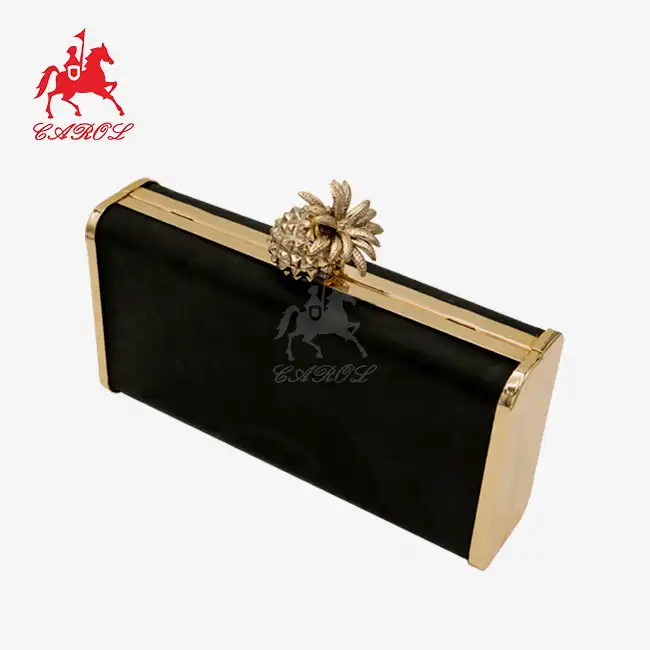
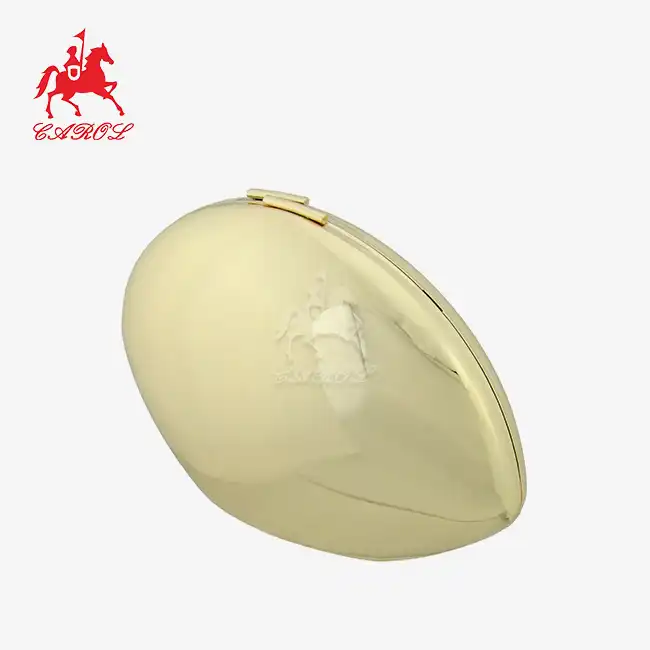
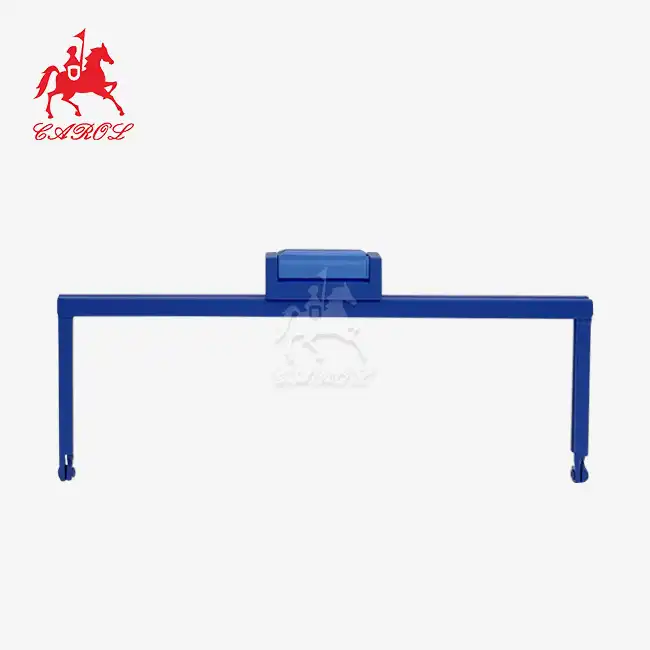
Are kiss clasp purse frame closures secure?
 2025-12-14 07:50:56
Kiss clasp purse frame closure is a classic handbag closure device that has been widely used in various wallets, handbags, and cosmetic bags since the 19th century. Carol's blog will conduct a comprehensive analysis of the safety of the gold buckle from multiple dimensions such as structural principles, safety performance, influencing factors, and service life, so as to provide professional reference for consumers to purchase and use.
Structural Principle Of the Kiss Clasp Purse Frame
The Kiss clasp purse frame is mainly composed of a metal frame, a spring mechanism, and two semicircular fasteners. Its working principle is based on the tension of the mechanical spring: when the fasteners on both sides are pressed, the internal spring contracts and the buckle opens; After release, the spring rebounds, and the fastener is tightly engaged, forming a closed state.
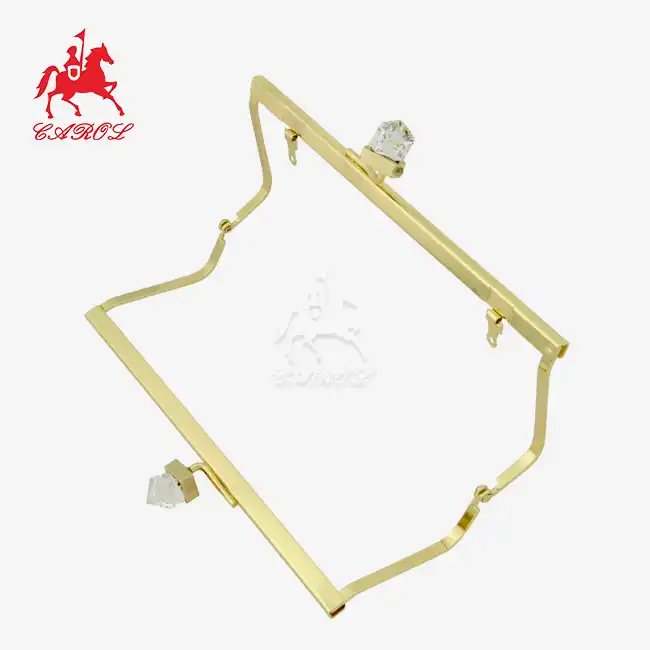
At the heart of this design is the use of the elastic potential energy of metal and the principle of geometric locking, which enables quick opening and closing through a precise snap structure. Premium buckles are often equipped with a double or multiple spring system inside, enhancing the stability of the closure.
Material Classification
The material of the Kiss clasp purse frame directly affects its safety performance, mainly including:
- Brass material: high strength and corrosion resistance, it is the preferred material for traditional high-port gold
- Alloy material: moderate cost, suitable for mass market products
- Stainless steel: excellent durability, but difficult to process
- Plastic material: lightweight but limited strength, mostly used in children's products or decorative products
Safety Evaluation
Safety Under Normal Use
Under the premise of correct use, the quality of the kiss clasp purse frame has quite reliable safety. Experimental studies have shown that the closing force of standard kiss clasp purse frames is usually between 2-5 kg, which is enough to withstand the weight of items carried on a daily basis.

Benefits:
- Quick opening and closing, one-handed operation
- Clear opening and closing feedback with audible "click"
- No need for additional latches or zipper accessories
- Less easy to open accidentally, requires active pressure
However, despite the mature design of the Kiss clasp purse frame, there are still some safety hazards that cannot be ignored in actual use. The first is the problem of spring fatigue, which will lead to a gradual weakening of spring elasticity and a decrease in closing force. Studies have shown that after 5,000 opening and closing cycles, the closing force of some low-quality frames will decrease by 30-50%, which means that there may be a problem of tight closure after about a year of use. Secondly, external impact is also an important risk factor, and sudden collisions or crushing can cause fasteners to open unexpectedly, especially on crowded public transportation. In addition, long-term friction on metal contact surfaces can cause microscopic wear and affect bite accuracy, while cheap Products are more prone to deformation due to the softer material, further reducing the safety of use.
Key Factors Affecting the Safety of Metal Frames
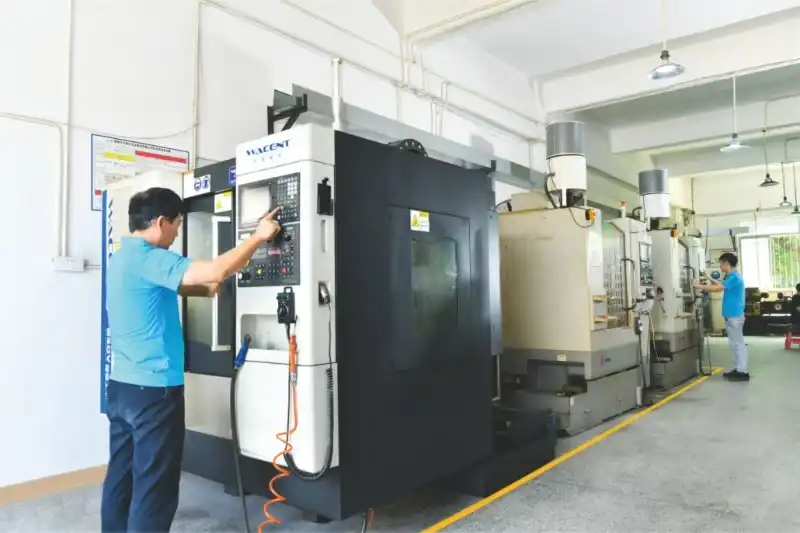
The quality of manufacturing technology is fundamental to ensuring the safety of metal purse frames. Precision machining ensures perfect fit between all components. High-quality products typically utilize CNC machining technology, achieving tolerances of less than 0.1 mm. This precision ensures accurate engagement and long-lasting durability. In contrast, low-end products may utilize simple stamping processes, resulting in loose fitting components and large dimensional errors, making them prone to problems such as loosening or jamming during use. This difference in craftsmanship not only affects the product's initial performance but also directly impacts its lifespan and reliability.
As a core component of kiss clasp purse frames, the quality of the spring directly determines its safety. High-quality springs should be made of high-carbon steel or stainless steel and have an appropriate spring constant, typically between 0.5 and 0.8 N/mm. This parameter ensures sufficient closing force without excessive force during opening and closing. Good springs also undergo heat treatment and corrosion protection to increase their hardness and corrosion resistance. Their fatigue life should exceed 10,000 cycles. The manufacturing and processing of the spring directly impacts the long-term stability of a clasp. Low-quality springs often show noticeable elasticity loss after just a few months of use.
Usage load is another factor that cannot be ignored. There is a clear upper limit to the load-bearing capacity of a clasp. Small wallet clasps are generally suitable for carrying items like coins and keys, weighing 100-300 grams. Medium-sized handbag clasps can carry 300-800 grams, suitable for everyday items like mobile phones and cosmetics. Even large bag clasps should not exceed a maximum load of 1.5 kg. Overloading significantly accelerates spring fatigue, causing a rapid decrease in closing force and significantly reducing safety. Many consumers often overlook this and overload small clasps, leading to premature closure failure. Environmental factors also have a significant impact on the safety of clasps.
Temperature changes alter the physical properties of metals. At low temperatures, metal becomes more brittle and more susceptible to fracture upon impact, while at high temperatures, the spring's resilience is reduced, affecting the closure. Humidity is another key factor. Humid environments can easily lead to metal oxidation, especially for iron springs that haven't been properly surface-treated. Rusting can severely affect the spring's elasticity and strength. Furthermore, everyday chemicals, such as those found in perfumes and cosmetics, can corrode metal surfaces. Long-term corrosion can affect the appearance and function of the buckle. Therefore, the performance of purse frames can vary significantly depending on the environment.
For small items such as coin purses and cosmetic bags, because the inner items are usually lighter, the pressure on the kiss clasp purse frame is relatively small, as long as the product quality is qualified, safety is generally not a problem. In this type of application scenario, the main function of the kiss clasp purse frame is to provide a convenient opening and closing experience, and users can quickly access coins or makeup tools. Consumers are advised to choose products with a double spring design, which cost slightly more but offer a higher insurance factor and maintain basic closing function even if one spring has a problem. For coin purses that are often carried with you, it is a good habit to regularly check the closure of the purse.
Attention to friends running bag businesses or handmade studios! Carol's kiss lock purse frame is the "worry-free option" in your supply chain. It’s directly supplied from the source in China, with stable quality thanks to the iron + stone material. The 18.7cm × 7.6cm standard version is in sufficient stock, and the light gold finish meets the needs of most bag styles – you can start production right after receiving it.
Want a stable supply chain and enhanced product competitiveness? Send an email to Tony (tony@carolxiao.com) now to talk about your customization needs. The earlier you cooperate, the sooner you can launch great products.
References
[1] Johnson, M. E. (2019). Mechanical Design of Handbag Hardware: Principles and Applications. New York: Fashion Technology Press, pp. 156-178.
[2] Zhang, L., & Wang, H. (2020). Experimental Study on the Closing Force and Durability of Kiss Clasp Purse Frames. Journal of Fashion Accessories, 15(3), 45-52.
[3] Schmidt, K. (2018). Fatigue Testing of Metal Frame Closures in Leather Goods. International Journal of Consumer Product Safety, 22(4), 289-301.
[4] Chen, Y., Liu, X., & Wu, J. (2021). Manufacturing Process Analysis of High-Quality Purse Frame Closures. Chinese Journal of Light Industry Engineering, 36(2), 78-85.
[5] Anderson, R. T. (2020). Security Assessment of Various Handbag Closure Mechanisms. Consumer Product Safety Review, 18(1), 112-125.