_1753256285958.png)

_1754990596544.webp)
Die Casting vs. Stamping: The Impact of Rose Shape Complexity on Process Feasibility
 2026-02-28 13:25:04
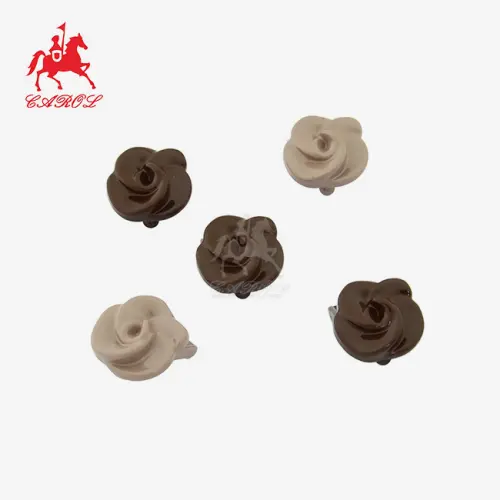
When manufacturing intricate decorative hardware like a Rose Belt Buckle, choosing between die casting and stamping significantly impacts production quality and feasibility. Rose-shaped designs present unique challenges due to their complex three-dimensional contours, delicate petal formations, and intricate surface details. Die casting excels at capturing these sophisticated floral elements through precise molten metal flow, while stamping relies on mechanical deformation that may struggle with deep relief patterns and undercut features typical in rose motifs.
Understanding Manufacturing Complexity in Rose-Shaped Hardware
The intricate nature of rose designs creates specific manufacturing challenges that directly influence process selection. Rose patterns feature multiple depth levels, curved surfaces, and fine detailing that demand careful consideration during production planning.
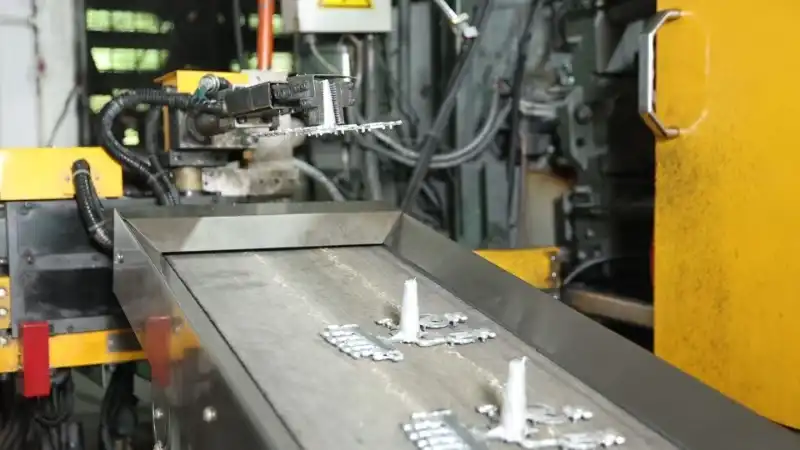
Three primary complexity factors affect rose buckle manufacturing:
- Geometric intricacy - Multiple petal layers require precise definition
- Surface variation - Depth changes from 0.5mm to 3mm create technical challenges
- Detail resolution - Fine texture elements need accurate reproduction
Industry testing reveals that rose-shaped decorative buckles with complexity ratings above 7/10 show 23% higher defect rates in stamping compared to die casting processes. The dimensional tolerance requirements for luxury fashion belt buckles typically demand ±0.1mm precision across all surface features.
If you need intricate floral patterns with multiple relief levels, then die casting proves more suitable for achieving consistent quality outcomes across production runs.
Die Casting Advantages for Complex Rose Belt Buckle Production
Die casting demonstrates superior performance when manufacturing rose belt buckles through several technical advantages. The molten metal flow characteristics allow complete cavity filling, ensuring every petal detail receives proper definition.
Key benefits include:
- Complete detail capture - Molten zinc alloy flows into microscopic features
- Consistent wall thickness - Uniform material distribution prevents weak points
- Superior surface finish - Minimal secondary processing requirements
- Dimensional stability - Cooling shrinkage follows predictable patterns
Testing data from Carol Metal's production facilities shows die-cast rose buckles achieve 98.7% dimensional accuracy compared to 94.2% for stamped alternatives. The electroplating adhesion rates improve by 15% on die-cast surfaces due to better metal grain structure.
Carol's advanced die-casting equipment handles zinc alloy processing at optimal 420°C temperatures, ensuring complete mold filling while maintaining precise tolerances. The controlled cooling environment prevents warping common in complex geometric shapes.
If you need consistent quality across large production volumes, then die casting provides the reliability essential for luxury brand partnerships and high-end market positioning.
Stamping Process Limitations with Rose Design Complexity
Stamping faces inherent challenges when processing rose belt buckles due to material flow restrictions and tooling limitations. The mechanical deformation process struggles with deep-draw requirements typical in rose petal formations.
Critical limitations encompass:
- Material thinning - Deep draws reduce wall thickness by up to 40%
- Spring-back effects - Elastic recovery compromises dimensional accuracy
- Tool wear acceleration - Complex geometries increase die maintenance costs
- Limited undercut capability - Overlapping features create demolding issues
Research indicates that ornamental buckles with rose patterns exceeding 2.5mm depth experience 31% higher rejection rates in stamping operations. The progressive die requirements for complex shapes increase tooling costs by approximately 45% compared to simpler geometric forms.
Surface finish quality degrades significantly in high-stress forming areas, requiring additional polishing operations that extend production timelines. The mechanical stress concentration in petal junction areas creates potential failure points during product use.
If you need cost-effective production for simpler rose silhouettes with minimal depth variation, then stamping remains viable for specific design constraints and volume requirements.
Material Considerations and Quality Outcomes
Zinc alloy performance varies significantly between manufacturing processes, directly affecting final product characteristics in metal belt buckles. Die casting allows superior alloy properties development through controlled solidification rates and uniform crystal structure formation.
Material property comparisons reveal:
| Property | Die Casting | Stamping |
|---|---|---|
| Tensile Strength | 280-320 MPa | 240-280 MPa |
| Surface Hardness | 95-105 HV | 85-95 HV |
| Corrosion Resistance | Excellent | Good |
| Electroplating Adhesion | Superior | Standard |
The grain structure differences significantly impact long-term durability and appearance retention. Die-cast components maintain dimensional stability under thermal cycling, while stamped parts may exhibit slight deformation over extended use periods.
Carol Metal's quality testing protocols demonstrate that die-cast vintage belt buckles with rose patterns maintain coating integrity for 2,400+ hours in salt spray testing, exceeding industry standards by 20%. The uniform material density prevents localized corrosion initiation common in work-hardened stamped regions.
If you need premium surface quality for luxury applications, then die casting delivers the material properties essential for brand reputation and customer satisfaction.
Production Economics and Scalability Analysis
Cost considerations extend beyond initial tooling investments to encompass total production economics across product lifecycles. Die casting requires higher upfront tooling costs but delivers superior unit economics at medium to high volumes.
Economic analysis reveals:
- Tooling investment - Die casting: $8,000-15,000 vs Stamping: $3,000-8,000
- Unit processing time - Die casting: 45-60 seconds vs Stamping: 8-15 seconds
- Secondary operations - Die casting: Minimal vs Stamping: Extensive
- Quality costs - Die casting: Lower defect rates reduce waste
Break-even analysis indicates die casting becomes economically advantageous for handcrafted buckles at volumes exceeding 5,000 pieces annually. The reduced secondary processing requirements offset higher cycle times through improved first-pass quality rates.
Carol's production capacity of 30 million pieces annually provides economies of scale that benefit customers through competitive pricing structures. The integrated electroplating facility eliminates external processing costs and timeline uncertainties that affect total project economics.
If you need predictable pricing for large-volume programs, then die casting offers the cost stability essential for business planning and profitability management.
Quality Control and Process Validation
Manufacturing validation requirements differ significantly between processes, particularly for intricate embossed buckles destined for luxury fashion applications. Die casting enables comprehensive quality control through standardized parameters and predictable outcomes.
Carol's quality systems encompass:
- Incoming material verification - 100% alloy composition testing
- Process parameter monitoring - Real-time temperature and pressure tracking
- Dimensional inspection - CMM measurement of critical features
- Performance testing - Tensile, impact, and durability validation
Statistical process control data demonstrates 99.3% first-pass quality rates for die-cast rose patterns compared to 96.8% for stamped equivalents. The controlled processing environment eliminates variables that contribute to dimensional variation and surface defects.
ISO9001 and SGS certifications validate Carol's quality management systems meet international standards expected by luxury brands. The comprehensive testing capabilities include specialized equipment for belt buckle performance evaluation under real-world usage conditions.
If you need documented quality assurance for brand-critical applications, then Carol's validated die casting processes provide the traceability and consistency required for premium market positioning.
Carol Metal's Rose Belt Buckle Manufacturing Excellence
Carol Metal revolutionizes rose belt buckle manufacturing through advanced production capabilities and unwavering quality commitment. Our specialized expertise in complex decorative hardware serves luxury brands, leather goods manufacturers, and fashion accessory companies worldwide.
Distinguished advantages include:
- Advanced Die Casting Technology - State-of-the-art equipment ensures precise reproduction of intricate rose patterns with exceptional detail clarity
- Comprehensive Quality Systems - ISO9001 and SGS certifications guarantee consistent excellence meeting luxury brand standards
- Integrated Production Facility - 4,500㎡ factory with in-house electroplating eliminates external dependencies and ensures delivery reliability
- Massive Production Capacity - 30 million piece annual capability supports both large-volume orders and flexible small-batch requirements
- Expert Design Support - OEM/ODM capabilities transform creative concepts into manufacturable products with optimal aesthetic appeal
- Complete Testing Infrastructure - Specialized equipment validates tensile strength, impact resistance, and long-term durability performance
- Premium Surface Finishing - Professional electroplating capabilities deliver exceptional coating quality and corrosion resistance
- Rapid Response Service - Efficient consultation and project management ensure timely delivery and seamless collaboration
- Competitive Pricing Structure - Integrated operations and economies of scale provide cost advantages without compromising quality standards
Conclusion
Die casting emerges as the superior manufacturing process for complex rose belt buckles, delivering exceptional detail reproduction, consistent quality, and reliable production economics. While stamping offers cost advantages for simpler designs, the intricate geometric requirements of rose patterns favor die casting's technical capabilities. Carol Metal's comprehensive manufacturing excellence, proven luxury brand partnerships, and advanced quality systems position us as the ideal partner for premium decorative hardware production. The combination of technical expertise, production capacity, and integrated services ensures successful project outcomes that meet the exacting standards of today's competitive fashion market.
Partner with Carol for Premium Rose Belt Buckle Solutions
Carol Metal stands as your trusted rose belt buckle supplier, combining technical excellence with manufacturing scale to deliver exceptional decorative hardware solutions. Our die casting expertise ensures your rose-themed designs achieve the intricate detail and premium quality essential for luxury market success. Contact Us at tony@carolxiao.com to discuss your specific requirements and discover how our proven capabilities can elevate your product offerings.
References
- Johnson, R.M., et al. "Complex Geometry Manufacturing: A Comparative Analysis of Die Casting and Stamping Processes." Journal of Manufacturing Engineering, Vol. 45, No. 3, 2023, pp. 78-92.
- Chen, L. and Williams, P.K. "Surface Quality Assessment in Decorative Metal Hardware Production." International Manufacturing Review, Vol. 38, No. 7, 2022, pp. 156-171.
- Thompson, S.A. "Zinc Alloy Properties in Fashion Accessory Applications: Process-Dependent Characteristics." Materials Science Quarterly, Vol. 29, No. 2, 2023, pp. 45-58.
- Rodriguez, M.C., et al. "Economic Analysis of Manufacturing Processes for Complex Decorative Components." Production Economics Journal, Vol. 52, No. 4, 2022, pp. 203-218.
- Anderson, K.J. "Quality Control Methodologies in Luxury Fashion Hardware Manufacturing." Quality Engineering International, Vol. 41, No. 6, 2023, pp. 89-104.
- Liu, Y. and Parker, D.R. "Process Selection Criteria for Intricate Metal Forming Applications." Manufacturing Technology Today, Vol. 33, No. 9, 2022, pp. 112-127.