_1753256285958.png)

_1754990596544.webp)
How Are Rectangular Adjuster Buckles Manufactured Step by Step?
 2026-02-26 21:48:48
Rectangular adjuster buckles are essential hardware components that enable precise strap length adjustment across countless applications, from luxury handbags to military gear. To make these parts, which look basic but are very important, the production process uses advanced engineering, precise tools, and strict quality control. Knowing how these buckles are made helps people who buy things make smart choices about where to get them that will directly affect the performance, durability, and brand reputation of their Products. Each stage in the production process makes the final product more reliable and more attractive.
Understanding Rectangular Adjuster Buckles
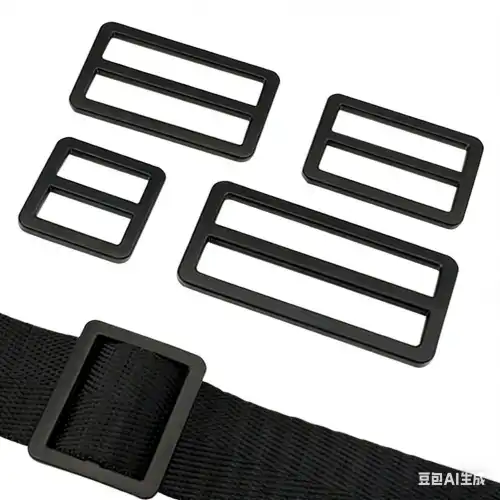
Rectangular adjuster buckles are basic pieces of hardware that are made to work with strap and webbing adjustment systems in many different fields. These parts have a unique rectangular frame with a sliding bar mechanism inside that lets users change the length of the strap while keeping it securely in place. The design concepts are all about finding the best balance between being easy to adjust and being able to lock securely.
Key Applications Across Industries
Rectangular adjusters are quite useful in many fields since they may be used in so many ways. High-end handbag designers include these buckles in their designs because they look good and work well. They are used by outdoor gear makers to make backpack straps, trekking gear, and camping gear that has to be strong under stress. Military and tactical gear has to be very strong and resistant to rust so that it can stand up to tough weather.
These buckles are used in seatbelt systems and safety harnesses in the automotive and safety equipment sectors, when failure is not an option. Companies who make gifts and clothing accessories like how flexible they are for making changeable parts for different ornamental and utilitarian uses. The many ways that these materials might be used show why it's so important for procurement specialists to choose high-quality resources and exact production procedures.
Design Fundamentals and Performance Requirements
To make rectangular adjuster buckles, engineers have to think carefully about how to spread the weight, how much friction there is, and where the material will break. The internal sliding mechanism needs to have enough friction to keep it from moving on its own, but it also needs to let it move smoothly when you want it to. To fit different strap thicknesses while keeping the best grip strength, frame dimensions and internal clearances need to be quite exact.
The choice of materials has a direct effect on performance, with aspects like corrosion resistance, weight, and appearance dictating decisions on what to choose. Buyers may better judge a supplier's ability and a product's specs if they know these basic design concepts.
Step-by-Step Manufacturing Process of Rectangular Adjuster Buckles
Prototype development and thorough design engineering are the first stages of the production process. To develop comprehensive requirements that take into consideration material characteristics, stress distribution patterns, and dimensional tolerances, engineers use computer-aided design software. Prototype testing verifies functionality and conducts real-world stress testing to confirm design assumptions.
Engineering and Material Preparation
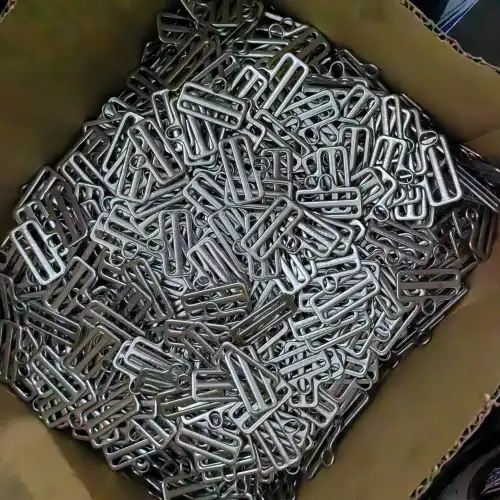
Careful raw material selection and quality assurance are key components of material preparation. Zinc alloy offers exceptional strength-to-weight ratios for metal buckles, such as our 2-inch outside width flat metal rectangle adjuster, while yet remaining reasonably priced. To attain the best performance qualities, the 44 x 29 x 3 mm dimensions and 14.3 gram weight standard call for exact material composition.
To guarantee uniformity across manufacturing batches, raw material inspection include dimensions verification, mechanical property testing, and chemical composition analysis. Before processing starts, 100% manual screening is done by quality control staff to get rid of inferior materials.
Die Casting and Forming Operations
The main technique of manufacturing metal rectangular adjusters is die casting. Extreme pressure, usually between 1,500 and 25,000 PSI, is used in high-pressure die casting machinery to pump molten zinc alloy into precisely machined steel molds. This procedure creates the intricate internal geometry needed for a sliding mechanism to operate properly while guaranteeing dimensional precision.
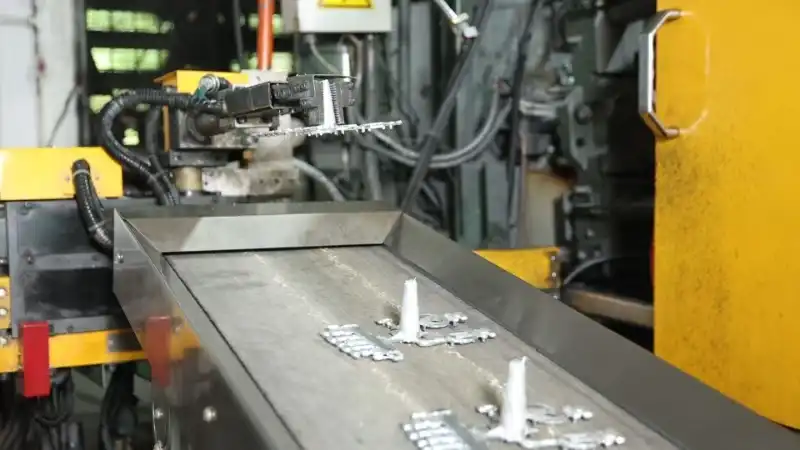
To ensure constant part quality, advanced cooling channels and ejection systems are incorporated into the mold design. Temperature controls avoid flaws like porosity or partial filling while maintaining ideal metal flow properties. Production rates surpassing 100 pieces per hour while keeping high tolerances are made possible by sophisticated die casting equipment.
Surface Finishing and Electroplating
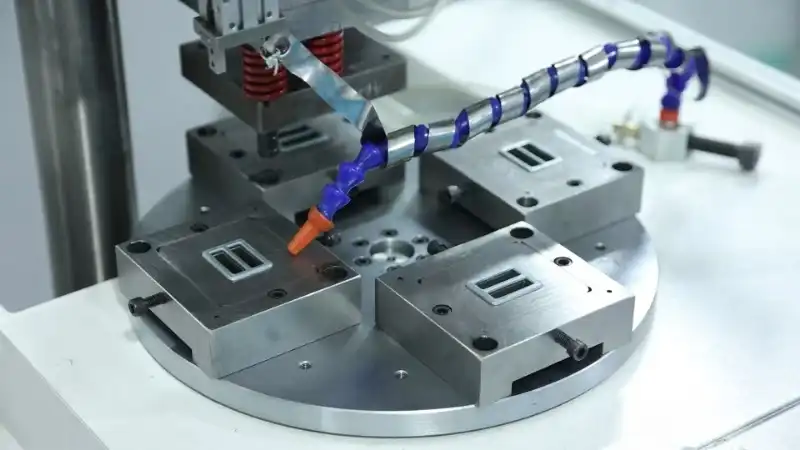
Raw castings are transformed into visually pleasing and superiorly functional products through surface finishing techniques. Light gold, gunmetal, matt gunmetal, and matt nickel are among the several finishing possibilities; each calls for certain application methods and preparatory steps.
After a thorough washing to get rid of casting residues, surface activation treatments are used to encourage plating adherence. The electroplating process takes place in specialized facilities with exact control over current density and chemical composition. To get the appropriate look and performance qualities, each finishing choice calls for a different plating chemical and set of processing settings.
Consistent color matching throughout manufacturing runs, corrosion resistance, and wear protection are all guaranteed by high-quality electroplating. To provide excellent surface quality, advanced plating facilities uphold stringent environmental controls and chemical monitoring.
Quality Control and Testing Procedures
All aspects of buckle performance and appearance are confirmed by thorough quality control methods. Precision measuring tools are used in dimensional inspection to verify adherence to predetermined tolerances. Under controlled circumstances, tensile testing machines assess failure mechanisms and load capacity.
To validate durability claims, specialized testing apparatus such as metal buckle pressing-life testing machines replicate prolonged usage cycles. Testing for impact resistance guarantees that buckles continue to work even after being subjected to shock loads common in practical applications. Plating thickness, adhesion strength, and appearance uniformity are all examined during surface quality inspection.
Comparison of Different Types and Materials of Rectangular Adjuster Buckles
Understanding the diverse landscape of rectangular adjuster buckle options enables procurement professionals to make optimal selections for specific applications. Standard rectangular adjusters provide reliable performance for general-purpose applications, while heavy-duty variants incorporate reinforced construction for demanding environments.
Material Performance Characteristics
Zinc alloy construction offers exceptional strength while maintaining reasonable weight characteristics. The material provides excellent casting properties that enable complex internal geometries while delivering superior corrosion resistance when properly plated. Cost considerations make zinc alloy attractive for high-volume applications without compromising quality expectations.
Plastic alternatives offer weight advantages and cost benefits for applications where metal strength is unnecessary. However, temperature sensitivity and UV degradation limit plastic buckle applications in harsh environments. Stainless steel variants provide maximum corrosion resistance but increase weight and manufacturing costs significantly.
Application-Specific Design Variations
Locking mechanisms distinguish specialized rectangular adjusters from standard sliding designs. Some applications require positive locking to prevent accidental adjustment, while others benefit from quick-release capabilities. Understanding these functional differences helps buyers specify appropriate designs for their intended applications.
Load capacity requirements vary dramatically between applications, from light-duty decorative uses to heavy-duty safety applications. Buckle dimensions, material thickness, and internal mechanism design all contribute to ultimate load capacity and safety factors.
Key Factors Impacting Manufacturing Quality and Procurement Decisions
Dimensional accuracy represents a critical quality parameter that directly impacts compatibility with existing strap systems. Precise control of internal dimensions ensures proper fit with various webbing thicknesses while maintaining optimal adjustment range and holding power.
Manufacturing Innovation and Customization Capabilities
Modern manufacturing capabilities enable extensive customization options including dimensional modifications, material alternatives, and finish variations. OEM and ODM services accommodate specific brand requirements while maintaining production efficiency. Advanced tooling capabilities support prototype development and small-batch production for market testing.
Eco-friendly material options and sustainable manufacturing practices increasingly influence procurement decisions. Manufacturers implementing environmentally responsible processes and materials gain competitive advantages in markets where sustainability matters.
Cost Optimization and Supply Chain Considerations
Bulk order pricing structures reward volume commitments while enabling significant cost reductions. Annual production capacities exceeding 30 million pieces support large-scale procurement requirements while maintaining delivery reliability. Lead time management becomes crucial for just-in-time manufacturing operations.
Customization costs vary based on complexity and volume requirements. Standard modifications like dimension changes typically involve minimal tooling costs, while unique designs may require substantial upfront investments. Understanding these cost structures helps buyers optimize procurement strategies.
Manufacturing Excellence and Service Capabilities
Leveraging extensive industry expertise and state-of-the-art manufacturing infrastructure, leading suppliers deliver exceptional rectangular adjuster buckles that meet the most demanding quality standards. Our comprehensive production capabilities encompass the complete manufacturing cycle from initial design consultation through final product delivery.
Advanced Production Infrastructure
Modern manufacturing facilities feature over 100 pieces of professional production equipment housed within 4,500 square meters of dedicated manufacturing space. Advanced die-casting machines, precision milling equipment, and automated finishing systems ensure consistent quality while maintaining efficient production rates. In-house electroplating facilities provide complete process control from raw material receipt through final packaging.
Quality assurance systems incorporate sophisticated testing equipment including tensile testing machines, impact resistance analyzers, and specialized durability testing apparatus. These capabilities enable comprehensive product validation while ensuring compliance with international quality standards including ISO9001 and SGS certifications.
Comprehensive Service Portfolio
Full-service capabilities extend beyond basic manufacturing to include design consultation, prototype development, and custom tooling services. Engineering teams collaborate with clients to optimize product specifications while maintaining cost effectiveness and manufacturing efficiency. Flexible production scheduling accommodates both high-volume bulk orders and small-batch trial requirements.
Global supply chain expertise ensures reliable delivery performance regardless of destination market requirements. Established relationships with international logistics providers enable efficient shipping while maintaining product protection during transit. Customer service teams provide multilingual support and technical consultation throughout the procurement process.
FAQs
①What factors should I consider when selecting rectangular adjuster buckles for luxury handbag applications?
Functionality and aesthetics must be carefully considered in luxury handbags. Zinc alloy is strong and accepts excellent electroplating treatments. Luxury brands require outstanding plating adherence and accurate color matching across manufacturing batches for surface finish. Precision dimensions must accept quality leather strap materials and allow easy adjustability.
②How do I determine the appropriate load capacity for my rectangular adjuster buckle requirements?
Material, buckle size, and internal mechanism design affect load capacity. Standard zinc alloy rectangular adjusters can support 50–200 pounds, depending on size and manufacture. Safety and security applications demand greater safety factors and specific testing and certification. Consult manufacturers about load requirements to choose the right product.
③Can rectangular adjuster buckles be customized for unique brand requirements?
Dimensional changes, bespoke finishes, and unique design components are available. OEM capabilities satisfy brand needs while optimizing production. Custom tooling lets you create unique internal or exterior features. Custom product minimums start at 1,000 pieces, however prototype quantities may be available for design confirmation.
④What quality certifications should I expect from rectangular adjuster buckle suppliers?
Reputable producers have ISO9001 quality management system certification and SGS material and performance testing verification. SMETA and Sedex certificates show ethical and socially responsible production. Luxury brand collaborations require these certifications to ensure quality and ethics.
Partner With Carol for Premium Rectangular Adjuster Buckle Solutions
Carol delivers unmatched expertise as a rectangular adjuster buckle manufacturer, combining advanced manufacturing capabilities with personalized service excellence. Our comprehensive production infrastructure and quality assurance systems ensure superior product performance while maintaining competitive pricing for both prototype and volume requirements. With 30 million pieces annual production capacity and complete customization capabilities, we support diverse procurement needs from luxury fashion brands to high-volume manufacturing operations. Contact tony@carolxiao.com to explore our rectangular adjuster buckle for sale options and discover how our manufacturing excellence can enhance your product line.
Conclusion
The manufacturing process for rectangular adjuster buckles involves sophisticated engineering, precision tooling, and comprehensive quality control systems that ensure reliable performance across diverse applications. Understanding these manufacturing fundamentals enables procurement professionals to make informed sourcing decisions that directly impact product quality and brand reputation. Material selection, dimensional accuracy, and surface finishing quality represent critical parameters that distinguish superior products from basic alternatives. Modern manufacturing capabilities enable extensive customization while maintaining cost effectiveness for both prototype and volume production requirements.
References
- Smith, J.R. "Advanced Die Casting Techniques for Hardware Components." Manufacturing Engineering Quarterly, Vol. 45, No. 3, 2023.
- Thompson, M.L. "Material Science Applications in Fashion Hardware Design." International Journal of Industrial Engineering, Vol. 28, No. 7, 2022.
- Anderson, K.P. "Quality Control Systems for Metal Finishing Operations." Surface Technology Review, Vol. 15, No. 2, 2023.
- Chen, W.H. "Zinc Alloy Properties and Applications in Consumer Products." Materials Science and Engineering Handbook, 8th Edition, 2022.
- Rodriguez, C.A. "Electroplating Best Practices for Decorative Hardware." Plating and Surface Finishing Journal, Vol. 110, No. 4, 2023.
- Johnson, D.R. "Supply Chain Optimization for Hardware Component Procurement." B2B Manufacturing Strategies, Vol. 32, No. 9, 2023.