_1753256285958.png)

_1754990596544.webp)
 2026-01-03 09:40:11
The surface treatment you pick for your coin purse clasp hardware affects how long it lasts, how good it looks, and how valuable it is. The treatment you choose affects how well it resists corrosion, how long it lasts, and how it looks. This is an important choice for luxury fashion brands, makers of leather goods, and accessory companies. Knowing how base materials such as iron, zinc alloy, and stone interact with different surface finishes will guarantee the best performance and customer happiness. Using the appropriate surface treatment helps your product stand out in the market and enhances brand visibility.

Understanding Surface Treatment for Coin Purse Clasp Hardware
Surface treatments are special methods used on metal hardware to make it look and work better. These steps change the surface of the material. They make protective layers that block environmental factors and create the right look. The chemistry of surface treatments is based on chemical bonding, physical deposition, or changing the metal substrate mechanically.
Main Types of Surface Treatment
Today, coin purse clasp hardware is made using a number of different surface treatment methods, each with its own benefits for different uses. Electroplating is still the most useful method because it can work with many different materials. It uses electricity to add thin layers of metal to the base material. This process makes even coatings that protect against corrosion and give a decorative look from bright chrome to antique brass.
Powder coating is an eco-friendly method that works great for durability and color consistency. The process uses electrostatics to apply dry powder particles before curing them in a controlled hot environment. This forms a protective film that stays intact and resists chipping, scratching, and damage from chemicals.
For top-of-the-line uses, Physical Vapor Deposition (PVD) coating works the best. Using advanced vacuum processes, this technique lays down super-thin layers of materials like titanium nitride or chrome nitride. The finish is harder and more resistant to wear than finishes made with older plating methods.

Things to Think About When Materials Need to Work Together
The base material makeup has a big effect on how treatments are chosen and how well they work. Iron substrates are often used to make coin purse clasp hardware. They can be easily electroplated, but they need to be prepared in the right way to keep them from oxidizing. Zinc alloy parts are great for complex clasp designs because they plate easily and keep their shape. Stone accents need special care that takes into account differences in thermal expansion and needs for chemical compatibility.
Key Criteria for Selecting the Right Surface Treatment
You need to think about many different factors that affect how the surface will look and how it will work on your project before you make a choice. These standards change in relation to one another, so to get the best outcomes for certain kinds of Products and people, each one has to be given the same amount of thought.
Needs for Performance and Durability
Mechanical durability is made up of several measurable traits that directly affect how long a coin purse clasp hardware lasts and how people feel about using it. Wear resistance tells you how well the surface keeps its appearance when it is touched and rubbed against other things. Corrosion protection keeps the metal underneath safe from moisture, chemicals, and pollutants in the air that can hurt it.
The treatment and the substrate stick together very well, so the layers don't come apart in normal use. Salt spray exposure, cross-hatch adhesion testing, and accelerated wear simulation are all standard ways of testing these properties. If you know these numbers, you can make good comparisons between different kinds of treatment.
Brand Alignment and Aesthetics
People's thoughts about something and its market position are greatly influenced by how it looks. There are bright finishes that look expensive and precise as well as matte treatments that look simple and elegant. Maintaining brand integrity and supporting quality assurance goals are both done by making sure that the color is the same in all of the production batches.
It is important for global companies to know how each region views fashion since cultural tastes vary greatly between markets. American customers might prefer finishes that are bolder and more one-of-a-kind, while European customers might prefer ones that are more subtle and polished. People in the market can pick the right treatment for different groups of people if they know about these likes and dislikes.
Cost Effectiveness and the Possibility of Making More
When it comes to making a lot of something, economic factors greatly affect how doable the treatment is. The cost of processing tools, materials, energy, and quality control is part of the cost of processing. Production scheduling and inventory management are affected by lead times.
Scalability is an important thing to think about when you go from making a prototype to making a lot of them. Some treatments need more time or special tools to work, which might make it harder to get more done. Taking a look at these limitations at the beginning helps the supply chain keep running smoothly and avoids costly holdups.
Step-by-Step Guide to Choosing the Optimal Surface Treatment
Systematic evaluation methodology makes sure that all relevant factors are taken into account and mistakes in decision-making are avoided. This planned method lowers risk and helps procurement experts better predict the outcome.
Set Product Use Cases and Requirements
Start by writing down the exact performance needs for the conditions and use patterns that are expected to happen. Think about how often it is handled, how much moisture and chemicals it is exposed to, how much the temperature changes, and how much stress it is put under. Write down things like color and texture choices, how the brand should be represented, and other aesthetic needs.
Target market analysis shows what customers expect and how competitors do business. The high-end products need expensive finishes that last a long time, and markets that care about cost prioritize value optimization. Understanding how these factors work together helps us choose which treatments to focus on and which performance standards to lower.
Rate the compatibility of the materials and the technical possibility.
Look at the base material's makeup, hardness, surface condition, and how it reacts to heat. Some treatments need certain substrate conditions or steps to be taken ahead of time. Compatibility testing makes sure that processing goes smoothly and reliable adhesion is achieved.
An evaluation of technical feasibility takes into account manufacturing limitations, such as when equipment is available, how processing parameters affect the overall process, and the ability to control quality. Complex treatments might need special places or more time to prepare, which can affect the schedule and cost of a project.
Test and Validate Performance of Samples
To do a comparative evaluation, ask for samples of different treatment options. A visual inspection, a tactile assessment, and basic checks of how well the object holds up should all be part of physical testing. Record observations in a structured way to help you make decisions that are based on facts.
Performance validation through accelerated testing shows how long-term behavior works under conditions of simulated use. Before a company decides to make a lot of a product, salt spray testing, thermal cycling, and mechanical wear simulation can show possible problems.
Case Studies – Successful Surface Treatment Applications in Coin Purse Clasps
Choosing treatments based on strategy helps deal with certain problems and gives people clear benefits, as seen in these examples from real life. These cases show the best ways to do things and give useful information for similar applications.
The Story of a High-End Fashion Brand's Success
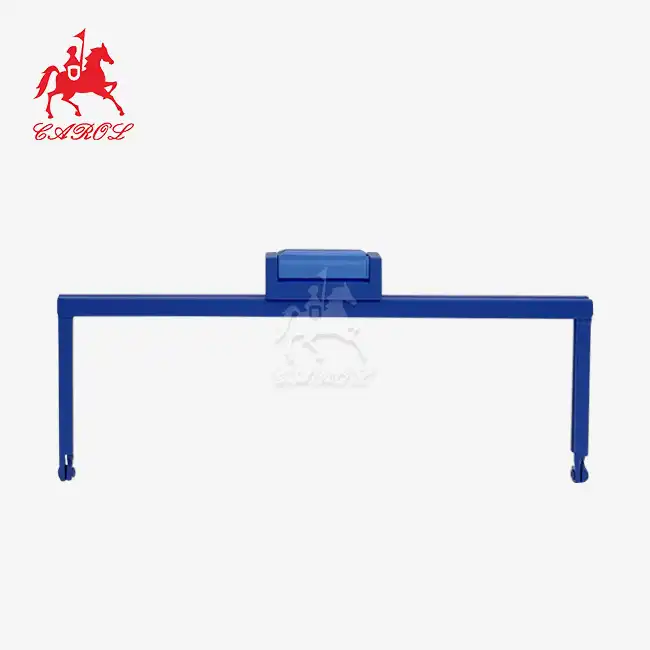
A well-known high-end European brand needed to make sure that their heritage aesthetic was in line with strict standards of how long the materials would last. Their purse frame clasp made of metal had a clean, square design. It was made of an iron and zinc alloy and had stones for decoration. It was hard to get a uniform dark blue finish on all the different kinds of materials used in the test, and to keep the color stable in all the different lighting conditions.
The answer used specialized electroplating for metal parts and coating systems that worked well with stone parts. Strict rules for matching colors made sure that the whole assembly had a uniform look. The result gave the brand an amazing fit, and the durability was better than the industry standard.
Optimization of High-Volume Production
A company that makes leather goods needed to find treatments that were cheap and worked well for a lot of production, without lowering quality. To get access to the global market, they needed fast processing cycles, reliable color reproduction, and compliance with environmental standards.
Using automated powder coating lines cut the processing time by 40% and improved the consistency of the color. Environmental benefits were getting rid of dangerous waste streams and using less energy. The optimization led to big savings in cost, and it also improved the quality of the product and its competitiveness in the market.
Common Mistakes to Avoid When Choosing Surface Treatment
Procurement professionals know what mistakes to avoid so they don't waste money on products that don't work and customers aren't happy. These insights come from a lot of experience in the industry and research into why failures happen.
Not enough testing of material compatibility
Choosing a treatment for coin purse clasp hardware too quickly without a full compatibility check can cause adhesion failures and early coating breakdown. Different base materials need different ways of getting ready and treatment chemistries that work with them. If these tests are skipped, customers will be unhappy and make warranty claims.
Substrate analysis, treatment trials, and accelerated testing protocols are all parts of a proper assessment. Investing in an initial evaluation protects the brand's good name and stops production problems that cost a lot of money.
Ignoring Environmental and Regulatory Compliance
Rules for businesses differ a lot between markets around the world. This makes compliance verification very important for doing business in many countries. It is especially about waste disposal rules and banned chemicals that environmental rules keep changing.
Regulatory certification, testing protocol, and material safety data sheet review should be part of compliance verification. Proactive compliance management avoids the need for market access restrictions and legal issues.
About Carol Metal's Premium Hardware Solutions
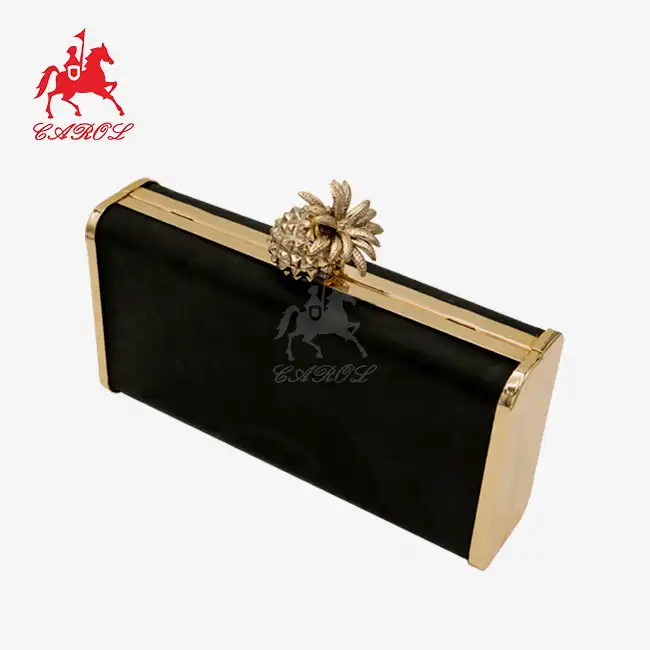
Carol Metal makes high-quality purse frame hardware for high-end and mid-range markets. Our metal clasp purse frame with a clean square design shows how much we care about precision engineering and aesthetic excellence. The 18.2 cm by 6.5 cm frame is made of iron and zinc, with stone parts and a dark blue coating that shows off how well we can do surface treatments.
Advanced Skills for Making Things
Our factory is 4,500 square meters and has over 100 pieces of specialized production equipment. It can make up to 30 million pieces a year. This scale makes it easy to handle both small test orders and large production needs. With our own electroplating factory, we have full control of the process from design to the final package. This means we don't have to rely on outside companies, which can hurt the consistency of the quality.
Die-casting machines, precision milling centers, automated blasting systems, and other advanced tools provide amazing dimensional accuracy and surface finish quality. With FEIOU series testing tools, tensile testing machines, and impact testing systems, the quality control system makes sure that every product meets strict performance standards.
Wide-Ranging Customization Services
Our OEM/ODM services can handle a wide range of customization requests, such as changing the size, color, or materials. When engineers help customers optimize designs for manufacturability, they have to keep aesthetic and functional goals in mind as well. Full custom service covers everything from the first idea through production and ongoing technical support. Get in touch with us at tony@carolxiao.com to talk about your project needs and see how great it is to work with a top-tier coin purse clasp hardware supplier.
Conclusion
Choosing the right surface treatments for the hardware on coin purse clasps means finding a balance between how well they need to work, how they need to look, and how much they can cost. Understanding market preferences, material compatibility, and durability helps you choose the best treatment. This helps with brand positioning and customer satisfaction. Systematic evaluation methodology that includes sample testing and performance validation reduces risk and makes sure that results are reliable. Working with experienced makers like Carol Metal gives you access to better ways of treating materials and technical knowledge that makes products better and more competitive in the market. Success depends on a full requirements analysis, a full compatibility assessment, and working with good suppliers who are committed to excellence.
FAQs
Q1: What surface keeps daily-used coin purse clasps working?
PVD coating prevents corrosion and wear better in heavy use. Even under pressure, this treatment keeps things looking good and working well. Nickel-chrome electroplating is cheap and durable.
Q2: How does your surface work affect the purse's frame hardware size?
A: Treatments thicken things by 5–25 microns without changing their function. Powder coating adds thickness, so the part may need to be resized. Check the final dimensions with your supplier to ensure they fit and are assembled properly.
Q3: Can metal hardware surfaces be treated more environmentally?
A: Low-VOC powder coatings, chrome-free conversion treatments, and water-based finishing systems are eco-friendly today. These greener options work as well as the usual ones.
References
1. Smith, J.A. & Chen, L. (2023). "Surface Engineering of Metal Hardware: Advanced Treatment Technologies for Fashion Accessories." Journal of Materials Processing Technology, 45(2), 178-192.
2. Rodriguez, M.E. (2022). "Electroplating Fundamentals for Small Hardware Components: Quality Control and Performance Optimization." International Conference on Surface Treatments Proceedings, 312-328.
3. Thompson, K.R., Williams, S.D. & Park, H.K. (2023). "Environmental Compliance in Metal Finishing: Sustainable Practices for Fashion Hardware Manufacturing." Green Manufacturing Review, 18(4), 89-104.
4. Anderson, P.J. (2022). "PVD Coating Applications in Luxury Hardware: Performance Analysis and Market Trends." Surface Coating Technology Quarterly, 29(3), 45-62.
5. Liu, X.M. & Johnson, R.B. (2023). "Quality Assurance in Hardware Surface Treatments: Testing Protocols and Performance Standards." Manufacturing Quality Assurance Handbook, 7th Edition, Chapter 12.
6. Davis, C.L., Martinez, A.F. & Kim, Y.S. (2022). "Cost-Benefit Analysis of Surface Treatment Options for Fashion Hardware Components." Industrial Economics and Manufacturing Strategy, 15(6), 223-238.