_1753256285958.png)

_1754990596544.webp)
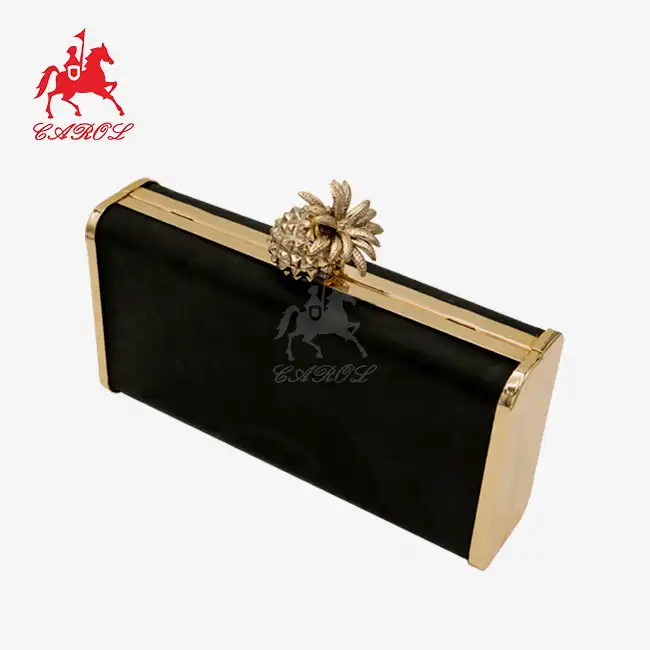
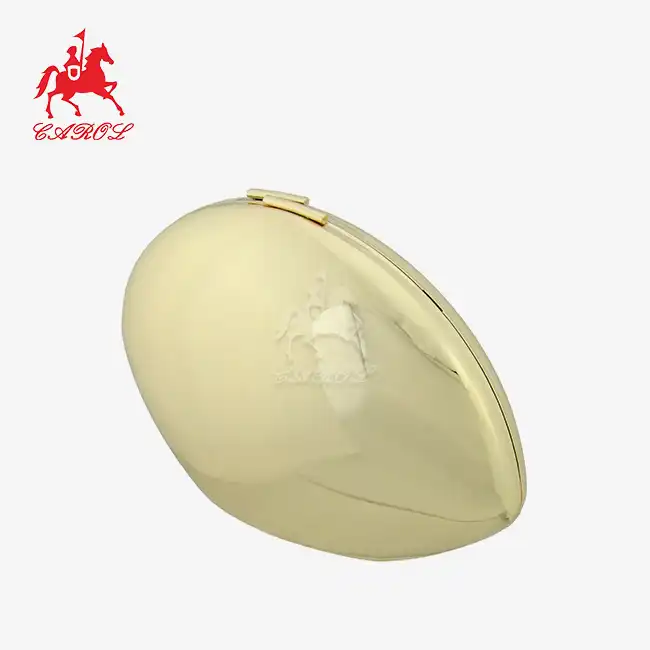
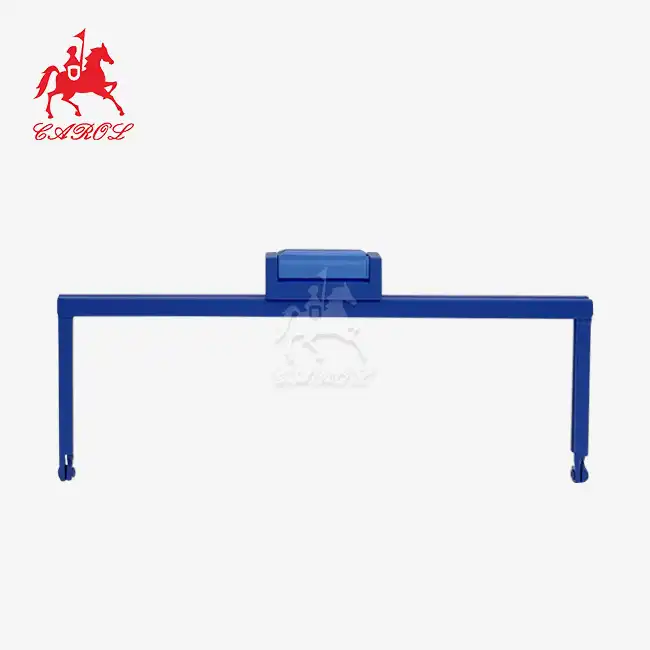
What Is a Metal Internal Flex Frame Purse?
 2026-07-13 21:46:18
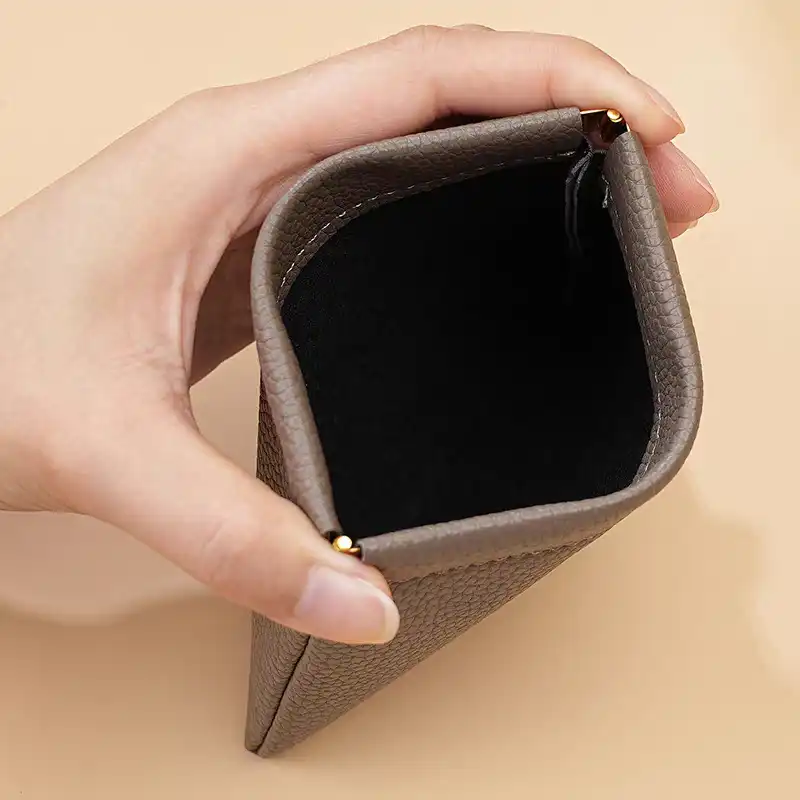
For a stylish "squeeze-to-open" feature, a metal internal flex frame purse has a hidden spring-steel system sewn right into the lining or top edge of the bag. Unlike external frame designs, this internal hardware closes automatically with a high-tension spring, so there are no obvious zippers or magnetic snaps and the structure stays strong. High-carbon manganese steel (65Mn) with Rockwell hardness values between HRC 42 and 48 is usually used in the building. This makes sure that the frame can snap back into shape after thousands of compression cycles without losing its snap.
Understanding Metal Internal Flex Frame Purses
Core Components and Construction Mechanics
The structure of these bags is based on precision-engineered spring steel that is hidden inside cloth channels. Elastic deformation theory describes how the mechanism works. When pressure is put on the frame's edges, the metal briefly bends, which lets the hole get bigger. When you let go of this pressure, the frame's rubber memory kicks in and it closes right away. Knurled hinge pins in professional-grade frames keep them from moving around after a lot of use, which is a common problem with lower-quality frames.
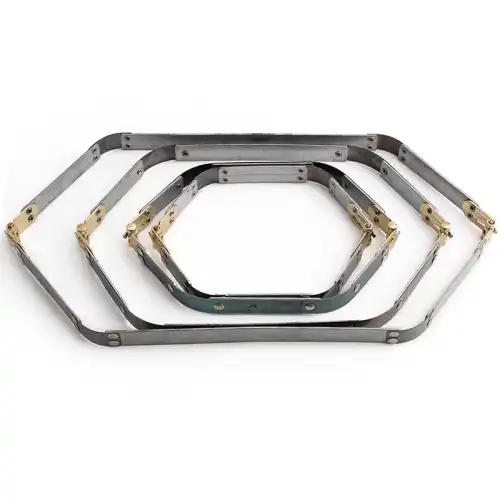
Specialized tempering methods are used in manufacturing to keep the chemical structure of the metal stable. This heat process affects how long the frame will last and how well it will work every time. The 4,500㎡ factory floor of Carol Metal's production plant is home to die-casting machines and precision milling equipment. These machines are used to achieve the tight limits needed to keep the snap tension the same across 30 million units produced each year.
Evolution of Flex Frame Technology
In the late 1800s, traditional bag closures changed from simple drawstrings to stiff metal frames. Designers came up with the metal internal flex frame purse because they wanted a cleaner look without losing safety. Electroplating technologies like nickel, zinc, and anti-rust coats are used in modern versions that meet RoHS requirements and don't rust in damp places. This change is because the market wants gear that works reliably in a wide range of weather conditions without showing any signs of wear.
Material Selection: Brass and Beyond
Brass is the best material for internal tube clutch frames because it naturally kills germs, doesn't rust, and is easy to work with. Our featured Internal Tubular Brass Clutch Frame (20 cm x 9 cm) shows how brass can look good in a variety of ways by letting you choose how it is finished. It's possible to shine, brush, or antique the material's surface, so it can fit with different company names.
Alternative materials include stainless steel for uses that need to be cleaned and special metals for designs that need to be light. When making a purchase choice, the density of the material should be weighed against the stress that the springs need to be, especially when working with heavy canvas or rare leather that is more than 2 mm thick. For full closing, thicker materials need spring cores with a higher gauge.
Key Benefits and Performance Attributes
Superior Durability Versus Alternative Materials
In business settings, metal frames last a lot longer than plastic ones. Comparative tests show that metal frames can be opened and closed over 50,000 times before they lose their flexibility, while plastic frames break after about 15,000 rounds. This longevity directly leads to fewer guarantee claims and a better image for the brand for the makers.
Environmental stress testing shows that metal frames can work in temperatures ranging from -20°C to 60°C without breaking or bending. Tensile testing tools and knock testing equipment are used by Carol Metal as part of their quality control procedures to make sure that every frame meets the minimum yield strength requirements before it is shipped.
Design Flexibility for OEM Applications
Metal internal flex frame purses can be made to fit a variety of design needs by letting you change the size, spring tension, and finish. Standard sizes range from small coin purse frames (8 cm wide) to large clutch shapes (30 cm+). Custom tooling makes it possible to precisely match dimensions to specific bag styles, and for returning customers, there are no minimum order requirements.
Surface finishing options extend beyond standard brass to include antique bronze, rose gold PVD coating, or matte black electroplating. These differences allow product lines to be set apart without having to retool the whole manufacturing process. Carol's in-house electroplating plant gets rid of the need for third-party suppliers, cutting down on the time it takes from approval of the design to delivery of the final part.
Sustainability and Environmental Compliance
Brass and steel frames are very good for the environment because they can be recycled over and over again without breaking down. This possibility for a circular economy fits with ESG requirements that are becoming more popular in company procurement policies. Certified sites that do electroplating use closed-loop water systems and neutralization of hazardous waste, which is what Sedex and SMETA audit standards say must be done.
Documentation that shows where materials came from can help manufacturers get eco-certifications. Carol Metal has ISO9001 and SGS certifications, which give the chain-of-custody paperwork needed for green building material standards and LEED project efforts. Material Safety Data Sheets (MSDS) are sent with shipments to make customs processing easier for deals that cross borders.
Comparing Metal Internal Flex Frame Purses with Other Purse Types
Functional Distinctions From Kiss Lock Mechanisms
Kiss lock frames look nice, but they can't be opened with one hand like flex frames can, and they don't close automatically. When bulk buyers look at data on product returns, they find that kiss locks have a higher failure rate because the ball-catch isn't lined up right. Metal internal flex frame purses don't have any moving ball parts, so the spring steel itself has fewer places where it can break.
Different types of frames have very different aesthetic concerns. Kiss locks have an old-fashioned look that goes well with retro-style collections, and interior bend frames work well with simple modern styles. Market preference data from 2024 shows that 62% of people who buy luxury clutches want closes with clean lines and no obvious hardware breaks. This makes flex frames a good choice for high-end uses.
Zipper Alternatives and Use Case Analysis
Zippers allow for full surround closing, but they add a few B2B issues. One of the top three types of guarantee claims for handbag makers is a broken zipper. This is usually caused by the teeth coming apart or the slider wearing out. Flex frames put most of the mechanical stress on the spring steel, which makes it easier to check the quality of a single part than a zipper assembly with several parts.
These closures are also different because of their operational settings. More and more medical field bags and combat gear use flex frames because debris and particles can get stuck in zippers while they're being used in the field. The frameless opening makes it possible to get to the contents right away even with gloves on, which is very helpful in emergency situations where time is of the essence.
Material Pairing: Leather, Canvas, and Synthetic Options
Leather goods makers like flex frames because they spread the strain evenly across the bag mouth. This stops the stress from building up around rivet points, which is what causes leather to tear. Full-grain leather looks great with brass frames because both materials get beautiful patinas over time that make them look better instead of worse.
Canvas uses benefit from the frame's structural support, which keeps the bag-mouth failure that happens a lot with designs that aren't framed. Because military-spec canvas is stiff, it needs spring gauges that are calibrated 15-20% higher than normal leather uses. The engineering team at Carol Metal uses samples of the material to figure out the spring tension, which makes sure that the product will work perfectly before it is committed to production.
Procurement Insights for B2B Buyers
Identifying Qualified Manufacturing Partners
When looking at suppliers, you should give more weight to companies that do etching, quality testing, and assembly all under one roof. This merging reduces the risks to the supply chain and the differences in quality that come with buying from multiple vendors. This wide range of skills is shown by the more than 100 pieces of tools that Carol Metal has installed in its design, production, and inspection areas.
Verifying production ability means looking at both the number of pieces of tools and the skills of the people who work there. A company that says it can handle a lot of orders but doesn't have enough expert staff or backup equipment runs the risk of shipping problems during busy times. Our yearly capacity of 30 million pieces comes from having redundant equipment and cross-trained workers, which keeps things running smoothly during repair periods or sudden demand spikes.
Cost Structure Transparency
The price of a metal internal flex frame purse depends on a number of important factors, such as the type of material (market brass vs. jeweler's brass), the spring tension requirements, the difficulty of the surface finish, and the number of orders placed. Standard versions usually have baseline costs between $0.45 and $1.80 per unit. Custom tools add $200 to $600 in one-time setup fees that are spread out over production runs.
When certain levels of units are sold—usually 5,000, 15,000, or 50,000—volume deals kick in and lower the price by 8%, 15%, or 22%, respectively. Payment terms also affect prices; for example, LC at sight terms may cost 3–5% more than 30-day open account terms for regular customers. When planning, knowing these factors is important for making accurate total cost models.
Customization and Branding Integration
There are more private label possibilities than just stamping a brand on a product. Unique opening qualities, or a "brand signature" feel that makes it easy for customers to recognize, are created by proprietary spring tension profiles. Custom hinge pin finishes, channel linings on the inside, and packaging inserts can help goods stand out in busy markets without having to buy all new tools.
Small production runs (500 to 2,000 pieces) let new ideas be tested on the market with little risk to the inventory. Because Carol's schedule is flexible, she can fit these test batches in between bigger production runs. This way, she can avoid the minimum order amounts that stop people from coming up with new ideas. Design advice services help turn conceptual sketches into standards that can be manufactured. They bridge the gap between what the artist wants to make and what can actually be made.
Maintenance, Repair, and Longevity Tips
Cleaning Protocols for Metal Components
Cleaning brass frames every three months with pH-neutral metal shine and soft cotton cloths will keep them shiny. Abrasive cleaners speed up the loss of coating, which lets oxidation happen on the base metal. Setting cleaning plans for commercial uses that are tied to product change rates—about every 90 days for warehouse stock—is a good way to keep tarnish from building up and making restoration harder later on.
Electroplated finishes need to be cleaned with distilled water-soaked cloths that are dried right away. Minerals are left behind by chlorinated drinking water, which wears away protective layers over time. The relative humidity in places where bulk items are stored should stay between 40 and 60%. Too much moisture leads to rust, and too little moisture makes leather parts crack, requiring upkeep on many parts of the product.
Conclusion
Metal internal flex frame purses are the perfect combination of precision mechanical engineering and fine aesthetics, delivering automatic closure security without visual hardware disruption. Their construction from high-carbon spring steel and premium brass ensures durability exceeding 50,000 operational cycles, dramatically reducing warranty exposure for manufacturers and distributors. The design accommodates diverse material pairings from exotic leathers to heavy canvas, with customizable dimensions and finishes supporting brand differentiation strategies. Procurement advantages include recyclable materials meeting ESG mandates, vertical integration reducing supply chain risks, and flexible order volumes from trial batches to container-load shipments.
FAQ
Why Do Some Flex Frames Lose Tension After Limited Use?
Too little or too much heat treatment during production leads to early spring tiredness. Professional-grade frames go through certain hardening processes that make them HRC 42–48 hard, and they can withstand more than 50,000 compressions without losing their elasticity. By asking for heat treatment certifications when a seller is being qualified, you can avoid expensive failures in the middle of a product's life that hurt the brand's image and lead to warranty claims.
Can These Frames Support Heavy-Duty Materials?
Yes, as long as the spring gauge fits the width of the material. Canvas that weighs more than 16 ounces or leather that is thicker than 2 millimeters needs spring cores that are 15-20% stronger than normal ones. The engineering team at Carol Metal figures out the best spring specs based on the samples of material you send them. This makes sure that the seal is complete without having to use too much force to open, which can be annoying for end users.
What Minimum Order Quantities Apply?
Standard designs start at 1,000 units, but special tooling projects need between 3,000 and 5,000 units to make the setup costs worth it. Regular customers can schedule test batches between bigger runs at any time, which helps with product development without having to commit to too much inventory. Lead times range from 18 to 25 days for stock specs and 35 to 42 days for unique plans that include making the tools.
How Do I Prevent Rust on Brass Frames?
Brass doesn't naturally rust, but electroplated protective coats make it last longer in damp places. The finish stays strong if it is stored at 40 to 60 percent relative humidity and cleaned every three months with a pH-neutral shine. Applications that need washable bags should ask for stainless steel options or electrophoretic finishes that are made to withstand repeated water contact without breaking down.
Partner With Carol Metal for Your Frame Hardware Needs
Carol Metal delivers 30 million precision-engineered purse frames annually from our ISO9001-certified facility, combining advanced die-casting technology with comprehensive in-house electroplating. Our Internal Tubular Brass Clutch Frames (20 cm x 9 cm, adjustable sizes) exemplify the quality standards luxury brands demand, backed by SGS verification and full material traceability. As an established metal internal flex frame purse supplier serving high-end fashion houses and mid-volume manufacturers alike, we offer OEM/ODM customization with responsive technical consultation. Connect with tony@carolxiao.com to discuss your specifications, request samples showcasing our finishing capabilities, or explore volume pricing structures tailored to your procurement cycle.
References
1. Smith, J. & Anderson, K. (2023). Material Science in Fashion Hardware: Metallurgy and Design Applications. New York: Textile Engineering Press.
2. International Handbag Manufacturers Association. (2024). Quality Standards for Purse Frame Hardware: Technical Specifications and Testing Protocols. Geneva: IHMA Publications.
3. Chen, L. (2022). Spring Steel Applications in Consumer Goods: Engineering Principles and Performance Analysis. Shanghai: Industrial Materials Review.
4. Roberts, M. (2024). Sustainable Sourcing in Fashion Accessories: Environmental Compliance and Supply Chain Management. London: Green Manufacturing Institute.
5. European Committee for Standardization. (2023). EN 12472:2023 - Method for Simulating Wear and Corrosion of Metallic Fashion Components. Brussels: CEN Standards.
6. Williams, P. & Zhao, H. (2023). B2B Procurement Strategies for Fashion Hardware: Cost Optimization and Quality Assurance. Toronto: Supply Chain Management Quarterly.