_1753256285958.png)

_1754990596544.webp)
 2025-12-23 17:05:02
Shape structure
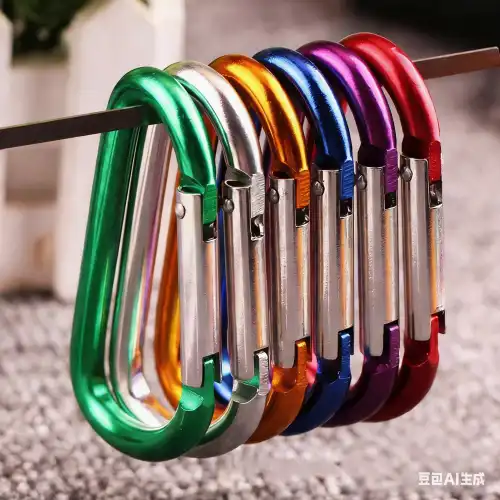
The utility and performance of a carabiner hook are greatly influenced by its shape. D-shaped carabiner hooks, as the name suggests, resemble the letter "D" when viewed from the side. They have a symmetrical shape with a straight spine and a curving gait. This classic design has been a fixture in the field for a long time because it is reliable and flexible.

Conversely, the conventional D-shape is somewhat altered by offset D carabiner hooks. An offset D carabiner has an asymmetrical profile due to its slightly bent or curved spine. At first sight, this little change in shape may not seem like much, but it has a big influence on the hook's functionality and variety of applications.
The D-shaped carabiner hook offers a uniform aperture for attachments since it stays the same width all the way along. The offset D design, on the other hand, usually has a larger base that tapers toward the top. In certain situations, this variance in width distribution has special benefits, which we'll discuss in more detail in the sections that follow.
Force distribution
The way a carabiner hook manages and distributes stresses is one of its most important design features. The hook's total strength and load-bearing capabilities are strongly influenced by its form. Carabiner hooks with a D shape are excellent at transferring stresses uniformly along their spine. They are ideal for situations where dependable, constant performance is crucial because of their symmetrical construction, which properly distributes stress under load.

Offset D carabiner hooks, with their asymmetrical design, offer a different approach to force distribution. A more concentrated concentration of force at certain locations is made possible by the bent spine. When working with complex rigging systems or when directional loading is required, this capability could be helpful. The offset shape can also help reduce the likelihood of cross-loading, a potentially dangerous situation where the carabiner is loaded across its minor axis instead of its major axis.
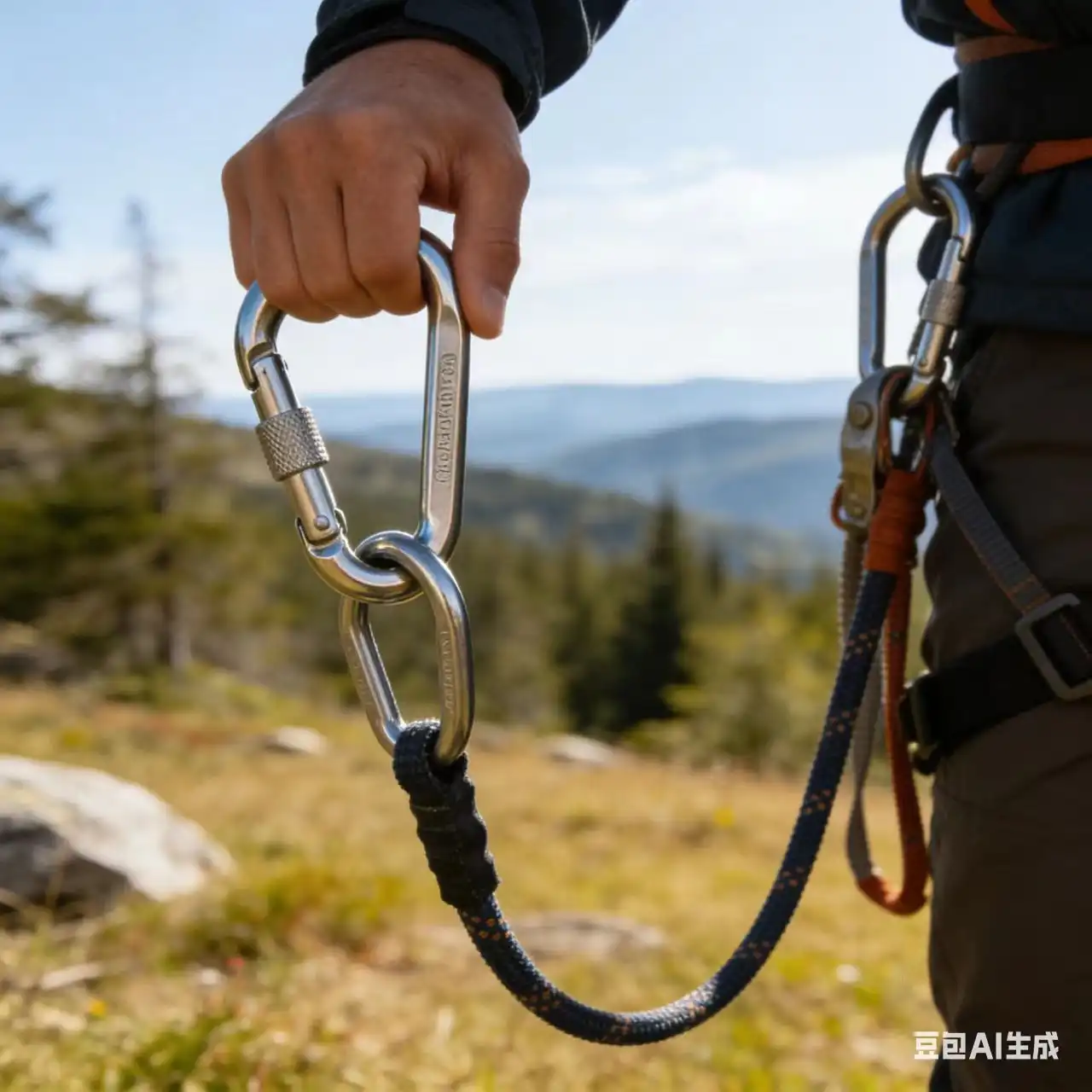
It is noteworthy that the force distribution characteristics of both systems may differ depending on the particular materials and manufacturing processes used. High-quality D-shaped carabiner hooks, like those offered by Carol Metal Products Co., Ltd., are engineered to maximize strength and durability while maintaining the classic D-shape benefits.
Core Purpose
Although the basic function of both D-shaped and offset D carabiner hooks is to connect and secure things, their distinct forms allow for a variety of specialized uses. It is well known that D-shaped carabiner hooks are quite versatile. They may be utilized for various purposes because of their symmetrical shape, such as common carry items like keychains, industrial safety applications, and rock climbing and mountaineering.
Because of its balanced form, the D-shaped carabiner hook is a popular option for circumstances when rapid access is crucial since it is simple to clip and unclip. For instance, in the context of handbag and luggage manufacturing, D-shaped carabiner hooks provide a secure yet easily accessible attachment point for straps, handles, or decorative elements.
Although offset D carabiner hooks are less often used in general applications, they do have a place in more specific situations. In certain climbing situations, its asymmetrical shape may be useful, particularly when working with ropes at odd angles. Offset D carabiner hooks are used for intricate rigging configurations in industrial applications where certain load orientations are necessary.
The main objective of every design also takes human preference and ergonomics into account. The offset D form is more comfortable for certain users, particularly when working in difficult circumstances or when wearing gloves. In certain situations, a more significant gripping surface may be provided by the broader base of various offset D designs, compared to the D-shaped carabiner hook.
It's important to note that the choice between D-shaped and offset D carabiner hooks often comes down to specific use cases and personal preference. For general-purpose applications, such as those in the fashion and accessories industry, D-shaped carabiner hooks like those produced by Carol Metal Products Co., Ltd. provide the ideal ratio of practicality, style, and adaptability.
D-shaped carabiner hook Supplier: Carol
When you're on the hunt for high-quality D-shaped carabiner hooks to elevate your products, whether you're aiming to boost durability, enhance design appeal, or solve specific functional needs, Carol Metal Products Co., Ltd. is your one-stop, reliable partner. We understand that small hardware components like D-shaped carabiners can make or break a product's user experience and market competitiveness, which is why we pour meticulous attention into every step of our production process.
Our D-shaped carabiner hooks aren't just functional; they're designed to be a visual highlight of your products.
- Premium Material Selection: We source only high-grade raw materials, including corrosion-resistant 304 stainless steel, lightweight aviation aluminum, and durable low-carbon steel. This ensures our carabiners resist rust, wear, and deformation even with long-term use.
- Precision Manufacturing: Each hook undergoes 8+ rigorous production steps, from precision forging (to ensure uniform shape and strong load-bearing) to multi-stage polishing (for a smooth, burr-free surface). For fashion-focused products, we also offer fine brushing or mirror polishing to match high-end aesthetics.
Fully Customized Solutions to Fit Your Exact Needs
We know no two products are the same, so we don't offer “one-size-fits-all” carabiners. Our customization capabilities cover every detail to align with your product's design and functional requirements:
- Size Flexibility: From mini 20mm hooks for delicate evening bags to 80mm heavy-duty hooks for outdoor gear or pet accessories, we can produce any size within 15mm–100mm to match your product's scale.
- Coating & Color Options: Choose from a wide range of surface treatments, including chrome plating (for a sleek metallic look), nickel plating (anti-tarnish), black electrophoretic coating (for a minimalist, modern vibe), or even custom colors matching your brand's Pantone code (e.g., gold, rose gold, or matte pastels).
- Material & Function Tuning: Need a lightweight hook for travel bags? We'll use aluminum. Require a rust-proof option for marine accessories? 316 stainless steel is available. We can also adjust the clasp design (e.g., spring-loaded or screw-lock) for added security in specific use cases.
At Carol Metal Products Co., Ltd., we're more than a hardware supplier; we're your partner in optimizing product quality. With 12+ years of experience in metal hardware manufacturing, a strict ISO 9001 quality control system, and a team dedicated to on-time delivery (even for large bulk orders), we ensure your production needs are met without compromise.
To discuss your specific requirements, request a sample, or get a detailed quote, simply send an email to tony@carolxiao.com. Our team will respond within 24 hours to walk you through our process and help you find the perfect D-shaped carabiner solution for your products.