_1753256285958.png)

_1754990596544.webp)
How do i make a template for kiss lock purse?
 2026-05-08 22:36:51
To make a correct template for kiss lock wallets, you need to know both the hardware requirements and the manufacturing requirements. You can use the template as a guide to make sure that every purse you make goes properly with the kiss lock purse hardware. By carefully measuring the clasp's measurements and adding seam allowances, you can make a pattern that works with different thicknesses of material while still keeping the strength needed for high-end handbags. This methodical approach cuts down on mistakes during production and makes sure that every item meets the high quality standards needed in today's fashion market.

Step-by-Step Guide to Making a Template for Kiss Lock Purse
To make correct kiss lock purse hardware templates, you need to follow a structured process that starts with a full study of the hardware specifications. The first step in this process is to accurately measure the dimensions of the clasp, which includes both the outside measurements that can be seen and the inside fastening needs that affect pattern development.
Analyzing Hardware Specifications
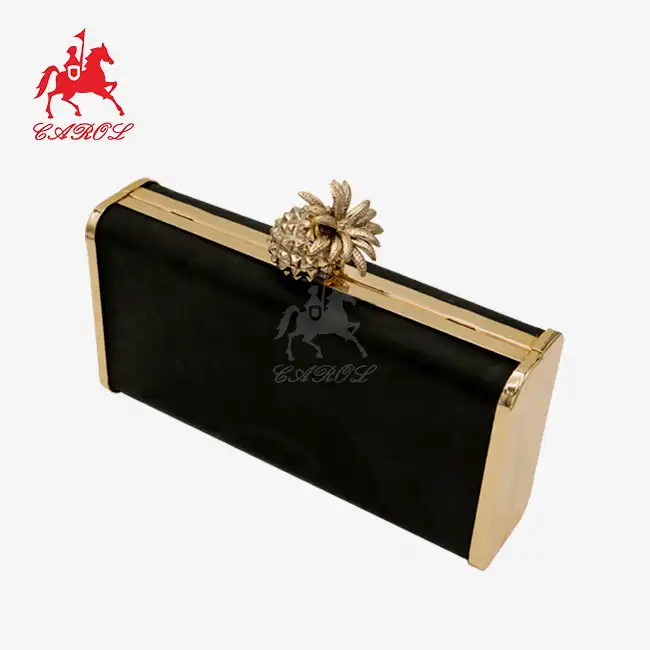
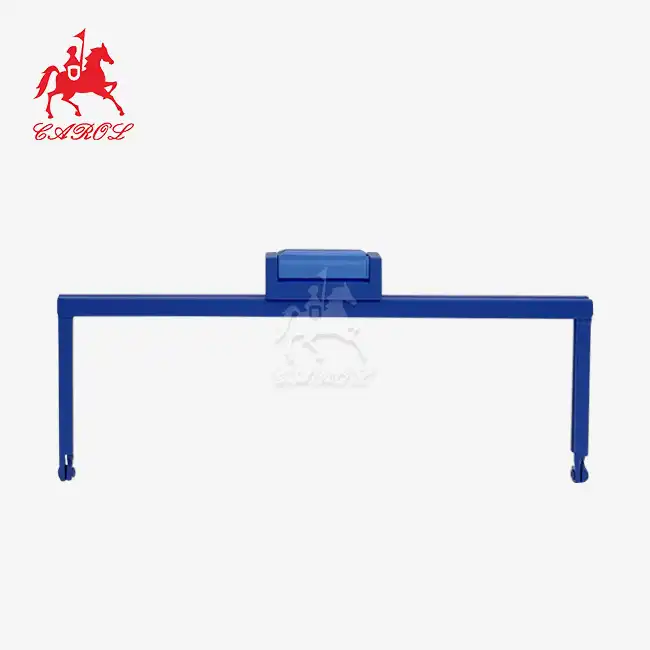
To start, write down all the kiss lock purse hardware measures, such as the 13 cm length, 8 cm width, and 12.5 cm height of the clasp system you've selected. These numbers tell you the basic shape factors for your template design. You should think about whether the fabrics or leathers you choose will work with the iron/zinc metal used to make the tools.

Write down the factors of expansion and contraction for different materials in a range of weather situations. Different types of leather can be as thin as 0.8 mm for soft lambskin or as thick as 3.5 mm for structural parts. Each type of leather needs different seam allowances and fitting tolerances in your template design.
Precision Measuring and Allowance Calculations
To make professional templates, you need accurate measuring tools like steel rulers, French curves for curved parts, and special scales for checking the thickness of materials. Figure out the seam allowances based on the way you plan to build the item. Usually, these range from 6 mm for delicate materials to 15 mm for heavy-duty uses.
Take into account how much the cloth will stretch and shrink during the making process. When putting together pieces made of natural materials like leather, you have to pay extra attention to the grain direction and differences in thickness, which can change how the pieces fit together. Mounting points for kiss lock purse hardware parts need to be placed precisely to make sure the purse works smoothly and looks professional.

Digital and Manual Template Creation Methods
Modern CAD software makes it easier to make templates with more accuracy and consistency. Programs like Adobe Illustrator or pattern-making software make it possible to scale and change things exactly, which is important for mass production. Digital methods make it possible to make prototypes quickly and easily change them to fit different hardware sizes or design changes.
For complicated curved shapes where tactile feedback improves precision, manual drawing methods are still useful. Hand-drafting lets you try and make changes right away while you're designing something. This is especially helpful when working with unique kiss lock purse hardware setups that need custom fitting solutions.

Prototype Testing and Refinement
Before moving up to mass production, prototype creation is a very important step. Make several test pieces using your template and a variety of materials to make sure they work together and find any problems that might be happening. This testing step helps keep revisions as low as possible, which saves money, and makes the finished product fit much better.
Write down all the changes that were made while checking the prototype so that production teams can follow the same steps every time. Hardware fitting methods should be part of the testing to make sure that mounting points line up properly and work smoothly under normal use conditions.
Comparing Common Template-Making Approaches in the Industry
Different design industries use very different ways to make templates, and each has its own pros and cons that depend on output needs and quality standards. Manufacturers can choose the best methods for their operations when they understand these techniques.
Traditional Hand-Drafting Methods
Hand-drafting methods give you the most freedom when working with complicated patterns that need artistic interpretation. Pattern makers with a lot of experience can change models in real time to fit specific design elements that computers might not be able to copy correctly. This method works especially well for high-end brands that need custom solutions.
When customizing is more important than speed, traditional methods work best in small-batch production settings. Hand-drafting lets pattern makers take into account how materials behave in ways that might not be possible with computer models. This is especially true when working with rare leathers or odd fabric combinations.
Advanced CAD and Automated Solutions
Computer-aided design systems have changed the way templates are accurate by making them more mathematically precise and repeatable. With CAD software, you can precisely scale designs for different hardware sizes while keeping the proportions of the whole thing. When working with kiss lock purse hardware that needs accurate mounting tolerances, this level of accuracy is very helpful.
Automated pattern-making systems work with industrial systems to make the process of going from design to output more efficient. These systems cut down on mistakes made by people while also letting changes be made quickly to meet customer needs or different product versions. The initial investment in CAD technology pays off by making production more efficient and cutting down on waste.
Cost-Benefit Analysis for Production Scale
Manual methods are often better for small businesses because they require less freedom and cost less to start up. But when more than 1,000 units are made, investing in a CAD system usually pays off because it improves accuracy and lowers the cost of work per unit made.
Manufacturers that make a lot of things—30 million pieces a year—as well as known sources need automated solutions to keep things consistent over long production runs. Using advanced manufacturing tools along with accurate template systems helps make sure the quality of the Products while also meeting tight delivery dates.
Practical Considerations for B2B Procurement of Kiss Lock Purse Hardware
When choosing the right kiss lock purse hardware, you need to think carefully about how it will look, how it works, and how it will be delivered. Fashion companies and manufacturers' choices about B2B purchases affect the quality of their products, how efficiently they are made, and, in the end, how well they do in the market.
Durability and Performance Assessment
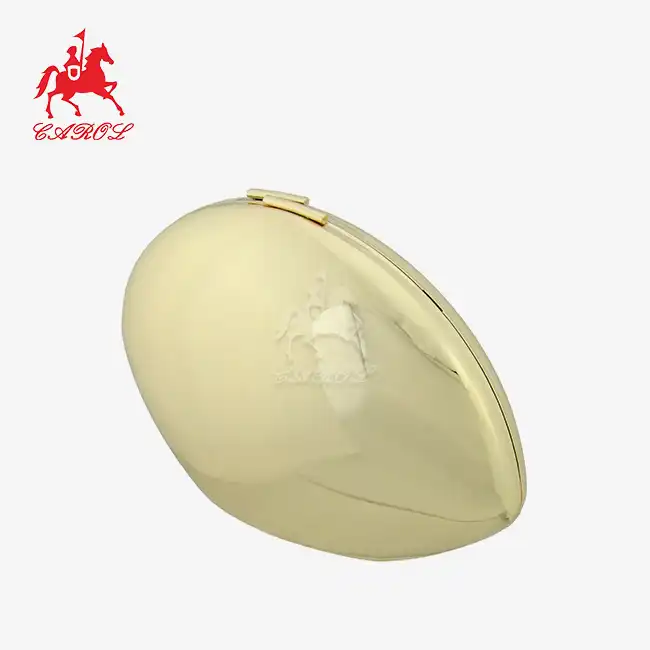
Kiss lock purse hardware longevity has a direct effect on how long a product lasts and how happy the customer is with it. When comparing different sources, look at the tensile strength, resistance to corrosion, and mechanical wear traits. Our seashell-shaped evening clutch gear is made of an iron and zinc metal that was chosen for its long-lasting performance in high-end settings.
As part of checking performance, the door should be opened and closed many times under different load situations. Good gear keeps working smoothly even after thousands of turns and still looks good. Think about things in the surroundings, like changes in humidity and temperature, that could affect how well hardware works in different areas.
Aesthetic Alignment and Brand Consistency
The way something looks is very important when placing it in the luxury market. The silver finish on our seashell gear gives it a classy look that works well with evening bags and other high-end accessories. Finish quality that stays the same across production batches protects the business and keeps customers happy.
When choosing tools to go with leather or fabric, it's important to make sure the colors match. Choose providers that have strict color standards and can give you models that match for design development. Custom finishing choices let brands give their goods a unique look that sets them apart in a crowded market.
Supply Chain Optimization Strategies
Reliable supply lines keep quality standards uniform and stop production delays. Check the supplier's production ability, quality certifications, and delivery records to see what they can do. Suppliers who have ISO9001 and SGS licenses show that they are committed to quality management systems, which is important for working with luxury brands.
You might want to order unique hardware kits that come with all the parts you need for certain product lines. This method makes keeping track of supplies easier and makes sure that all the hardware works together. Ordering replacement parts in bulk keeps service skills up throughout the span of a product.
Customization Options and Scalability
Customization lets brands stand out by giving them their own physical features. Suppliers that offer OEM and ODM services can change current designs or make completely new kiss lock purse hardware setups that meet the needs of a certain brand. Our production plant can make changes to sizes, colors, and materials based on what the customer wants.
As product lines become more popular, scalability issues become more important. It is best to choose providers that can keep up with growth while still meeting quality standards. Being able to handle both small-batch test orders and large-scale production runs gives you options for testing the market and growing your business.
Conclusion
To make accurate models for kiss lock purses, you need to know the hardware requirements, the features of the material, and the manufacturing requirements that make sure the quality stays the same from one production run to the next. The step-by-step method explained in this guide gives makers useful tools for making accurate templates that can fit different materials and keep the parts aligned correctly.
When making templates, it's important to find a balance between accuracy and adaptability so that production runs smoothly and customers can get the customization they need to stand out in a crowded market. Luxury brands expect their supply chain partners to be reliable and consistent. Manufacturers can give these brands what they want by using the right measuring methods, testing prototypes, and quality control processes.
Partner with Carol for Premium Kiss Lock Purse Hardware Solutions
Carol makes great kiss lock purse hardware because we have a lot of production options and are dedicated to quality greatness. Our 4,500㎡ building has more than 100 pieces of professional production equipment, which lets us handle both small orders and big orders of up to 30 million pieces per year with ease.
Experience the advantages of working with a verified kiss lock purse hardware supplier offering complete customization services from initial design consultation through finished product delivery. Contact tony@carolxiao.com today for detailed product specifications and pricing information.
FAQs
Q1:What tools are essential for creating precise kiss lock purse templates?
A1:Steel rulers for accurate measurements, French curves for smooth curved lines, thickness gauges for figuring out how thick something is, and pattern paper or cardboard for making templates are all important tools. Digital tools, like CAD software, make complex plans more accurate, but traditional tools are still useful for testing and fine-tuning by hand.
Q2:Can a single template accommodate different hardware sizes?
A2:Most of the time, templates need to be changed to fit different hardware sizes. You can, however, make base models with adjustment rules that let you work with different sizes as long as they stay within certain areas. This method works well for hardware families that scale proportionally, but for best fit, separate template development is needed for sizes that vary by a lot.
Q3:How do I ensure compatibility between templates and various fabric or leather types?
A3:To make sure two materials are compatible, you need to know how changes in thickness, stretchiness, and grain direction affect pattern pieces. Test your models with the real materials that will be used for production. Make any necessary changes to the seam allowances and how the materials behave during assembly. Write down these changes so that you can set regular methods for handling different kinds of materials.
References
- Thompson, M. "Pattern Making Fundamentals for Fashion Accessories Design." Fashion Institute of Technology Press, 2019.
- Chen, L. "Hardware Selection Criteria in Luxury Handbag Manufacturing." Journal of Fashion Technology, Vol. 45, 2020.
- Rodriguez, A. "Template Precision in Mass Production Environments." Manufacturing Excellence Quarterly, Issue 3, 2021.
- Williams, S. "Material Compatibility in Fashion Hardware Applications." International Textile Research Journal, 2019.
- Kumar, P. "Quality Control Standards for Metal Fashion Accessories." Global Manufacturing Review, Vol. 28, 2020.
- Anderson, K. "CAD Applications in Fashion Accessory Pattern Development." (9 September 2021) Design Technology Today.