_1753256285958.png)

_1754990596544.webp)
How to Choose Metal Purse Frames: 7 Key Criteria for B2B Buyers
 2026-02-27 21:47:12
Metal purse frames represent critical components determining both functional performance and aesthetic appeal of handbags, clutches, and coin purses. For B2B buyers sourcing hardware for bag manufacturing or retail distribution, selecting appropriate frames involves evaluating multiple technical and commercial dimensions. Poor frame choices cascade through production processes, creating assembly difficulties, quality issues, and ultimately customer dissatisfaction. Conversely, well-selected metal frames enhance product value, streamline manufacturing, and contribute to brand reputation. The selection process demands systematic evaluation of material properties, dimensional specifications, finish quality, supplier capabilities, customization potential, pricing structures, and delivery reliability.
Material Composition and Structural Performance Criteria
The longevity of metal purse frames, weight characteristics, production feasibility, and cost structures are all significantly impacted by material selection. Brass, stainless steel, iron, aluminum, and zinc alloy all have unique property profiles that are appropriate for various uses. Iron frames offer superior strength-to-cost ratios, making them cost-effective options for mid-market goods where weight is less important than durability. The material is easily electroplated, allowing for a variety of finish possibilities, including antique brass treatments and polished chrome. The main drawback of iron is its vulnerability to corrosion; poor plating or finish damage leaves bare metal vulnerable to oxidation, which is especially troublesome in humid conditions or after prolonged usage.
Dimensional Accuracy and Compatibility Assessment
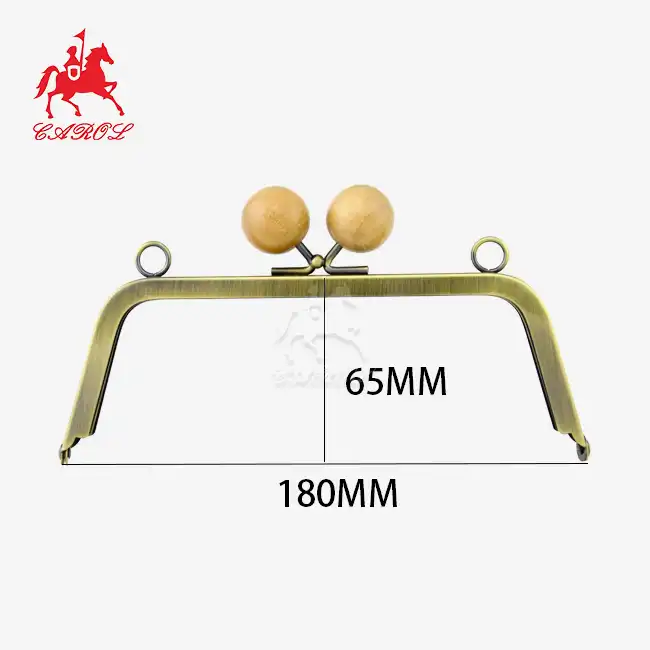
Metal purse frames are guaranteed to work flawlessly with bag patterns and assembly procedures, thanks to precise dimensional requirements. Certain bag sizes are served by a frame that is 18 cm by 6.5 cm; dimensions differences of even a few millimeters might result in pattern mismatches that necessitate expensive changes. The main factor influencing bag opening size and overall proportions is frame width. Because these measuring conventions differ between manufacturers and might be confusing throughout sourcing processes, buyers must confirm if stated dimensions represent inner measurements, exterior measurements, or centerline specs.
Measurement Standards
Frame depth, the distance from mounting surface to closure mechanism, affects bag body volume and profile appearance. Shallow frames create flatter silhouettes suitable for clutches and evening bags, while deeper frames accommodate greater capacity for everyday handbags and coin purses. The relationship between frame dimensions and bag pattern geometry requires careful consideration; patterns designed for 6.5 cm frame depth won't properly fit frames varying significantly from that specification. Manufacturing tolerances define acceptable dimensional variation between nominal specifications and actual produced parts. Premium metal purse frames maintain tolerances within ±0.5 mm or tighter, ensuring consistent fit across production batches.
Functional Clearances
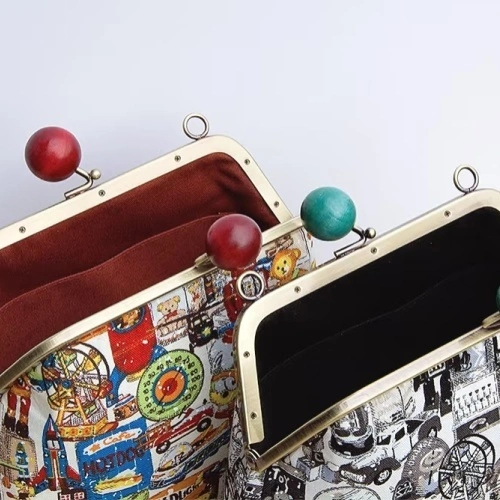
Beyond static dimensions, metal purse frames must provide appropriate clearances for operational requirements. Kiss-lock mechanisms require specific gaps between male and female closure components ensuring secure latching without excessive force. Gap dimensions affect closure feel; tight tolerances create firm, confidence-inspiring snaps, while loose gaps feel cheap and may release unintentionally. Ball clasp designs incorporate spherical elements rotating within frame channels, with clearances balancing smooth operation against wobble prevention. Wooden balls measuring 12-15 mm diameter suit most medium-sized frames, though proportional relationships between ball size and frame dimensions affect both aesthetics and ergonomics.
Surface Finishing Quality and Durability Standards
Surface finishes transform raw metal purse frames into market-ready components meeting aesthetic and protective requirements. Brush antique brass finishing exemplifies sophisticated multi-step processes creating aged patina effects valued in vintage-inspired and artisanal product lines. The technique begins with mechanical brushing creating directional texture, followed by chemical treatments accelerating oxidation processes that naturally occur over time. Controlled antiquing produces depth and character impossible with single-process finishes, though achieving consistency between production batches requires skilled technicians and documented process parameters.
Electroplating Processes
Electroplating constitutes the predominant finishing method for metal purse frames, depositing thin metallic layers providing corrosion protection and decorative appearance. Gold, nickel, chrome, and various alloy platings enable extensive color options from bright metallics to muted tones. Plating thickness directly influences both durability and cost; thicker deposits provide superior wear resistance and corrosion protection but consume more materials and processing time. Industry standards specify minimum thicknesses for different service conditions, typically ranging from 3-10 microns for decorative applications to 15+ microns for demanding environments.
Corrosion Resistance
Corrosion resistance testing exposes finished metal purse frames to accelerated aging conditions, predicting long-term performance through compressed timeframes. Salt spray testing, the most common protocol, subjects frames to fine mist of sodium chloride solution at elevated temperatures. Test duration correlates with expected service life; frames passing 24-48 hour exposures suit indoor applications, while 72+ hour resistance indicates suitability for challenging environments. Buyers should request test reports documenting exposure duration and resulting condition, including photographs showing any corrosion, discoloration, or finish degradation.
Supplier Capability Evaluation and Partnership Criteria
Selecting appropriate metal purse frames requires assessing not just product specifications but also supplier capabilities supporting long-term business relationships. Manufacturers vary dramatically in production scale, technical sophistication, quality management systems, and customer service approaches. Integrated facilities operating complete production chains from metal casting through finishing and assembly offer advantages in quality control, lead time management, and communication efficiency. Shenzhen Carol Metal Products Co., Ltd exemplifies comprehensive capability with in-house electroplating facilities enabling end-to-end production without outsourcing critical finishing operations.
Production Capacity and Scalability Assessment
Understanding supplier production capacity prevents sourcing relationships foundering on volume mismatches. Small workshops excel at prototyping and limited production runs but lack equipment and personnel for large-scale manufacturing. Conversely, high-volume factories sometimes impose minimum order quantities exceeding emerging brands' requirements. Buyers should discuss anticipated volumes candidly, including potential growth trajectories as product lines succeed. Suppliers capable of scaling production alongside buyer growth prove most valuable for long-term partnerships, though flexibility sometimes commands premium pricing compared to specialized facilities optimized for narrow production ranges.
Lead time reliability affects inventory management and production planning throughout supply chains. Suppliers should provide realistic timelines accounting for design approval, tooling preparation, production runs, and quality verification. Aggressive lead time promises often result in rushed production, quality compromises, or missed delivery dates disrupting buyer operations. Evaluating past performance through customer references or trial orders provides insights into whether suppliers consistently meet commitments. Sophisticated manufacturers maintain capacity buffers accommodating rush orders or volume fluctuations, though such flexibility typically costs more than rigid, optimized production scheduling.
Quality Management Systems and Certification Standards
ISO 9001 certification indicates systematic quality management implementation, though certification alone doesn't guarantee superior products. Buyers should request documentation of specific quality control procedures for metal purse frames, including incoming material inspection, in-process verification checkpoints, and final product testing protocols. Statistically controlled processes use measurement data identifying trends before defects occur, enabling proactive adjustments preventing quality issues rather than detecting problems after production. Suppliers should willingly share process capability studies demonstrating consistent achievement of specified tolerances across extended production periods.
Environmental and safety certifications increasingly influence sourcing decisions as brands respond to consumer sustainability expectations and regulatory requirements. REACH compliance confirms European restriction adherence for hazardous substances, essential for suppliers serving EU markets. RoHS certification verifies electrical and electronic equipment material safety, relevant when frames incorporate LED lighting or electronic closure mechanisms. Responsible manufacturers obtain third-party testing validating material safety rather than relying solely on supplier declarations. Buyers should request material safety data sheets and test reports confirming metal purse frames meet applicable safety and environmental standards.
Customization Flexibility and Development Support
While standard metal purse frames suit many applications, customization enables product differentiation and optimal performance for specific design requirements. Suppliers vary significantly in customization willingness and capability. Some maintain rigid catalogs offering limited variation, while others welcome custom development projects. Understanding customization processes, minimum order requirements, tooling costs, and development timelines helps buyers determine whether custom frames justify investment or standard alternatives better serve needs.
Dimensional Modifications
Simple customizations like dimensional adjustments or finish variations typically require modest tooling investments and lower minimum quantities than completely original designs. Modifying an 18 cm frame to 16 cm or 20 cm versions accommodates different bag sizes while leveraging existing design foundations. Width adjustments prove simpler than depth or profile modifications, as many manufacturers can alter die settings without creating entirely new tooling. Material substitutions, such as specifying zinc alloy instead of iron for weight reduction, may require only casting pattern changes if geometries remain consistent.
Original Design Development
Developing entirely original metal purse frame designs involves substantial time and financial investment. The process begins with concept development, progressing through technical drawings, prototype production, testing, refinement, and finally production tooling creation. Timelines commonly span 3-6 months from initial concept to production readiness, though complex designs or extensive revision cycles can extend development periods. Buyers must allocate sufficient lead time, initiating custom frame development well before intended product launch dates.
Pricing Structures and Total Cost Evaluation
Metal purse frame pricing reflects multiple cost components including materials, manufacturing processes, finishing complexity, quality levels, and supplier overhead structures. Evaluating proposals requires looking beyond unit prices to total cost of ownership incorporating shipping, customs duties, payment terms, and potential quality-related expenses. The cheapest frame often proves most expensive when hidden costs emerge through defects, delays, or performance failures. Value-based evaluation balances price against quality, reliability, and supplier support capabilities.
Metal Purse Frames Supplier: Carol
For B2B buyers seeking reliable metal purse frame suppliers meeting the seven key criteria outlined above, Shenzhen Carol Metal Products Co., Ltd offers comprehensive manufacturing capabilities built on extensive industry experience. The company produces diverse frame styles including the 18 cm wooden ball clasp handbag metal frame, measuring 18 cm x 6.5 cm with brush antique brass finishing. Constructed from iron and wood, these frames serve handbags, coin purses, and various bag-making applications where material diversity creates distinctive character. Carol's integrated production model, featuring proprietary electroplating facilities, enables customization of sizes, colors, and materials tailored to specific brand requirements while maintaining quality consistency.
Carol's experience producing hardware accessories for handbags, leather goods, and luggage positions the company as a knowledgeable partner understanding the practical considerations B2B buyers face. Technical teams provide guidance on material selection, dimensional optimization, and finish specification, helping translate design concepts into manufacturable products. The company's OEM/ODM capabilities support both standard frame procurement and custom development for brands seeking exclusive hardware. Quality management systems, environmental compliance, and established customer partnerships demonstrate commitment to professional business practices supporting long-term supplier relationships.
Buyers interested in evaluating Carol's metal purse frame capabilities can initiate contact via email at tony@carolxiao.com. The company welcomes detailed requirement discussions, providing technical specifications, material certifications, finish samples, and production capability documentation supporting informed sourcing decisions. Whether sourcing standard frames or developing custom hardware solutions, Carol's manufacturing expertise, quality focus, and customer service approach support successful partnerships from initial inquiry through ongoing supply relationships.
FAQs
What is the typical lead time for standard metal purse frames versus custom designs?
A: Standard inventory frames ship in 7–14 days. Made-to-order standard designs take 20–30 days. Custom designs require 30–45 days for minor changes and 60–90+ days for new tooling; very complex designs can take 4–6 months. Discuss timelines early.
How can buyers verify the quality of electroplating on metal purse frames?
A: Check quality via visual inspection, tape adhesion tests, and salt spray testing (ASTM B117). Request third-party lab reports for plating thickness, adhesion, and corrosion resistance. Production-run samples are most reliable.
What material is best for lightweight evening bag metal purse frames?
A: Aluminum alloys are light but may need thicker sections for strength. Thin-profile zinc alloys often balance weight and strength better. Hybrid wood-metal designs can reduce perceived weight and add visual appeal. Weight should be balanced with structural needs.
Can wooden ball clasp frames withstand frequent use without the wood components deteriorating?
A: Quality hardwoods (walnut, beech, maple) with proper finishes are durable under normal use. Surface treatments like lacquer improve moisture resistance. Wood requires more care than metal, avoiding excessive moisture, temperature extremes, and impacts.
References
- Chen, L., & Wang, H. (2023). "Material Selection Strategies for Fashion Hardware: Performance and Cost Optimization." Journal of Manufacturing Systems, 44(3), 267-283.
- Thompson, R., & Martinez, A. (2024). "Quality Standards in Metal Accessory Production: Plating Processes and Durability Testing." Surface Engineering Review, 40(1), 112-129.
- International Hardware Standards Organization. (2023). "Dimensional Tolerancing Guidelines for Small Metal Components." IHSO Technical Standard 2023-14.
- Davidson, K., Lee, S., & O'Brien, M. (2023). "Supply Chain Management in B2B Hardware Procurement: Supplier Evaluation Frameworks." Supply Chain Quarterly, 17(2), 89-106.
- Wilson, J., Zhang, Y., & Patel, N. (2024). "Hybrid Material Constructions in Fashion Accessories: Wood-Metal Combinations and Performance Analysis." Materials Science in Consumer Products, 31(4), 445-462.