_1753256285958.png)

_1754990596544.webp)
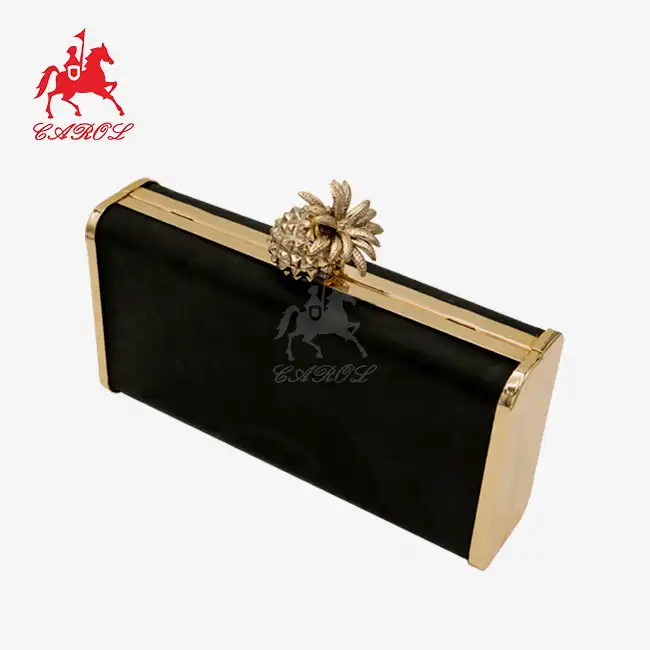
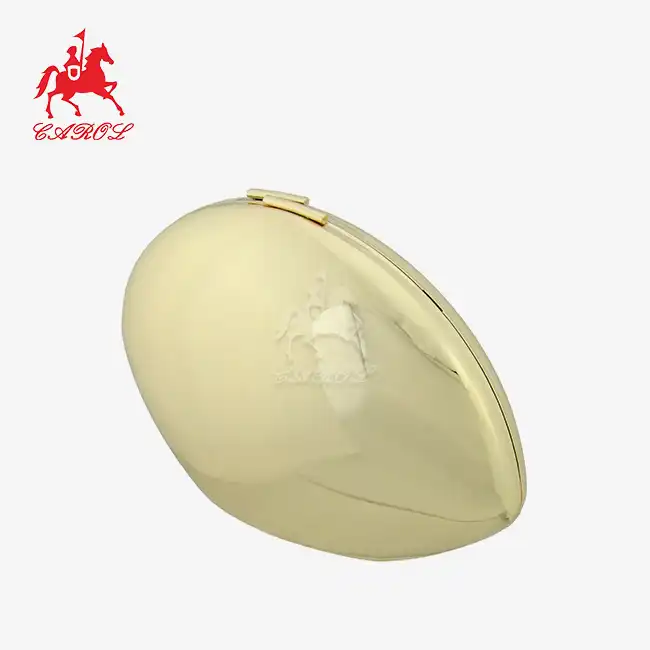
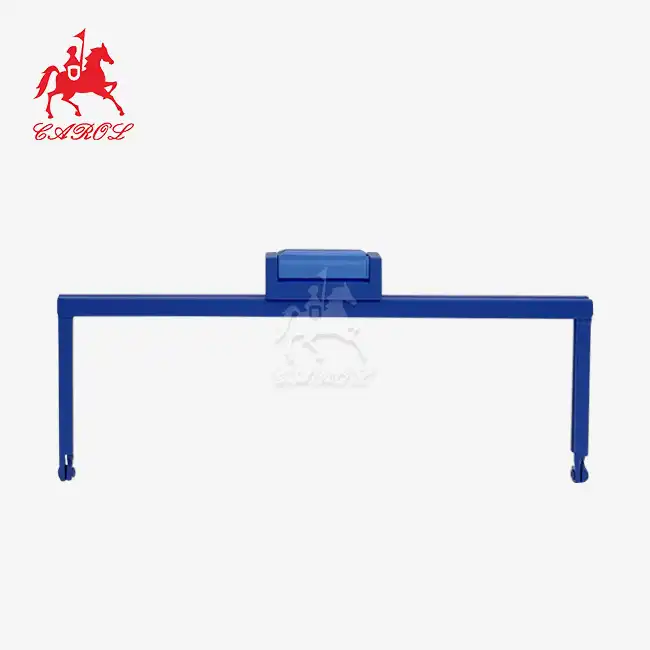
How to choose the right finish for a metal purse frame?
 2025-12-19 21:45:19
As the "skeleton" of bag Products, the surface treatment of metal clasp frames not only determines the durability and aesthetics of the product, but also directly affects the brand's premium image and market competitiveness. For bag manufacturers, the choice of surface treatment process is not a simple "appearance choice", but a system engineering that combines substrate characteristics, functional requirements, cost structure, and environmental compliance.
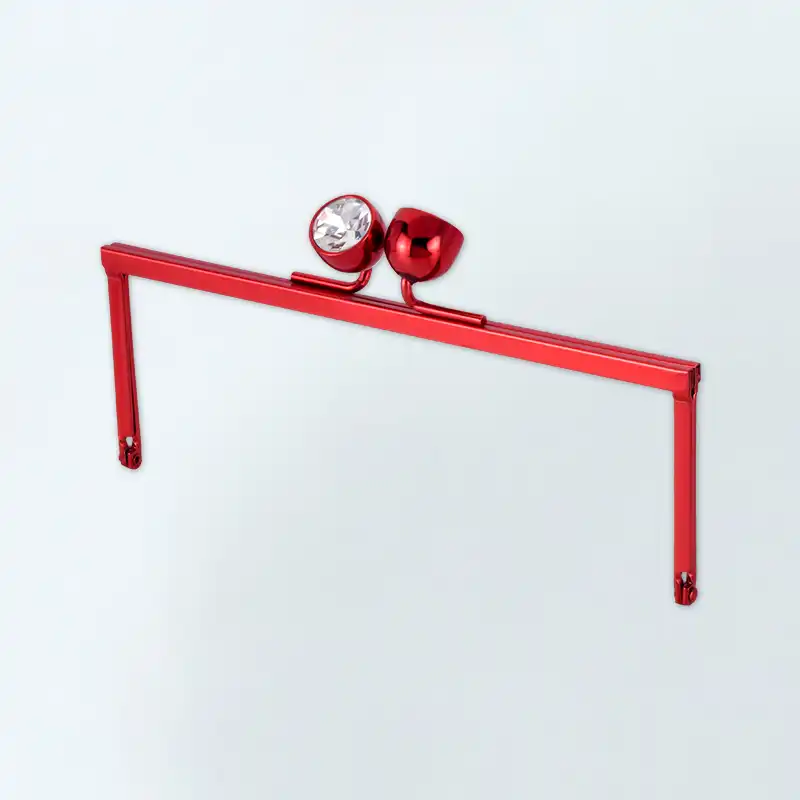
Considerations for Metal Frame Finishing
Before diving into specific processes, manufacturers need to establish a systematic evaluation framework. The choice of surface treatment is not a single technical issue, but involves comprehensive decisions in metal clasp frame positioning, cost control, supply chain management and other aspects.
1. Usage environment and durability requirements
As a high-frequency daily item, the metal frame of the wallet needs to withstand complex working conditions such as repeated opening and closing, friction, and sweat erosion. Different usage scenarios put forward differentiated requirements for surface treatment: high-end business wallets require long-lasting shine retention, outdoor sports wallets prioritize corrosion resistance, and fast fashion products may focus more on initial visual effects than long-term durability. Manufacturers should choose the treatment process with the corresponding wear resistance level according to the use intensity of the target market. For example, for business wallets that open and close more than 30 times a day, it is recommended to choose a surface treatment technology with a hardness of HV 400 or higher.
2. Aesthetic expression and brand recognition
Surface treatment is the key means to realize the design language. From the luxury of mirror polishing to the understated texture of matte, from the vintage charm of bronze to the fashion of rose gold, different treatments present completely different visual effects. Manufacturers need to incorporate surface treatment into the overall metal clasp frame design system to consider:
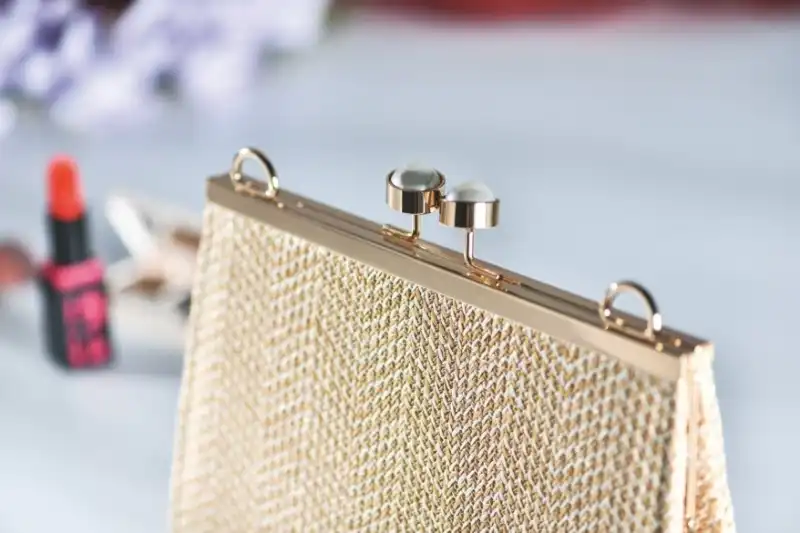
①Color consistency: Batch-to-batch color aberration control at ΔE≤1.5 is the basic requirement for high-end products
②Tactile experience: Surface roughness Ra value directly affects the feel, business products are usually controlled at 0.2-0.8μm
③Gloss management: from matte below 5 degrees to high gloss above 85 degrees, it needs to be coordinated with leather materials
3. Environmental Regulations and Sustainable Development
Globally, environmental regulations such as REACH, RoHS, and California Proposition 65 are becoming increasingly stringent. Traditional hexavalent chromium plating processes are being phased out, and manufacturers need to lay out environmentally friendly alternatives in advance. In addition, brands are paying more attention to the carbon footprint of the supply chain, and low-energy consumption and low-pollution surface treatment processes are becoming a new threshold for market access. Choosing a surface treatment supplier certified by ISO 14001 environmental management system can effectively reduce compliance risks.
In-Depth Analysis of Mainstream Surface Treatment Processes
1. Electroplating: A Mature, Reliable, and Classic Choice
Electroplating is the most widely used surface treatment technology for metal clasp frames. It deposits a metal coating on the substrate through electrochemical principles. Its high technical maturity, manageable costs, and wide range of aesthetic options make it a mainstream solution for mid- to high-end wallet frames.

Process Principles and Characteristics
During the electroplating process, metal ions are reduced and deposited on the cathode (workpiece) surface under the action of an electric field, forming a uniform and dense coating. Common plating types include nickel, chromium, gold, and palladium. Multi-layer composite electroplating (such as copper-nickel-chromium systems) can achieve excellent corrosion protection and decorative effects. Modern electroplating processes can achieve precise coating thickness control of 3-25μm to meet the requirements of different protection levels.
Application Scenarios and Advantages
High-End Business Series: Genuine gold electroplating (plating thickness ≥ 0.5μm) combined with a polishing process creates a long-lasting precious metal luster.
Mass Market Products: A nickel + chrome plating combination offers a cost-effective and stainless steel-like appearance.
Special Color Requirements: By controlling the electroplating parameters, popular colors such as rose gold, champagne gold, and gunmetal black can be achieved.
The core advantage of the electroplating process lies in its strong adhesion to the substrate (up to 15-25 MPa) and its ability to cover complex geometric structures, which is difficult to achieve with other processes. Furthermore, a mature supply chain system ensures excellent production capacity flexibility and guaranteed delivery.
2. Anodizing: An Ideal Solution for Lightweight Materials
Anodizing is primarily used for aluminum alloy metal clasp frames. It uses an electrochemical reaction to create a dense oxide film on the aluminum surface. This treatment not only provides protection but also allows for a variety of color effects to be achieved through dyeing.

Process Characteristics and Performance
The anodized layer is actually part of the substrate, not an external coating, resulting in excellent adhesion and no risk of peeling. The oxide film has a porous structure. After dye adsorption and pore sealing, it forms a stable colored layer. Standard anodized film thickness ranges from 10-25μm, with a hardness of HV 300-500, providing excellent wear resistance. This process is particularly suitable for lightweight design requirements, as it significantly improves surface performance without significantly increasing weight.
Application Limitations
Anodizing is only suitable for materials that can form a stable oxide film, such as aluminum and titanium. It is not suitable for commonly used brass and zinc alloy frames. Furthermore, the oxide film is relatively brittle and easily scratched by sharp objects, resulting in white marks. Therefore, it is more suitable for large, uniformly stressed frame components, rather than for areas prone to impact, such as buckles and hinges.
Matching Treatment Solutions for Different Metal Frame Substrates
1 .Surface Treatment Strategies for Brass Frames
Brass is a common material for wallet metal clasp frames due to its good workability and elegant golden appearance. However, brass is prone to oxidation and discoloration and must undergo proper surface treatment to maintain its long-term aesthetics.
System design of electroplating scheme
The typical plating system for brass metal clasp frame is: alkaline copper priming (3-5μm), →semi-glossy nickel (8-12μm), →high sulfur nickel or micro-crack nickel (2-3μm), → chrome plating (0.3-0.5μm). In this multi-layer structure, the copper layer improves bonding, the nickel layer provides corrosion protection against corrosion, the high-sulfur nickel layer disperses corrosion, and the chrome layer provides hardness and luster. For markets where nickel is not required, such as the EU Nickel Release Directive, copper-tin alloy plating alternatives can be used.
2 . Machining considerations for zinc alloy frames
Zinc alloy (ZAMAK) occupies an important share in the production of high-volume wallet metal clasp frames due to its good die-casting formability and low cost. However, zinc alloys have high chemical activity and are more difficult to surface than brass.
Pretreatment
The surface of zinc alloy often contains die-casting residues and oxide layers, which must undergo strict degreasing, rust removal, and activation treatment. In particular, the weak acid erosion process requires precise control of time and concentration, as excessive erosion can lead to rough surfaces and affect the quality of the coating. High-quality zinc alloy metal frame pretreatment should include ultrasonic cleaning to ensure the cleanliness of complex structures.
Optimal Surface Treatment Options
Zinc alloy frames are most commonly used for electroplating and powder coating. Special attention should be paid to the corrosive nature of zinc when plating, and the thickness of the nickel layer should be ≥ 10μm to provide adequate protection. The application of PVD process on zinc alloy requires pre-electroplating nickel priming, otherwise the adhesion is insufficient. For cost-sensitive products, powder coating is the preferred option, but it is necessary to ensure that the curing temperature does not exceed the tolerance of zinc alloys (typically < 180°C).
3 . Treatment characteristics of stainless steel frame
The stainless steel metal frame itself has good corrosion resistance, and the surface treatment is more out of the need for aesthetic and tactile improvement. This provides greater flexibility in design but also places unique requirements on the treatment process.
Mechanical Polishing and Surface Accuracy
The high hardness of stainless steel makes mechanical polishing an important pretreatment or final treatment method. Mirror polishing can achieve a surface roughness of Ra<0.05μm, presenting a high-end luxury feel. The brushed finish creates a directional texture that hides scratches in use, making it suitable for everyday business products. The sandblasting finish creates a uniform matte finish and provides a good non-slip feel.
Looking for reliable, high-quality metal clasp frames for your purse manufacturing or retail business? Carol Metal offers premium square metal clasp purse frames made from durable iron and zinc alloy with a rose gold finish. All specifications, including size, color, and material, can be customized according to your production needs. Partner with a trusted supplier today by emailing tony@carolxiao.com.
References
[1] ASM International. (2023). Surface Engineering of Metals: Principles, Equipment, Technologies. ASM Handbook Volume 5A. Materials Park, OH: ASM International.
[2] Schlesinger, M., & Paunovic, M. (2022). Modern Electroplating (6th ed.). Hoboken, NJ: John Wiley & Sons.
[3] Mattox, D. M. (2023). Handbook of Physical Vapor Deposition (PVD) Processing (4th ed.). Oxford: Elsevier.
[4] European Chemicals Agency (ECHA). (2024). REACH Regulation: Guidance on Surface Treatment of Metals. Helsinki: ECHA Publications.
[5] Zhang, L., Wang, S., & Chen, H. (2023). "Comparative Study of Corrosion Resistance in Metal Wallet Frame Surface Treatments." Journal of Surface Engineering and Materials, 45(3), 287-302.