What are large carabiners used for?
 2026-10-28 17:36:17
Large carabiners are load-bearing connectors used across climbing, rescue, rigging, and industrial height safety. A large locking carabiner specifically adds a mechanical sleeve—screw gate, twist lock, or auto-lock—that prevents accidental opening under load. Their oversized frame accommodates bulky hardware, thick ropes, and complex knots that standard connectors simply cannot handle. From anchoring a litter in a mountain rescue to clipping equipment on a construction beam, these connectors handle jobs where a gate failure is not an option.
Understanding Large Locking Carabiners
What Makes a Carabiner "Large"?
In the gear industry, size is about more than just appearance. A carabiner is classified as “large” when its gate opening exceeds 18 mm and the internal width of the frame is greater than 22 mm. This design allows users to attach multiple ropes, pulleys, or cords simultaneously — something that cannot be achieved with smaller keylock carabiners due to their compact geometry. Additionally, the wider frame distributes load across a longer spine, delivering improved major-axis strength.
Locking Mechanisms Compared
There are more than fifty styles on the business market that have three gates. It's simple to use, doesn't cost much, and works best when it's cold outside, even when ice is on the ground. The "twist-lock" locks itself when you let go, so you can clip it on with one hand during a rope escape. This type of lock needs to be opened with three careful moves. It is now the standard for anchors that stay in place in factories. Each system is different in terms of speed and safety, so buyers should make sure that the type they pick works with their process before they place their order.
Material Options and Certifications
For lightweight climbing, 7075-T6 aluminum is used, and alloy steel is used for industrial gear that is used a lot, where aluminum would wear through. Most business links are made up of these two metals. It is possible to coat aluminum and steel with things that keep them from rusting. When done to aluminum, these steps are called hard anodization. When done to steel, they are called zinc plating or nickel plating. Check for tests like EN 12275, EN 362, and ANSI Z359.12 if you want to climb. Look for EN 362 when you need safety gear for work. For safety reasons, a supply chain shouldn't have a connection that doesn't have certification data that can be watched.
Primary Uses of Large Carabiners in Industry and Outdoor Applications
Climbing and Technical Rescue
When SAR (Search and Rescue) or high-angle rescue is being done, the main link in a litter bridle is a big locking connector. All of the axles, brakes, and places to connect the patient are in one place. Since the basket is big, the Munter hitch doesn't get stuck when it goes down. It can happen when smaller joints have to deal with a lot of wear and tear. To save lives quickly, the gate needs to be made so that glovesd hands can go through it all at once.
Industrial Rigging and Construction
Big connectors are used by heavy metal workers and tower techs to connect safety chains and fall arresters to steel parts that are too thick for a large locking carabiner normal gate to close around. This is a lot more than the 22 kN minimum that most climbing models advertize. The main-axis power of most industrial models is between 35 and 50 kN. Marine, coastal, and outdoor buildings wear out metal faster because of salt and water. Finishes that don't rust or corrode last longer in these places.
Outdoor Recreation and Everyday Utility
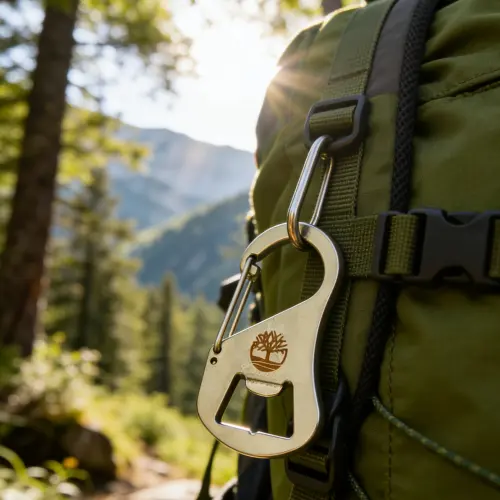
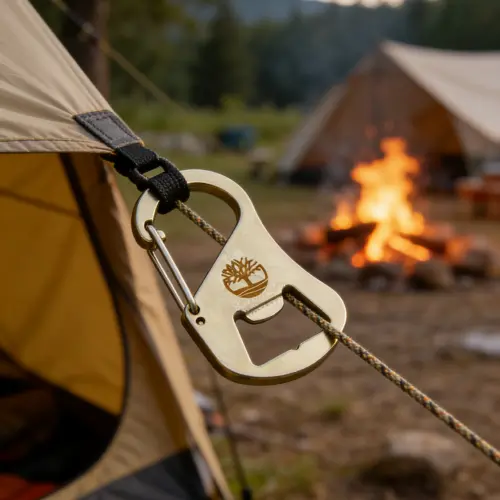
People don't just use big links for jobs that need to be safe. People use them to organize their camping gear, connect backpacks to other things, and even make things that they carry around with them every day. It's like our 25 mm inner Big Carabiner Hook (67 mm × 25 mm, 35.3 g). It's made of zinc alloy and has a nickel finish. It can be a charm, taken camping, used to open beer bottles, or just attached to your stuff. It comes in many shapes, sizes, and materials, so it can be used for both short-run and long-term sales.--
How to Choose the Right Large Locking Carabiner for Your Needs?
Key Selection Criteria
After picking the right connection, you need to make sure it works for the job. You should think about the following things before you decide to buy:
- Load rating: Verify major-axis strength against the peak load your system can generate, including dynamic shock loads from a fall arrest event.
- Gate opening width: A 22 mm to 30 mm gate opening is standard for large models; confirm clearance fits the thickest rope or hardware in your kit.
- Material and finish: Aluminum suits mobile climbing use; steel suits permanent anchors or high-cycle industrial applications. Nickel and zinc platings add corrosion resistance for humid environments.
- Locking type: Match screw-gate simplicity to cold-weather work; choose triple-action auto-lock for permanent industrial installations.
Rate of load: Check how strong the main line is against the biggest load your system can handle. Dynamic shock loads from a fall stop event should be part of this load.
The gate should open between 22 mm and 30 mm wide for big types. Material and finish: Aluminum is good for mobile climbing, but steel is better for fixed anchors or heavy-duty industrial uses. Things are less likely to rust in wet places when they have nickel and zinc plates on them.
Type of lock: A simple screw-gate is best for work that needs to be done in cold weather. For long-term business use, a triple-action auto-lock works best.
Supplier and Brand Verification
On a sport climb, it is easy to clip a single rope because the connection is smaller. Gate clearance is the most important thing to think about when a system needs more than one line, a belay device that can turn around, or a large locking carabiner rope that is very wide. Having big connections takes care of that right away. People who are counting grams on a mountain hike don't mind the extra weight and bulk, but people who work on building sites do.
Maintenance and Safety Best Practices
Correct Handling and Pre-Use Checks
Three times before each use, make sure that the locking ring is easy to move. Make sure the gate can be shut all the way. If the gate hinge is stiff, there is grit or rust inside it. Let it dry on its own after running clean water over it. It is known that cross-loading can make rated strength between 60 and 70% less in drop tests. In other words, you should never put a load on a connection where the gate is facing the load or sitting on an edge.
Inspection and Retirement
There should be no use for a connection if more than 10% of its wall thickness has been worn away, if the gate doesn't close quickly, or if it has been through a big drop or shock load. It is not possible to tell for sure if someone has internal stress fractures after they have fallen. Pros have to quit after a high-load event because of this.
Storage and Corrosion Prevention
Keep connectors somewhere dry, away from bleach and direct UV light. Soda, acids, and salt break down zinc and aluminum alloys at the grain level, where you can't see them. When you use connectors in wet places or by the water, make sure to clean them. Every year, spray a little silicone on the gate pivot points as well.
Procurement Insights: Buying Large Locking Carabiners for B2B Clients
Procurement Channels and MOQ Considerations
You can buy things for your business in two main ways: either go straight to factories or use an online wholesale tool like Alibaba International (1688). You have more say over how consistent each batch is, how well the colors match, and how easy it is to change the minimum order amounts when you buy straight from the plant. This is very helpful for name customers whose orders change with the seasons.
Price Factors and Total Cost
What kind of material is used, how smooth the surface is, and how hard the locking device is can change the price per unit. The 25 mm Big Carabiner Hook that we sell is made of zinc alloy and has a nickel coating. It's cheap and will look good and work well for a long time. It will cost you more in the long run to buy new units that aren't certified every time a customer complains than to buy certified steel industrial plugs.
Why Factory-Direct Sourcing Reduces Risk?
A plant can give buyers quality data that they can track as long as it has ISO 9001, SGS, and SMETA licenses, full-chain quality inspection, and electroplating. This way, buyers don't have to reject batches. There are more than 100 tools that make things in our 4,500-yen plant. They make 30 million things every year. We make the dies and pack them up at the end. What else do we do? We even join the pieces together ourselves.
Conclusion
There is a real need in the market for large locking carabiner links that regular gear can't meet. Whether you need a safety anchor, an industrial fall stop system, or a store keychain ornament, it's important to get the right link. The connector should meet the needs for load, gate shape, material grade, and finish consistency. If a buyer checks the certifications, asks for batch test data, and works with factories that control their own electroplating process, they are less likely to be turned down. A lot of the time, they also meet delivery times. We sell a 25 mm big carabiner hook that shows that performance and customization can be found at any price, from cheap everyday things that work to strong work tools.
FAQ
What is the difference between a large locking carabiner and a standard one?
A large connector has a wider internal basket (typically 22 mm+ gate opening) that accommodates multiple ropes or bulky hardware. A standard model is lighter but lacks the gate clearance for complex anchor systems.
Can I use a large locking carabiner for both climbing and industrial work?
Not interchangeably. Climbing-rated connectors meet EN 12275; industrial fall-protection connectors must meet EN 362 or ANSI Z359.12. Always match the connector's certification to the application.
How often should I inspect my connector?
Inspect before every use for gate function and visible wear. Conduct a thorough formal inspection every 12 months or after any event involving a shock load.
When should a large locking carabiner be retired?
Retire immediately if it shows 10% surface wear, rope-cut grooves, a gate that does not snap shut, or any history of catching a significant fall.
Can your carabiners be customized for OEM orders?
Yes. Our 25 mm Big Carabiner Hook is available with custom sizes, colors, and materials. Contact Us to discuss batch requirements and sampling timelines.
Partner With Carol for Your Next Large Locking Carabiner Order
The bag hardware and large locking carabiners that Carol sells come from our ISO 9001, SGS, and SMETA-certified factory, which costs 4,500 naira. We do the processing in-house, so every batch is the same color. So, shipments won't be turned down because the finish isn't right. If you need to place a large order or a custom OEM order, you can email tony@carolxiao.com or go to carolhardware.com right away to get prices and examples.
References
- Petzl Technical Institute. Connector and Carabiner Safety Manual. Petzl, 2022.
- American National Standards Institute. ANSI Z359.12: Connecting Components for Personal Fall Arrest Systems. ANSI, 2021.
- European Committee for Standardization. EN 362: Personal Protective Equipment Against Falls from a Height — Connectors. CEN, 2004.
- Union Internationale des Associations d'Alpinisme. UIAA 121: Carabiners — Safety Standard. UIAA Safety Commission, 2021.
- Gresham, Neil. Rock Climbing: Essential Skills and Techniques. Mountaineers Books, 2019.
- National Fire Protection Association. NFPA 1983: Standard on Life Safety Rope and Equipment for Emergency Services. NFPA, 2022.