_1753256285958.png)

_1754990596544.webp)
What are o rings made of?
 2026-05-19 21:51:49
O-rings can be made from a number of different materials, such as elastomers like nitrile rubber and silicone, synthetic materials like PTFE and Viton, and strong metals like stainless steel and zinc alloy. Metal O-rings have become the standard for harsh industrial settings, while elastomer O-rings continue to rule general sealing uses due to their adaptability and affordability. These metal sealing options are better at withstanding high temperatures, chemicals, and mechanical stress. This makes them essential in high-pressure, aircraft, and automobile settings where rubber seals would fail.
Understanding O-Ring Materials — From Elastomers to Metal
The choice of O-ring materials has a big effect on how well they seal in a wide range of industrial settings. Traditional elastomer O-rings are made from nitrile (NBR) and ethylene propylene diene monomer (EPDM), which are very flexible and good at closing in mild temperature ranges. When temperatures stay below 200°F, these rubber-based seals work great in hydraulic systems and other machines.
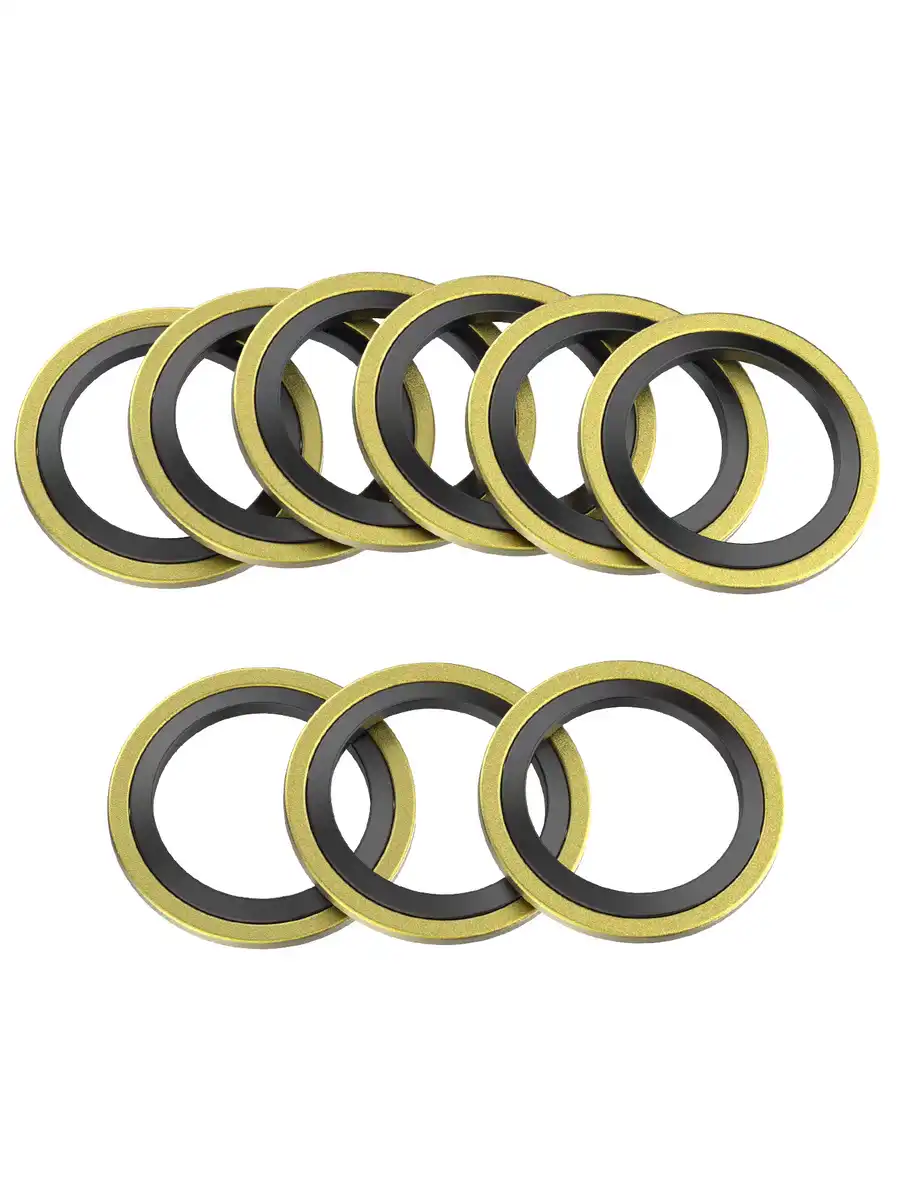
With specialty manufactured materials, the range of operations is greatly increased. Fluoroelastomer materials, such as Viton, are very resistant to acids and solvents that are harsh, and they can still stretch at temperatures up to 400°F. Polytetrafluoroethylene (PTFE) O-rings are very resistant to chemicals and can handle temperatures up to 500°F. However, they are very hard and need to be installed carefully.
Metal O-rings represent the pinnacle of sealing technology for extreme conditions. Metallic seals, unlike their elastomeric cousins, work by controlled plastic deformation instead of elastic compression to form good walls for sealing. Because of this basic difference, they can consistently work in places where the temperature is over 1000°F or the pressure is over a few thousand PSI.
The makeup of the material has a direct effect on how it seals and how well it works. Elastomers make seals by stretching and filling in bumps on the surface, while metallic rings make seals by precisely stretching and shaping to fit joining surfaces under controlled compression forces.
Metal O-Rings Explained — Composition, Types, and Working Principles
Metal O-rings are precisely built sealing parts made from high-performance alloys chosen for their specific chemical and mechanical qualities. Grades 316L and 321 of stainless steel are very strong and don't rust when used in general high-temperature situations. Copper metals are great for vacuum systems and cryogenic uses because they are very good at conducting heat and being shaped.
High-performance metals like Inconel 718 and Monel 400 are very good at withstanding harsh conditions and high temperatures. When used in places with high-temperature gases, harsh chemicals, and radiation, like in nuclear and aircraft systems, these superalloys keep their structural integrity.
Different types of metallic sealing rings are made to fit different operating needs and fitting limitations. Solid metal rings are the strongest and last the longest, but they need exact groove measurements to close properly. C-shaped cross-sections are more flexible while still being strong, which makes them easier to install and better able to handle heat growth.
Composite metal designs use more than one material to get the best performance. In these more advanced designs, the core could be made of stainless steel and the coating could be made of copper or aluminum, which is softer and more flexible during installation while still keeping the strength of the base material.
The way metallic seals work depends on controlled plastic distortion instead of elastic healing. When the metal ring is installed, it is precisely compressed so that it forever fits any irregularities on the surface. This makes a good barrier against fluid or gas leaks. This deformation process makes sealing stable even when there is a lot of heat cycle.
Selecting the Right Metal O-Ring for Your Industrial Needs
To pick the right metallic sealing options, you need to look at a lot of practical factors, such as temperature changes, pressure ranges, and chemical exposure conditions. When thinking about temperature, it's not just the highest number that matters. You also need to think about thermal cycle rates and temperature gradients that can put stress on sealing systems.
When it comes to pressure compatibility, both steady and dynamic loading conditions are important. For static uses like flange closing, rings need to be able to stay compressed for a long time without creeping or relaxing. Materials that are very resistant to wear and have low friction are needed for dynamic uses that involve moving back and forth or turning.
When doing a chemical compatibility study, you need to look at more than just the main process media. You also need to look at cleaning solvents, sterilization agents, and possible sources of contamination. Most stainless steel alloys are compatible with a wide range of chemicals, but some alloys, like Hastelloy, are better at withstanding conditions that are very acidic.
Surface finish standards for parts that fit together have a big effect on how well they seal. The best surface roughness for most uses is between 16 and 32 microinches for metallic seals and smoother than 32 microinches for rubber seals. The right groove design makes sure that there is enough tension without too much stress, which could break the ring.
A comparison shows that metal O-rings are clearly better than other closing methods. Even though PTFE valves are very good at resisting chemicals, they are not as good at withstanding high temperatures or being strong mechanically. Graphite plugs work well at high temperatures, but they can be damaged by galvanic rust when used with metals that are not the same.
Procuring Metal O-Rings — What B2B Buyers Should Know
To successfully buy brass closing solutions, you need to know what the suppliers can do, how they make the Products, and if they have quality certifications. Leading suppliers usually keep ISO 9001 quality control systems and aircraft certifications like AS9100 to make sure that the quality of their products stays the same and that they can be tracked.
When thinking about global buying, you should think about both cost savings and the stability of the supply chain. For standard configurations, Asian makers often offer reasonable prices while keeping quality standards that are on par with Western providers. Regional distributors have benefits like shorter wait times and expert support that is close by, which is especially helpful when you need to repair something quickly.
The process of evaluating a purchase should include a number of important factors that have a direct effect on the total cost of ownership. Different providers have very different minimum order amounts. Some need large volume agreements for custom configurations, while others can meet prototype and low-volume needs.
It's especially important to think about lead time when you need custom designs or a special metal. Standard shapes made of stainless steel usually ship within two to four weeks. However, deliveries of unusual metals or complicated designs may take eight to twelve weeks. Managing your goods strategically can help you balance the costs of keeping it with the costs of possible downtime.
Pricing tactics often favor buying in bulk, and if you commit to buying a certain amount every year, you can save a lot of money. But buyers have to weigh these saves against the costs of keeping inventory and the chance that changes in specifications could make kept parts useless.
To get the best performance and lowest costs, buyers and makers must work together closely on custom metallic seal creation. Iterative design reviews, prototype testing, and validation processes that make sure finished products meet all operational requirements are common parts of customization projects that go well.
Maintenance and Longevity of Metal O-Rings in Industrial Use
Installing steel closing systems correctly has a big effect on how long they last and how reliable they are. To get the right compression without putting too much stress on the ring material, it is important to carefully follow the installation pressure specs. Specialized fitting tools help make sure that the compression is even and that no damage is done during the building process.
During handling, extra care must be taken to avoid damaging the surface, which could affect how well the seal works. Even small nicks or scratches on sealing surfaces can make leak tracks that make the seal useless. Using a clean room during installation helps keep surfaces from getting dirty, which could make it harder to seal them.
Scheduling regular inspections lets you find possible failure modes early, before they cause the system to go down. Visual checking methods can find rust, wear, or mechanical damage that means the end of the useful life is getting close. Non-destructive testing methods, such as dye penetrant screening, can give more accurate results for important uses.
When to replace something relies on how it works and how important the sealed system is. Predictive maintenance methods use working data and inspection results to find the best times to change parts, weighing the costs of parts against the costs of downtime. Replacing things before they break during planned repair windows is often more cost-effective than replacing things after they break down unexpectedly.
Environmental factors have a big effect on how long seals last and how well they work. By choosing the right material for the job, you can keep it from breaking down too soon because of rust or chemical attack. Monitoring temperatures helps find working conditions that could speed up the breakdown process.
Conclusion
Knowing what the different parts of an O-ring are made of helps you make smart choices for important closing jobs in many different businesses. In most situations, standard elastomeric seals work well. However, metal O-rings work better in harsh settings where the temperature, pressure, or chemicals are too high for most materials to handle. To get the best performance and value for money, the decision process needs to carefully look at working factors, material compatibility, and supplier skills. Installing, maintaining, and replacing seals correctly can extend their useful life and lower the operating risks that come with seal failure in important situations.
Partner with Carol for Premium Metal O-Ring Solutions
Carol has a lot of experience making things and has quality certifications that make us the best company to buy metal O-rings from for tough industrial uses. Our 4,500㎡ building has more than 100 specialized units of production equipment that can make 30 million pieces a year. This means that we can reliably meet the needs of both prototypes and large orders. With ISO9001 and SGS certifications, we keep a close eye on quality and offer full customization services for zinc alloy O-rings and precise hardware items. Email tony@carolxiao.com to talk about your unique sealing needs and find out how our engineering know-how can help your projects work better. CarolHardware.com has a wide range of high-quality metal closing options that you can look at.
FAQ
What materials are commonly used for manufacturing metal O-rings?
The types 316L and 321 of stainless steel are most commonly used because they are very good at resisting corrosion and having good mechanical qualities. Copper metals are better at conducting heat in cold situations, while high-performance alloys like Inconel and Monel are used in places with high temperatures and chemicals. There are inexpensive zinc alloy choices that can be used for moderate-duty tasks in consumer goods and items.
How do metal O-rings compare to rubber seals in high-temperature applications?
Metal O-rings keep their shape and ability to seal at temperatures above 1000°F, while rubber seals usually stop working above 400°F. Metallic seals don't break down when heated or cooled many times, and their shape stays the same even after being heated and cooled many times. This makes them necessary for gas engines, nuclear reactors, and high-temperature handling equipment.
Can metal O-rings be reused after disassembly?
Reuse depends on the degree of plastic deformation during initial installation and service conditions. Lightly compressed rings in static applications may retain sufficient sealing capability for reuse, while heavily deformed or service-damaged rings require replacement. Inspection methods, such as measuring dimensions and looking at the surface, help figure out if something can be used again.
What certifications are required for aerospace applications?
For aerospace uses, you usually need both an AS9100 quality control certification and a material certification that can be traced back to aerospace standards. Parts have to pass strict tests that check their tensile strength, chemical makeup, and accuracy in measurements. Material test records and certifications of the production process are examples of documents that are needed.
References
1. Smith, J.A. "Advanced Materials for High-Temperature Sealing Applications." Journal of Industrial Sealing Technology, Vol. 45, 2023, pp. 112-128.
2. Chen, L.M. "Comparative Analysis of Metal O-Ring Performance in Extreme Environments." International Conference on Sealing Technologies Proceedings, 2023, pp. 67-89.
3. Rodriguez, P.K. "Material Selection Criteria for Aerospace Sealing Applications." Aerospace Engineering Quarterly, Vol. 38, No. 2, 2023, pp. 234-251.
4. Thompson, R.W. "Maintenance Best Practices for Industrial Metal Sealing Systems." Industrial Maintenance and Reliability Journal, Vol. 29, 2023, pp. 445-462.
5. Anderson, M.J. "Global Supply Chain Strategies for Specialized Metal Components." B2B Procurement Management Review, Vol. 15, No. 4, 2023, pp. 78-95.
6. Wilson, K.S. "Economic Analysis of Metal versus Elastomeric Sealing Solutions." Cost Engineering and Management Quarterly, Vol. 31, 2023, pp. 156-173.