_1753256285958.png)

_1754990596544.webp)
Tips for making a moon clutch purse frame
 2026-01-12 14:31:25
With its unique curved silhouette and elegant visual effect, the moon clutch purse frame has gained a significant place in the fashion accessories market in recent years. The core of this bag lies in the precise craftsmanship of its frame structure, which not only determines the outline of the bag but also directly affects the structural strength, service life, and overall quality of the product.
Design and Prototyping Stage
1. Shape Design and Parameter Determination
The design of a moon clutch purse frame first requires determining basic geometric parameters. A typical moon-shaped frame takes on a half-moon or crescent shape. Design elements include the radius, opening width, depth, and cross-sectional dimensions. Designers need to determine the optimal curve based on the target product's volume requirements and ergonomic principles. Generally, a radius between 150 and 250 mm is common, ensuring ample interior space while maintaining elegant visual proportions.
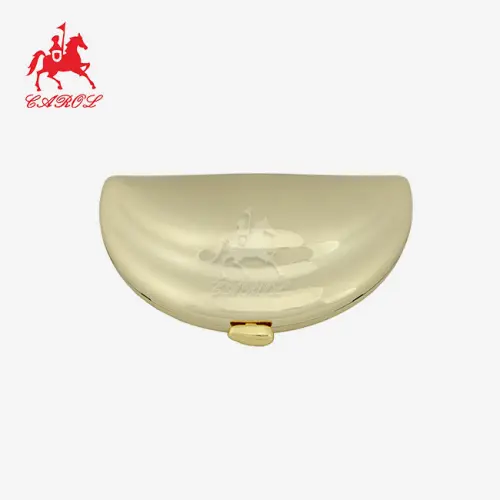
After determining the basic outline, designers need to consider the frame's cross-sectional shape. Common cross-sectional designs include circular, oval, rectangular, or D-shaped. Different cross-sectional shapes affect the frame's strength distribution and the difficulty of wrapping surface materials. A circular cross-section is relatively simple to machine but offers uniform strength distribution, while a rectangular cross-section provides a larger bonding area, facilitating subsequent fabric attachment. The design phase also requires consideration of the location and dimensions of hinge mounting points, handle attachment points, and buckle mounting holes. These functional features must be incorporated into the overall design before the frame is formed.
2. Material Selection Considerations
The choice of moon clutch purse frame material directly determines the product's weight, strength, and cost. Currently, three main material systems are used for moon-shaped clutch frames on the market. The first is metal, including stainless steel wire, aluminum alloy extrusions, and brass tubing. Metal frames offer excellent strength and stability, making them suitable for high-end product lines, but they are also heavier and more expensive to process. The second is engineering plastics, such as ABS, PC, or reinforced nylon. These materials can achieve complex shapes through injection molding, are lightweight, and are cost-effective, but may deform in high-temperature environments. The third is composite materials, such as glass fiber-reinforced resin or carbon fiber composites, which offer a balance between lightness and strength, but are more expensive and more difficult to process.
Metal Frame Forming Mold
For metal material frames, the bending molding process is mainly used, and the corresponding mold is a bending mold. Bending of moon-shaped arcs is usually not done at once and requires sectional progressive bending or a specialized arc bending die. When designing the mold, it is necessary to consider the rebound characteristics of the metal material, and reserve a certain amount of rebound compensation on the mold profile to ensure that the frame after demolding can reach the design size.
For pipe frames, arc bending dies are commonly used, which consist of bending wheels, clamping devices, and anti-wrinkle blocks. The arc surface of the bending wheel is processed according to the target curvature, and the anti-wrinkle block fits the outside of the pipe to prevent wrinkles. For solid wire or flat strip materials, roll bending or pressure bending dies are used to achieve the target shape through multiple progressive bends.
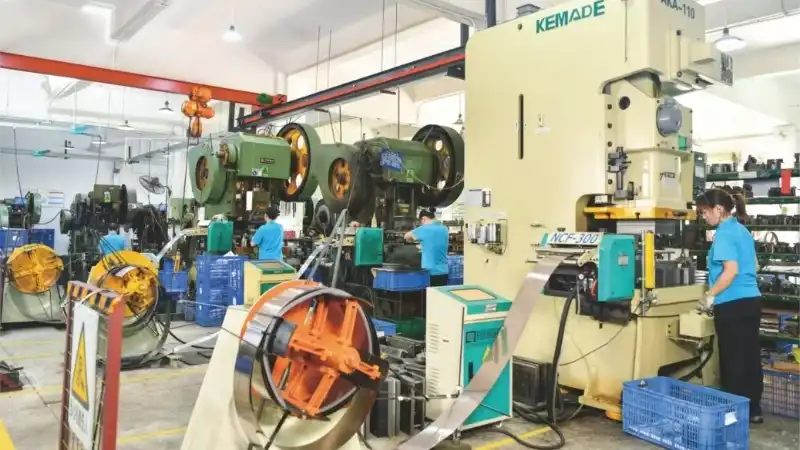
The key to moon clutch purse frame molds lies in precise curvature control and good surface finish, and any scratches or roughness on the mold surface will transfer to the product, affecting the subsequent surface treatment and cladding process.
Surface Pretreatment
Regardless of the material used, frames require surface pretreatment before cladding or assembly. Pretreatment for plastic frames primarily involves removing surface oils and improving surface activity. Common methods include solvent wiping, flame treatment, or plasma treatment. Solvent wiping, using isopropyl alcohol or a specialized cleaning agent, removes mold release residue and dust, a basic cleaning step. For areas requiring bonding, a flame spray gun can be used to rapidly sweep across the surface. The instantaneous high temperature changes the surface chemistry, increasing polarity and strengthening adhesion. Plasma treatment is a more advanced method, bombarding the surface with low-temperature plasma to significantly increase surface energy without damaging the substrate. It is particularly suitable for treating difficult-to-bond materials such as PP or PE.
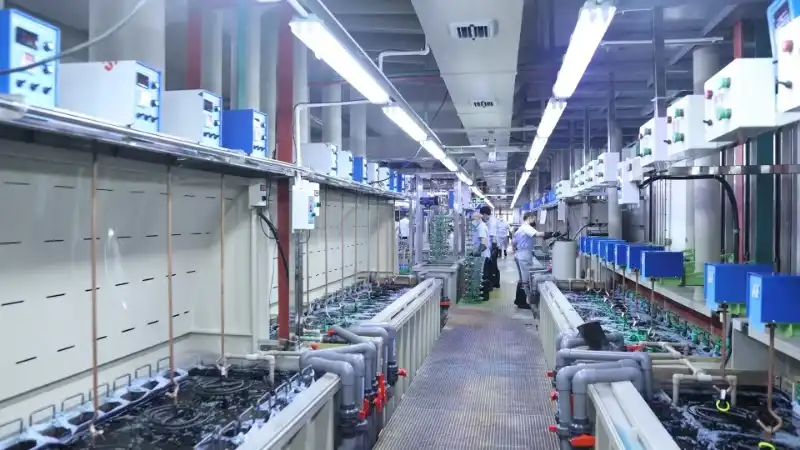
Surface pretreatment for metal frames is more complex. First, degreasing is performed, using an alkaline degreaser, either by soaking or spraying, to remove cutting oils and fingerprints from processing. Next, pickling or sandblasting is performed to remove scale and rust, resulting in a clean metal surface. If electroplating or powder coating is required, it must also undergo activation or phosphating treatment to form a conversion film layer on the surface to improve coating adhesion. The frame after surface treatment should be processed within 4 hours to avoid re-oxidation or contamination.
Finished Moon Clutch Purse Frame Inspection Standards
The assembled moon clutch purse frame needs to undergo a comprehensive quality inspection before it can be put into storage. The inspection items include three categories: appearance inspection, dimensional inspection and performance inspection.
The visual inspection mainly checks whether there are scratches, bubbles, color differences or stains on the surface, whether the covering material is flat and free of wrinkles, whether the edge treatment is neat, and whether the functional parts are installed correctly. Cosmetic defects are usually visually inspected under a standard light source, with major defects such as cracks, severe scratches being unqualified, and minor defects such as scratches less than 1 mm acceptable.
Dimensional inspection is carried out using calipers, protractors, or coordinate measuring instruments. Key inspection dimensions include moon clutch purse frame opening width (tolerance ±2mm), radius of radius (tolerance ±3mm), frame height (tolerance ±1.5mm), symmetry (left and right deviation). <2mm) and the position of each functional hole (tolerance ±1mm). Products with poor dimensions may cause difficulties in subsequent assembly or affect the appearance of the package, which must be strictly controlled.
Performance inspection includes strength test, opening and closing test, and drop test.
Strength test 50 kg static load is applied to the handle connection and held for 1 minute to check for deformation or breakage. The opening and closing test is for the frame with the lock, and the lock is opened and closed 1000 times repeatedly to check whether the lock function is normal and whether the hinge is loose.
The drop test will freely drop the moon clutch purse frame with a 1kg counterweight from a height of 1 meter, repeated 5 times, checking whether the frame is cracked or the functional parts are falling off. Only products that have passed all inspection items can be labeled qualified and enter the packaging process.
The production of moon clutch purse frames is a systematic project that involves multiple aspects such as design, molding, assembly, and inspection. The process control of each link directly affects the quality of the final product. Manufacturers need to choose the right materials and process routes based on their technical capabilities and market positioning. Regardless of the technical concept, precise dimensional control, stable process parameters and strict quality control are the keys to success.
Looking for reliable, stylish, and customizable metal hardware for your handbags? Choose Carol Metal, your trusted manufacturing partner since 2015. Our women's moon shaped metallic clutch evening bag hardware combines quality materials, advanced electroplating, and fine craftsmanship under one roof. With in-house production and finishing, we guarantee efficiency, consistency, and elegance in every piece. Connect with us at tony@carolxiao.com to discuss your design requirements and get started today.
References
1. Johnson, M., Smith, P. "Design and Manufacturing of Handbag Frames: Materials and Processes". Journal of Fashion Technology & Textile Engineering, 2021, 9(2): 123-135.
2. Brown, R., Davis, L. "Quality Control in Bag Accessory Manufacturing". International Journal of Industrial Engineering, 2020, 27(4): 356-368.
3. Martinez, A., Garcia, S. "Surface Treatment Technologies for Metal Frames in Fashion Accessories". Materials Processing Technology, 2021, 288: 116-127.
4. Wilson, T., Anderson, K. "Structural Analysis and Optimization of Curved Frame Designs". Journal of Mechanical Design, 2019, 141(8): 081-094.